

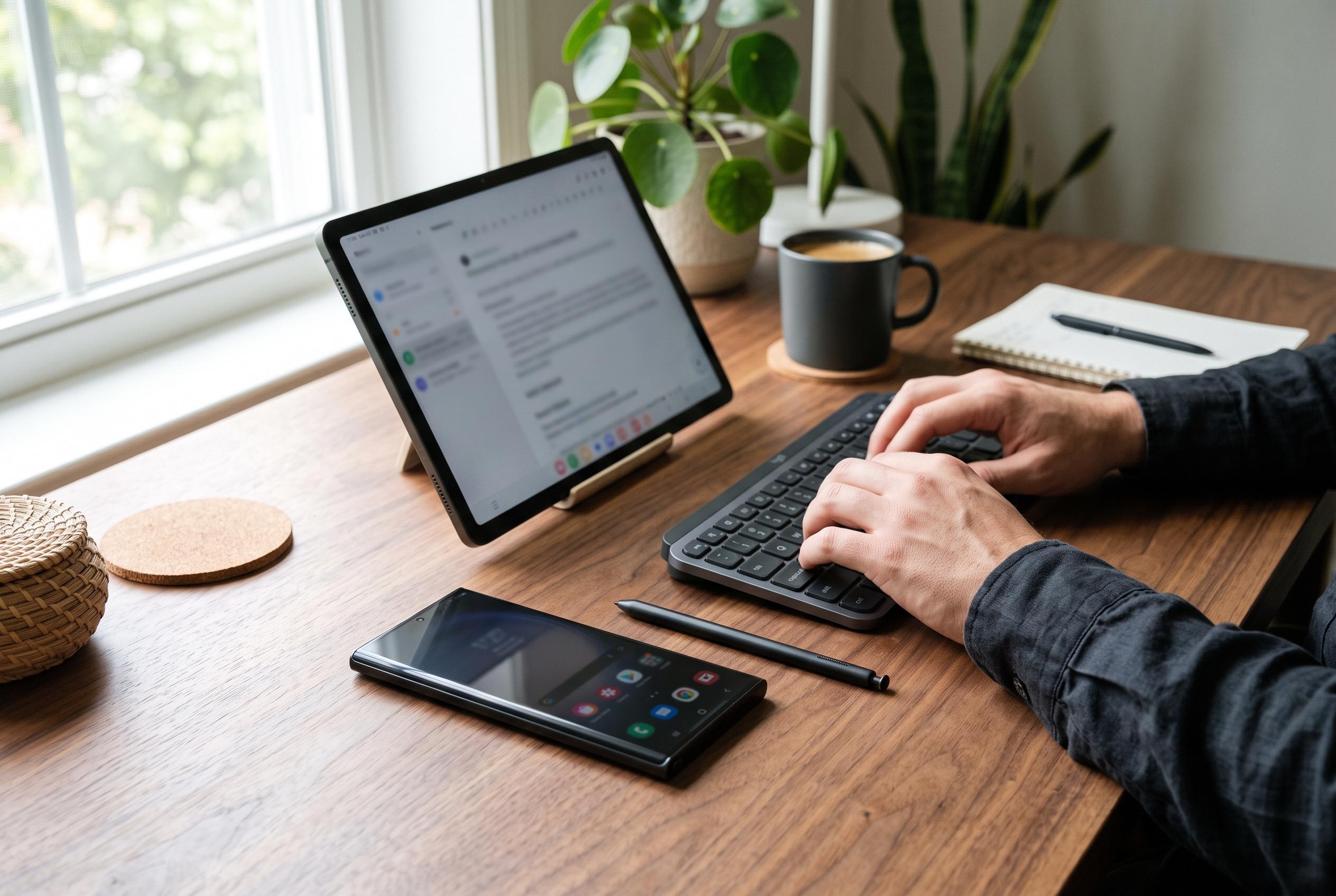

Samsung’s Galaxy S26 Ultra targets productivity-minded buyers with its S Pen, DeX and Privacy Display, while Apple’s iPhone 18 Pro Max focuses on cameras, battery life and performance.
Samsung’s Galaxy S26 Ultra and Apple’s iPhone 18 Pro Max sit at the top end of the smartphone market, but they aim at different kinds of buyers. Both are priced at $1,299, yet their priorities diverge sharply: Samsung leans into customisation, productivity and privacy tools, while Apple concentrates on camera quality, battery life and raw performance. For readers choosing between them, the more useful question is not which phone is better in absolute terms, but which one fits the way they work and use their handset day to day.
One of the clearest differences is in features that shape everyday interaction. According to Samsung’s launch material and subsequent coverage from MacRumours, Tom’s Guide and Android Central, the S26 Ultra’s Privacy Display narrows side viewing angles so that content is difficult to see from off-centre positions, which is intended to protect sensitive information in public places. The phone also keeps the S Pen, Samsung DeX and genuine split-screen multitasking, reinforcing its appeal to professionals and creative users. Apple’s approach is more restrained, but the iPhone 18 Pro Max still brings practical additions such as MagSafe accessories, the Action button, StandBy mode and Dynamic Island, with car crash detection adding a further safety layer.
The camera systems follow the same pattern of differentiation. The S26 Ultra is built around a 200 MP main camera and emphasises reach, detail and flexibility, with 8K video capture and stabilisation tools aimed at users who shoot in demanding conditions. Digital Camera World says the newer model also improves the primary lens and 5x telephoto performance, although it notes that the 3x sensor is less impressive than some rivals and that Samsung’s colour processing can still look overly aggressive. Apple, by contrast, is positioned as the more balanced imaging platform, with variable aperture for low-light work, ProRes recording and a strong emphasis on natural skin tones and cinematic video, which continues to make it attractive to content creators and filmmakers.
Display behaviour is another area where the phones are set up for different environments. Both use 6.9-inch panels, but the iPhone 18 Pro Max is reported to reach 3,000 nits of peak brightness, making it easier to read in direct sunlight. Samsung counters with an anti-reflective surface and the Privacy Display, which adds discretion without requiring a separate screen filter. T3 says the feature uses hardware-level directional light control and can be configured for specific apps, notifications or PIN entry, although maximum privacy modes may reduce colour fidelity and perceived sharpness. That makes the Samsung screen more specialised, while Apple’s is simpler and more straightforward for general outdoor use.
Customisation and performance also separate the two flagships. Samsung gives users more control over the interface through Good Lock, wallpaper effects and theming options, which will suit anyone who likes to tailor a device closely to their workflow. Apple has expanded personalisation with more flexible icons, widgets and tilt-sensitive wallpapers, but it remains more tightly controlled. In performance terms, the iPhone is described as faster and more efficient in gaming and heavily demanding apps, whereas Samsung’s Snapdragon-powered handset appears stronger in multitasking and video export. Battery life is close, but Apple’s 5,567 mAh pack is said to last longer, while Samsung’s 5,000 mAh battery charges more quickly. At 214 grams, the S26 Ultra is lighter than the 249-gram iPhone, and Apple is said to hold its value better in trade-ins, which may matter to buyers who upgrade often.
In the end, the iPhone 18 Pro Max looks like the safer recommendation for most users because of its battery endurance, strong cameras and better resale value. The S26 Ultra, though, is arguably the more interesting device for people who want a phone that behaves more like a productivity tool, with stylus input, deeper customisation and the new Privacy Display as defining advantages. The choice comes down to whether a buyer wants a refined all-rounder or a more adaptable flagship with added security and workflow features.
Disclaimer: This content is intended for informational purposes only. Readers are advised to exercise their own judgement, conduct due diligence, or consult a qualified expert before acting on any information provided.



