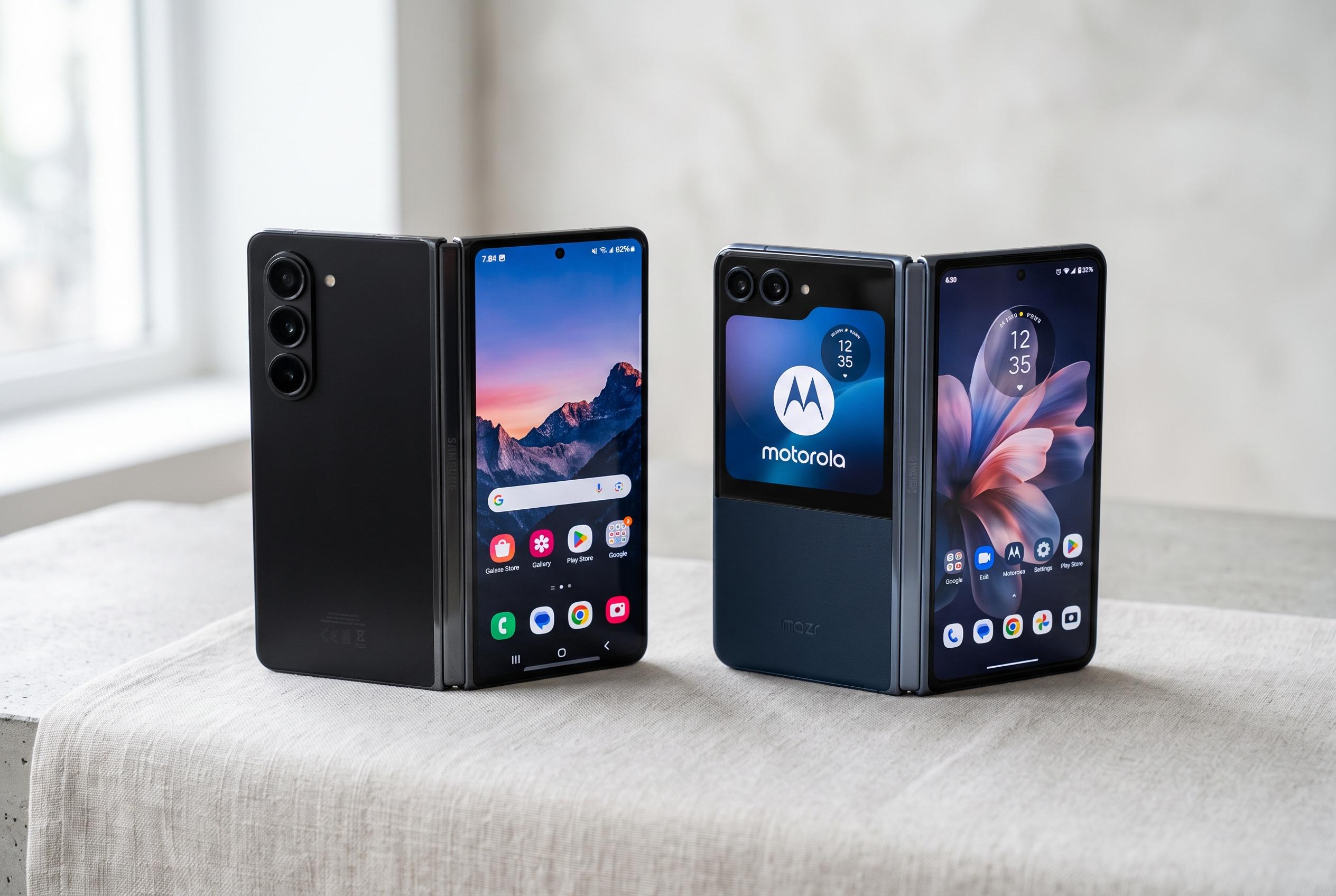

Samsung’s Galaxy Z Fold 8 Ultra emerges as the superior camera phone among foldables, but Motorola’s latest models close the gap, challenging Samsung’s dominance in real-world photography tests.
Samsung’s latest foldables do not transform the company’s camera reputation, but they do sharpen the conversation around where its hardware is strongest. In an extensive real-world test, Android Central’s Derrek Lee shot 1,000 photos with the Galaxy Z Fold 8 and Galaxy Z Fold 8 Ultra, then compared them with Motorola’s Razr Ultra 2026 and Razr Fold. The broad verdict is clear: Samsung’s Ultra model is the better camera phone, yet Motorola’s rivals are close enough in several situations to expose the limits of the standard Fold 8.
Lee said he tested both Samsung phones in a wide range of scenes after their launch on July 22, using a simple point-and-shoot approach without manual exposure tweaks or subject tapping. The base Fold 8 uses dual 50MP rear cameras, while the Ultra steps up to a 200MP main sensor and an extra telephoto lens, according to Samsung’s specifications as reported by SamMobile. That hardware gap shows up in practice. Android Central found the Ultra’s images to be more detailed and more vivid overall, while the Fold 8 often delivered softer, more restrained results. Tom’s Guide also concluded that the Ultra’s dedicated zoom camera helps, though the gain may not justify the extra $200 for every buyer.
The clearest advantage for the Fold 8 Ultra is in zoom and detail retention. Lee found that the non-Ultra model is usable at 2x, but quality falls away quickly beyond that point, even when software processing tries to compensate. The Ultra is more consistent, although Android Central said its colour rendering can occasionally become too intense, especially with reds. That lines up with broader hands-on reviews from PhoneArena, which noted that the regular Fold 8 lacks a telephoto lens and smaller sensor size makes it less capable than the Ultra on paper, even if it remains competent for everyday photography.
Motorola’s foldables complicate Samsung’s lead. In Lee’s comparisons with the Razr Ultra 2026, Motorola tended to produce more natural colour and stronger scene contrast, while Samsung often looked flatter. The Razr Ultra also handled difficult light better in some cases, though it could struggle around bright street lamps. With the Razr Fold, Motorola sometimes matched or exceeded Samsung in detail and low-light capture, and its AI-assisted zoom could outperform the Fold 8 Ultra at longer ranges, even if Samsung remained better for moving subjects and selfie quality. PhoneArena’s review of the Razr Ultra 2026 also pointed to a new 50MP main sensor with LOFIC technology, which helps explain why Motorola has become more competitive.
The overall picture is one of progress, but not dominance. Samsung still makes capable camera phones, and the Fold 8 Ultra is the stronger of the two new foldables, particularly for users who want punchier images, cleaner zoom and better all-round detail. Yet the standard Fold 8 is more muted and less flexible, and Motorola’s best foldables now challenge Samsung in enough scenarios to make the camera choice less one-sided than it once was. For buyers weighing a premium foldable on photography alone, the Ultra is the safer bet, but it is not a clear class leader across every situation.
Disclaimer: This content is intended for informational purposes only. Readers are advised to exercise their own judgement, conduct due diligence, or consult a qualified expert before acting on any information provided.