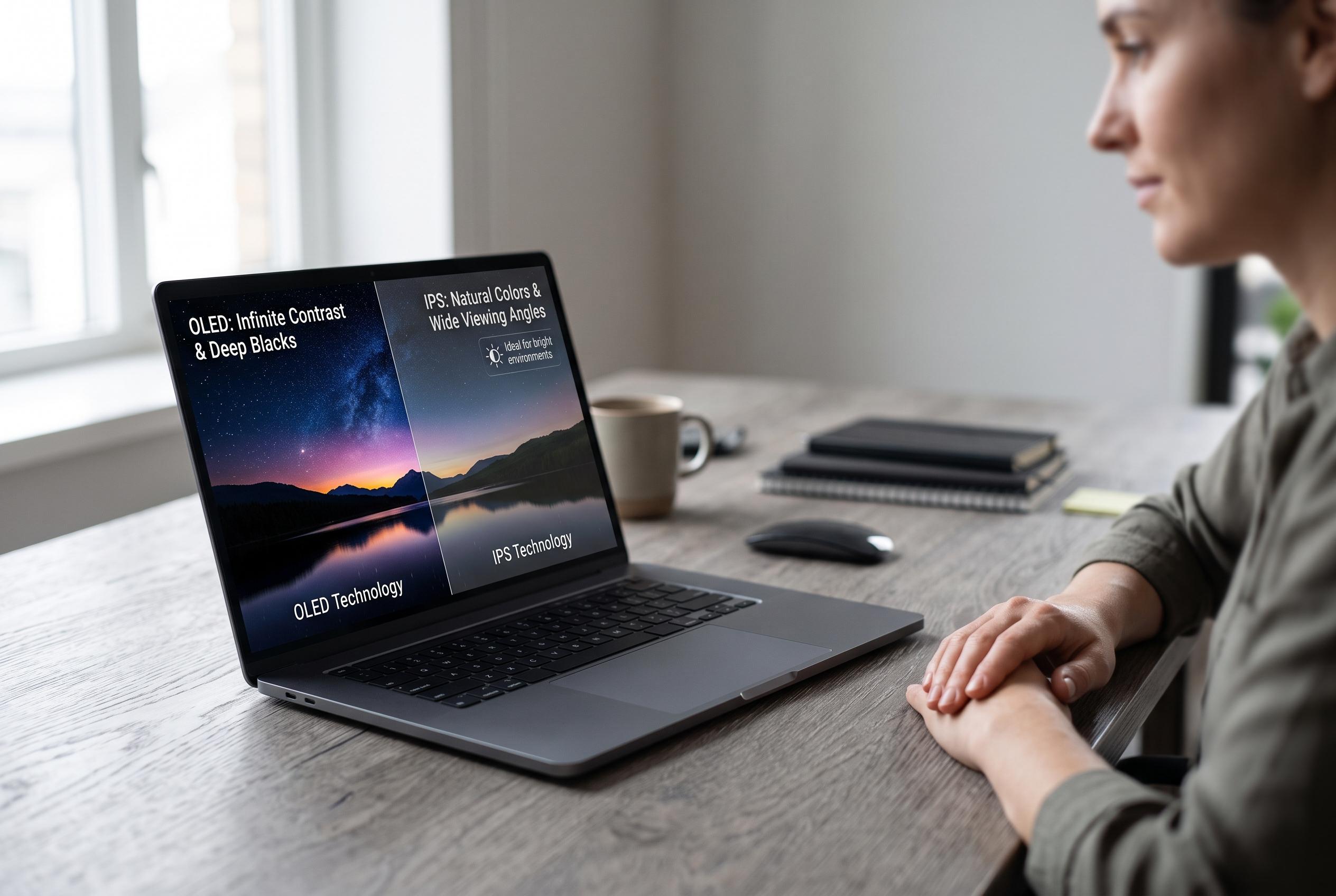

In 2026, students selecting a new laptop must weigh OLED’s superior contrast against IPS’s practicality, reflecting a shift towards prioritising screen performance for visual tasks.
For students choosing a new laptop in 2026, the screen matters as much as the processor or battery life. Creative Bloq’s Back to School coverage argues that the real decision is not about fashion but about how the machine will be used day after day. In practice, OLED and IPS panels serve different priorities, and the better choice depends on whether the buyer values image quality or practicality.
OLED has become the premium option because each pixel generates its own light. That allows the panel to switch individual pixels fully off, producing very deep blacks, strong contrast and highly saturated colour. RTINGS says that this self-emissive design is the key technical difference from IPS, which relies on a backlight behind the panel. For students in photography, animation, film or design, that extra contrast can make images easier to judge and edits easier to refine.
IPS remains the more established all-rounder. Because it uses a backlight and a liquid-crystal layer to control brightness, it generally offers stable performance, good viewing angles and reliable high brightness. Multiple display comparisons note that IPS is often better suited to bright classrooms, libraries and outdoor use because it can sustain brightness more consistently than many OLED panels. It is also free from burn-in, the permanent image retention that can affect OLED displays when static content sits on screen for long periods.
That durability point matters for student life. OLED burn-in is less common on modern laptops than it once was, but it is still a consideration for anyone who keeps toolbars, spreadsheets or coding environments open for hours each day. OLED models also tend to cost more, which makes them harder to justify for buyers who mainly need word processing, web browsing and video calls. For those workloads, IPS is usually more than adequate and often better value.
The simplest rule is still the most useful one. Choose OLED if the laptop will be used heavily for visual work, media consumption or other tasks where contrast and colour accuracy are important. Choose IPS if budget, brightness and long-term practicality matter more. Both technologies are mature, but they are optimised for different kinds of student use.
Disclaimer: This content is intended for informational purposes only. Readers are advised to exercise their own judgement, conduct due diligence, or consult a qualified expert before acting on any information provided.