

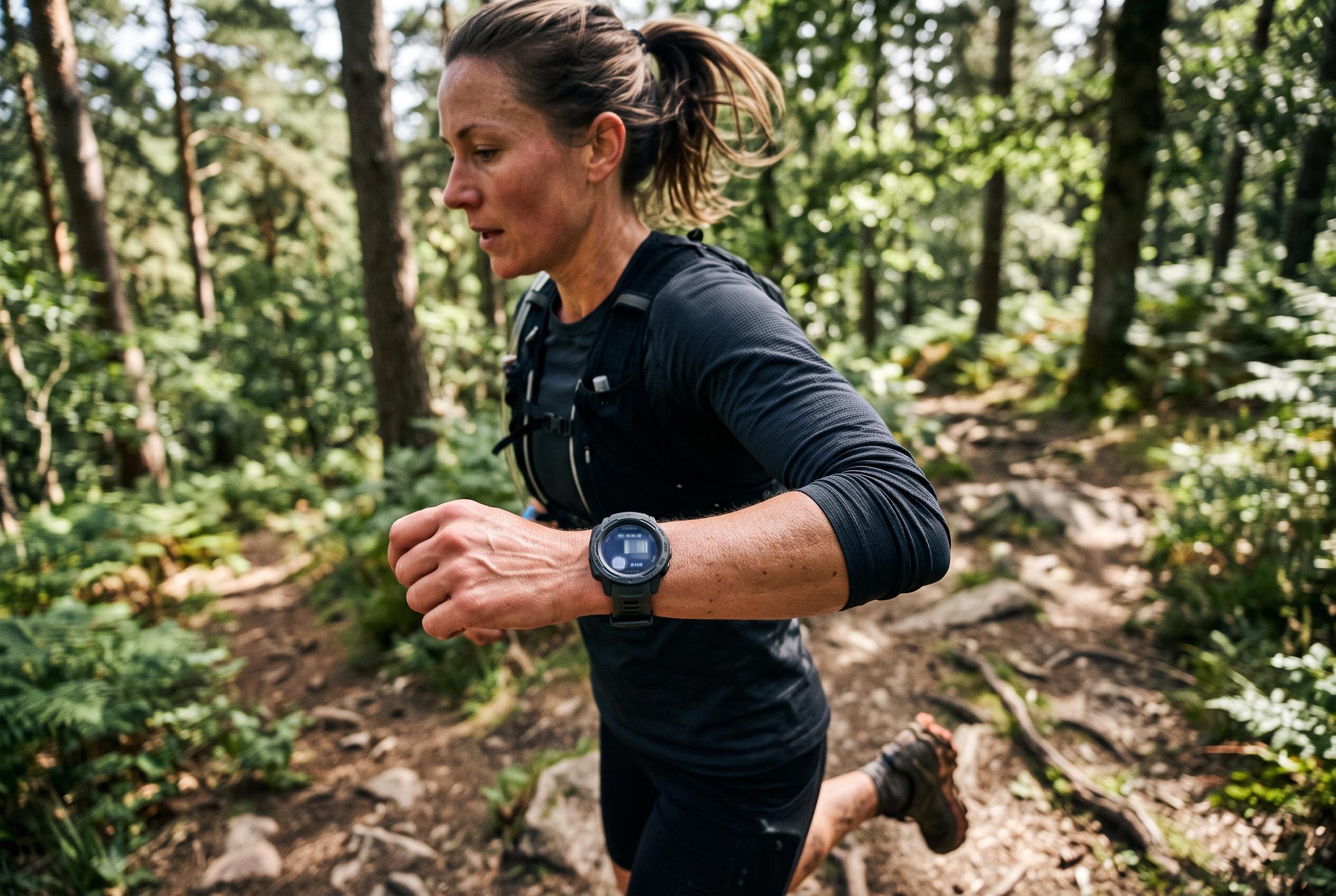

Suunto’s Race 3S undercuts Garmin’s Forerunner 570 and 970 while offering free offline maps and substantially longer multi-band GPS battery life, but Garmin retains the edge in training software, sensors and ecosystem support.
Suunto’s new Race 3S enters the running-watch market as a direct challenge to Garmin’s Forerunner line, and the comparison is not close on price alone. According to the launch material and subsequent coverage, the Suunto model undercuts both the Forerunner 570 and Forerunner 970 while still offering free worldwide offline maps, climb tools and unusually long multi-band GPS battery life. Garmin, by contrast, keeps the richer software environment, broader sensor compatibility and deeper training stack. The result is a familiar trade-off: Suunto looks stronger on value and endurance, while Garmin remains the more complete platform for athletes who want the widest set of features.
On navigation, the Race 3S has a clear selling point. The watch includes offline maps at no extra cost, with contour lines and place names, plus Suunto’s Climb Guidance for route-based ascent and descent information. The Forerunner 570 has no onboard maps at all, instead relying on a breadcrumb route line, while the Forerunner 970 adds full mapping, turn-by-turn directions, round-trip routing and Garmin’s ClimbPro tools. Suunto has also said a route-based pacing function, Race Planner, will arrive later. In practical terms, Garmin still offers the more sophisticated navigation system, but Suunto’s package is notable because it brings proper maps to a cheaper watch than Garmin’s map-free mid-range model.
Training features follow a similar pattern. Garmin’s Forerunner range goes further in software breadth, with tools such as Training Readiness, Training Status, Daily Suggested Workouts and, on the 970, additional metrics including Running Tolerance, Hill Score and Endurance Score. Garmin also bundles live coaching tools and a larger ecosystem of data presentation, although the source article argues that the volume of information can be more impressive than immediately useful. Suunto answers with a leaner approach built around training load, recovery and heart-rate-based zones, plus ZoneSense and EnergySense. Its AI Coach, introduced alongside the Race 3S, is designed to present plans and guidance in more conversational language. Reviews of the watch have described that as a meaningful attempt to simplify coaching for ordinary users, rather than overwhelm them with dashboard-style analysis.
Sensor support and ecosystem remain one of Garmin’s strongest defences. Both Forerunners work with ANT+ and Bluetooth sensors, which matters for cyclists and triathletes using a mix of chest straps, power meters, trainers and radar systems. The 970 also adds Garmin’s wider smartwatch and performance stack, including music services, contactless payments, LiveTrack, incident detection and, according to the comparison, a richer app environment through Connect IQ. Suunto’s Race 3S uses Bluetooth only, which is less expansive but still sufficient for most runners and many cyclists. SuuntoPlus provides a smaller third-party app layer, and the company says music playback and NFC payments will arrive later through software updates.
Battery life is where Suunto makes its most forceful case. The Race 3S is rated for up to 45 hours in its most accurate GPS mode, far ahead of the Forerunner 970 at 21 hours and the Forerunner 570 at 14 hours. The comparison means the Suunto watch is better suited to long trail races, ultras and back-to-back training days where charging access is limited. In everyday smartwatch use, the differences narrow, but the advantage still matters for athletes who value less frequent charging over extra software depth. The new model’s hardware also includes a sapphire lens, titanium bezel and a bright AMOLED display, reinforcing its positioning as a premium endurance watch rather than a cut-price alternative.
The company comparison is just as important as the watch comparison. Suunto offers a two-year worldwide warranty and battery servicing, which the article presents as genuine ownership advantages, particularly for users who keep a watch for several years. Garmin, however, retains the larger platform, the wider third-party support base and the more mature coach-and-training ecosystem. That makes Garmin the safer choice for athletes already invested in its sensors, cycling hardware or software services. Suunto is the leaner company, and that smaller scale may help it keep the product straightforward, but it also means updates and feature roll-outs are more selective. For buyers weighing the two, the decision comes down to whether they value Garmin’s breadth or Suunto’s battery life, mapping value and simpler ownership terms.
Disclaimer: This content is intended for informational purposes only. Readers are advised to exercise their own judgement, conduct due diligence, or consult a qualified expert before acting on any information provided.



