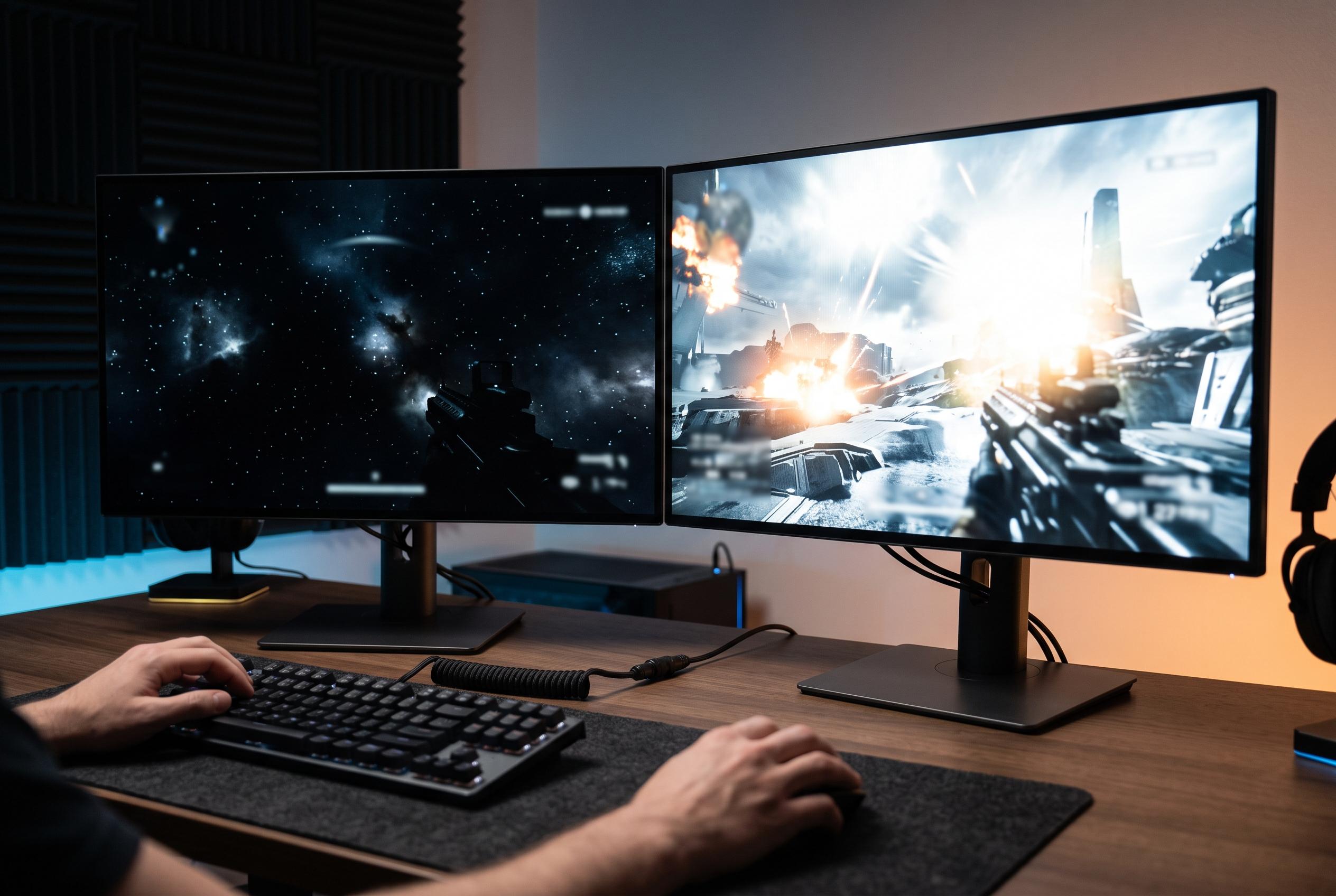

As OLED and Mini-LED emerge as leading display options for gaming, ViewSonic compares their strengths and weaknesses, guiding players on optimal choices based on room lighting, game type, and durability concerns.
OLED and Mini-LED are now the two most capable display technologies for gaming, but they solve the problem of image quality in very different ways. ViewSonic’s comparison says the choice is less about which panel is universally better than which one suits the room, the game type and the way the monitor will be used.
OLED is built around self-emissive pixels, so each pixel can switch off entirely to produce true black. That gives it effectively infinite contrast, very strong shadow detail and the sort of motion clarity that competitive players notice immediately. Mini-LED keeps an LCD panel but places thousands of tiny backlights behind it, divided into dimming zones that can raise or lower brightness with far greater precision than older edge-lit designs. Review site RTINGS and Tom’s Guide both describe this as the key trade-off: OLED for deeper blacks and faster pixel response, Mini-LED for higher brightness and stronger performance in ambient light.
That brightness gap matters most in real rooms, not specification sheets. ViewSonic says its Mini-LED models can reach peak brightness of about 1,400 nits, which helps HDR highlights stand out in daylight or under strong indoor lighting. OLED panels typically peak lower, although quantum dot versions improve colour volume and brightness. TechRadar and Tom’s Guide note that this is one reason Mini-LED remains attractive for large screens and mixed-use setups, even when OLED has the edge in black level and contrast.
Motion handling is the other major divide. OLED pixels change state almost instantly, which reduces blur during rapid camera movement and makes tracking targets easier in fast-paced games. Mini-LED performance depends on the LCD layer beneath the backlight, so response times are generally slower, even on fast IPS panels. ViewSonic says this is why OLED is a strong fit for competitive shooters, racing games and fighting titles, particularly when the screen is viewed from a fixed seat in a dark room.
There is also a durability question. OLED can suffer burn-in if static interface elements remain on screen for long periods, although modern panels include protections such as pixel shifting and refresh routines. RTINGS and PCWorld both treat this as a manageable but real risk, especially for players who leave the same game HUD visible for hours each day. Mini-LED has no comparable burn-in issue and generally offers better long-term resilience, which makes it easier to recommend for heavy daily use, daytime work and larger desktop displays.
In practice, the best choice depends on priorities. OLED is usually the better option for players who want the deepest blacks, the cleanest motion and the most dramatic improvement in dark scenes. Mini-LED is the safer pick for bright rooms, very large monitors and buyers who want sustained HDR impact without worrying about image retention. As ViewSonic frames it, the decision is not about chasing a single winner, but matching the panel to the game space and the kind of gaming that matters most.
Disclaimer: This content is intended for informational purposes only. Readers are advised to exercise their own judgement, conduct due diligence, or consult a qualified expert before acting on any information provided.