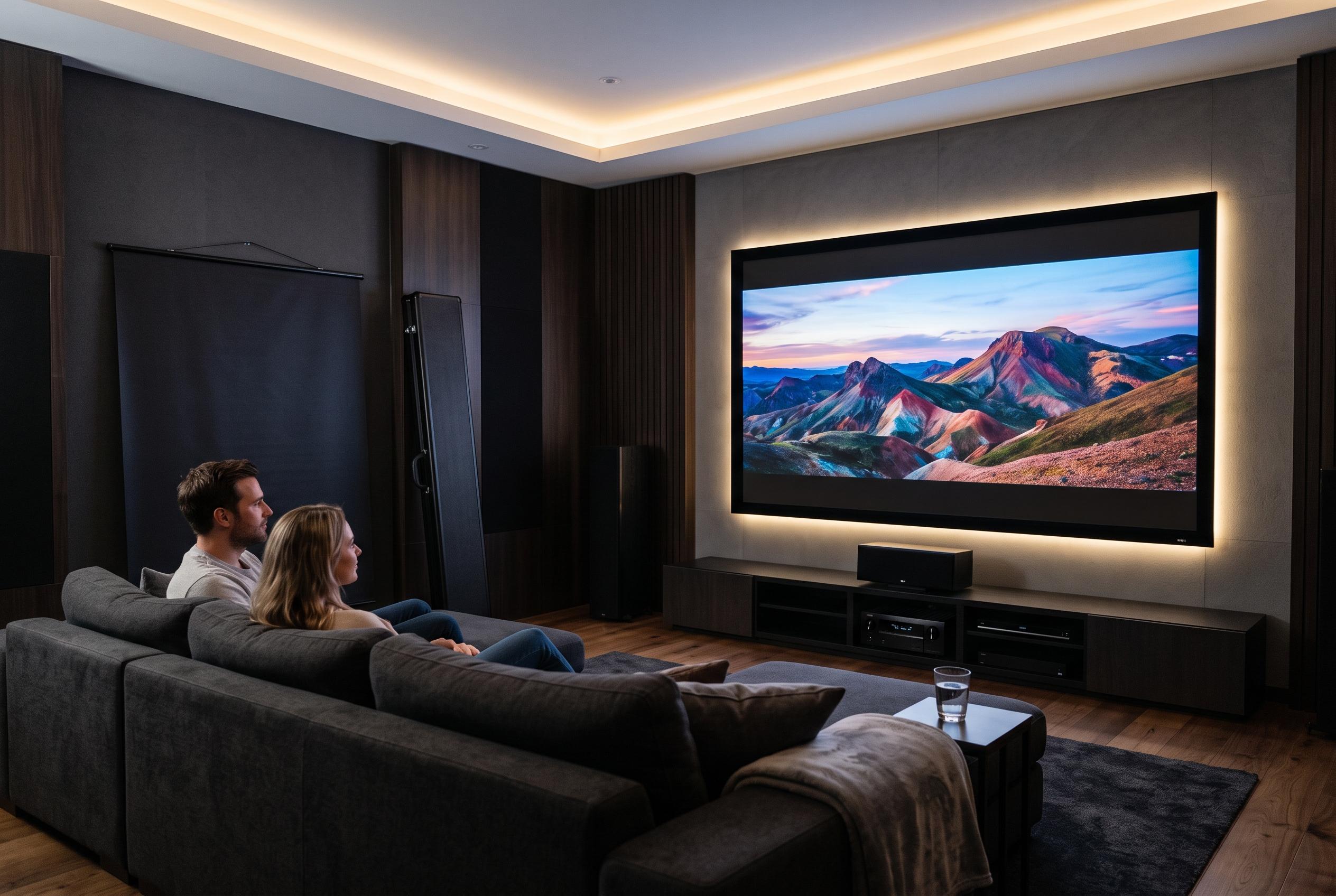

Fixed-frame screens deliver the flattest, sharpest images for dedicated cinemas, while portable models trade some performance for flexibility outdoors and in shared spaces.
Choosing the right projector screen can matter as much as choosing the projector itself. A well-matched surface can improve apparent contrast, keep edges sharper, and make long viewing sessions more comfortable, especially in rooms where ambient light is difficult to eliminate. For buyers weighing fixed-frame theatre screens against portable outdoor models, the key variables are size, gain, viewing angle, frame rigidity, and how often the screen will need to move. Recent buying guides from Projector Verdict, FlickerHall, TheatreCalc, Austin Gallery and other specialist sites broadly agree that the best option depends less on brand prestige than on the viewing environment and the projector’s placement.
For a dedicated home cinema, fixed-frame screens remain the most convincing choice. Among the models highlighted in the roundup, Silver Ticket’s 120-inch STR screen stands out for its black velvet-wrapped frame, 1.1-gain white surface and wide viewing angle, while the larger 150-inch version is better suited to very large rooms and seating layouts that need broader coverage. The Akia 135-inch fixed-frame screen goes further on size, with a tensioned CINEWHITE surface and ISF-certified material designed to keep colour and brightness consistent. The common thread in these recommendations is simple: a rigid frame and well-tensioned surface usually deliver the flattest image and the cleanest-looking border.
That emphasis on frame construction is echoed elsewhere. TheatreCalc identifies the Silver Ticket STR-169120 as a leading home-theatre option, praising its tensioned, flat surface for high-resolution content, while Projector Verdict similarly places the Silver Ticket STR family among the strongest fixed-frame choices for 2026. FlickerHall’s guide points to Elite Screens’ Sable Frame B2 120-inch model as a top all-rounder, reinforcing the view that fixed-frame screens remain the benchmark when the goal is cinematic image quality rather than portability.
Portable models serve a different purpose. ZUVMITG, STWUI and TOWOND all target users who need a screen that can move between a living room, garden, campsite or event space without permanent installation. These products typically rely on tripod stands, stake-down bases, sandbags or ropes to keep the surface steady outdoors. Their advantage is obvious: they are far easier to pack away than a wall-mounted screen. Their trade-off is equally clear: they need careful setup, weather awareness and a projector position that can be replicated each time they are used.
The most practical portable designs also make room for front- and rear-projection use, which adds flexibility in classrooms, backyards and temporary venues. That flexibility matters because not every viewing space can be darkened properly or reserved for a permanent frame. Reviewers consistently note that outdoor screens are only as good as their anchoring system, and that larger portable formats, including 120-inch and 150-inch models, demand more attention to wind, ground clearance and storage space. In that sense, a portable screen is less about absolute performance and more about acceptable compromise.
Screen surface properties also deserve attention. Gain affects how much light is directed back to the viewer, with moderate gain often offering a useful brightness boost without making the image look harsh. Wider viewing angles help larger groups see the picture clearly from the side, while a smoother and more evenly tensioned surface is important for preserving detail in 4K and 8K content. Several of the guides stress that ambient-light rejection can help in brighter rooms, but it is not a substitute for controlling windows, lamps and projector brightness. Put simply, the screen should complement the room, not fight it.
For most buyers, the decision comes down to three questions: will the screen stay in one place, how large does the image need to be, and how much ambient light must it handle? Permanent rooms generally favour fixed-frame screens, particularly from Silver Ticket, Akia or Elite Screens. Shared spaces and seasonal viewing are better served by tripod or stake-down models. The broad agreement across the 2026 buying guides is that the most satisfying result usually comes from matching the screen to the room and projector first, rather than simply choosing the largest diagonal available.
Disclaimer: This content is intended for informational purposes only. Readers are advised to exercise their own judgement, conduct due diligence, or consult a qualified expert before acting on any information provided.