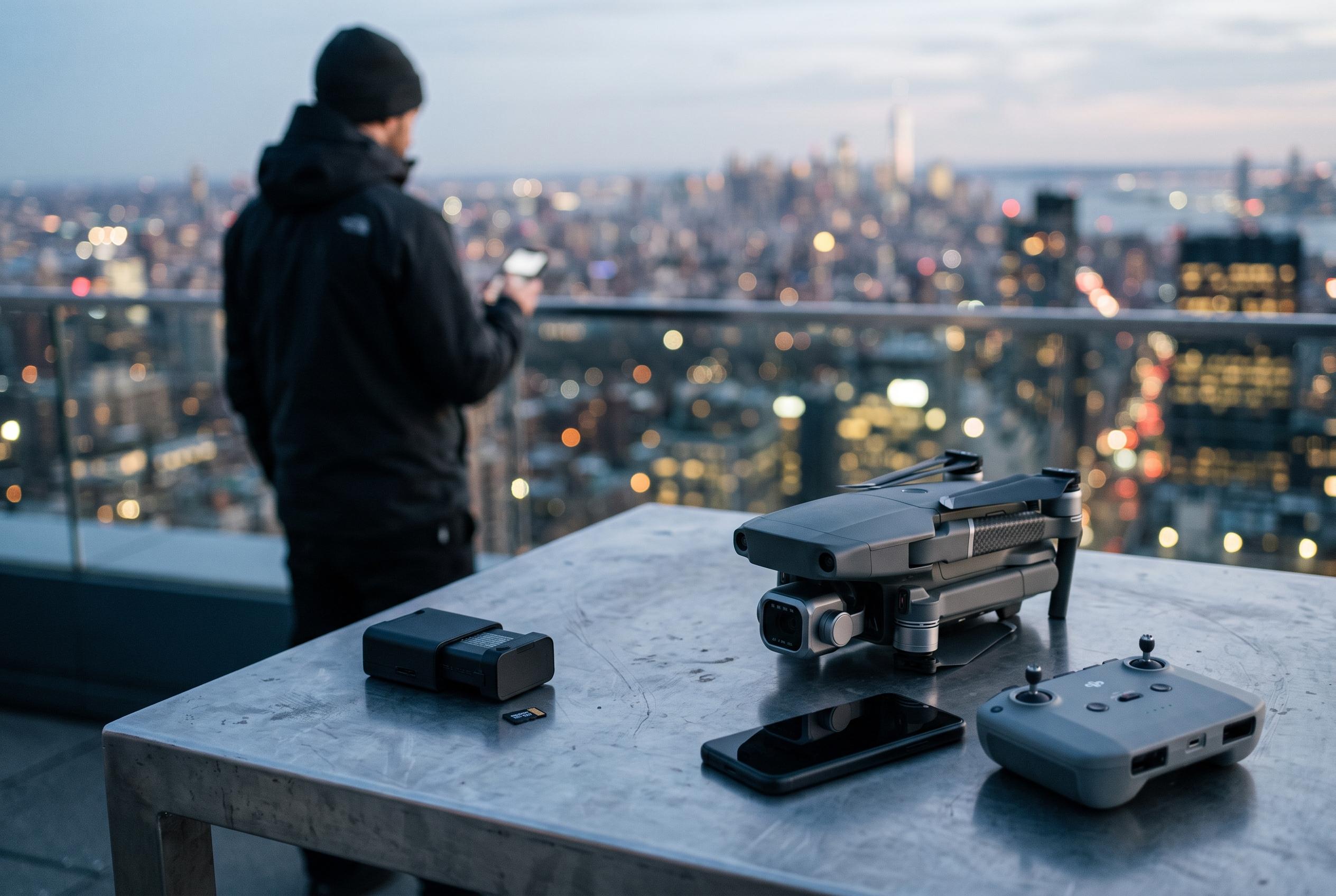

The 2026 drone market under £1,000 is evolving beyond basic shooting, with buyers increasingly selecting models based on sophisticated stabilisation, tracking, and cinematic capabilities, reflecting a shift towards professional-grade content tools in compact designs.
In 2026, the under-£1,000 drone market has moved well beyond basic hobby flying. Shortfilmcentral’s guide argues that the real threshold is no longer whether a compact drone can capture usable 4K footage, but whether it can do so with stabilisation, intelligent tracking and enough dynamic range for serious content work. That matters because the category now spans everything from ultra-light travel drones to heavier models aimed at low-light cinematography, and other 2026 buying guides from DroneGearHQ, Dronestechie and Loyalty Drones show the same pattern: buyers are now choosing between image quality, obstacle sensing, battery strategy and portability rather than simply price.
The clearest premium choice in the roundup is the DJI Mini 5 Pro, which pairs a 1-inch sensor with a 249g body, 4K/60fps HDR recording, omnidirectional obstacle sensing and forward LiDAR. Shortfilmcentral says that combination makes it the most capable sub-250g drone it has tested, particularly for low-light work, subject tracking and social-first vertical filming. Its 36-minute claimed endurance and 42GB of internal storage are practical additions for field use, although the guide notes that the price remains high compared with lighter-budget alternatives.
For creators who want value rather than outright class-leading imaging, the Potensic ATOM 2 stands out as the strongest non-DJI alternative. Shortfilmcentral highlights its 1/2-inch Sony CMOS sensor, 4K HDR video, AI tracking modes and 10km transmission system, all within a sub-249g frame. That puts it in the same conversation as the DJI Mini 4K for beginners, but with more advanced features for content makers who need vertical shooting and tracking without stretching to the Mini 5 Pro.
The DJI Mini 4K remains the most straightforward recommendation for first-time pilots. According to the guide, it offers a genuine 3-axis gimbal, real 4K capture and a user-friendly flight experience without the burden of registration for recreational flying in the United States. Shortfilmcentral contrasts that with less expensive drones that rely only on electronic stabilisation, arguing that the mechanical gimbal is what separates a capable starter drone from a compromise. That point is echoed elsewhere in the market, where several 2026 buyer’s guides continue to place the Mini 4K among the safest entry-level buys for novice operators.
The guide also broadens the field beyond DJI and Potensic, noting that some buyers will prefer models such as the Bwine F7MINI for its built-in controller screen, the DJI Neo series for palm launch and social content, or the Holy Stone line for very low-cost flying. Those drones do not match the Mini 5 Pro for imaging or the ATOM 2 for feature balance, but they illustrate how sharply the sub-£1,000 market now segments itself: one group prioritises ease of use, another prioritises total flight time, and a smaller group wants cinematic output with proper gimbal stabilisation. Other roundups released in 2026, including those from DroneGearHQ and Loyalty Drones, show similar segmentation around the Mini 4 Pro, Air 3S and DJI Flip, underscoring how crowded the category has become.
Shortfilmcentral’s practical conclusion is that the best drone under £1,000 depends less on a single specification than on the way it will be flown. For filmmakers, the Mini 5 Pro is the most complete package because it combines a larger sensor, stronger tracking and sub-250g portability. For cost-conscious creators, the ATOM 2 offers an unusually strong feature set. For newcomers, the Mini 4K remains the most balanced starting point. The broader lesson from the 2026 market is that compact drones are no longer defined by gimmicks or minimal video quality; they are now credible production tools, provided buyers match the aircraft to their real shooting needs.
Disclaimer: This content is intended for informational purposes only. Readers are advised to exercise their own judgement, conduct due diligence, or consult a qualified expert before acting on any information provided.