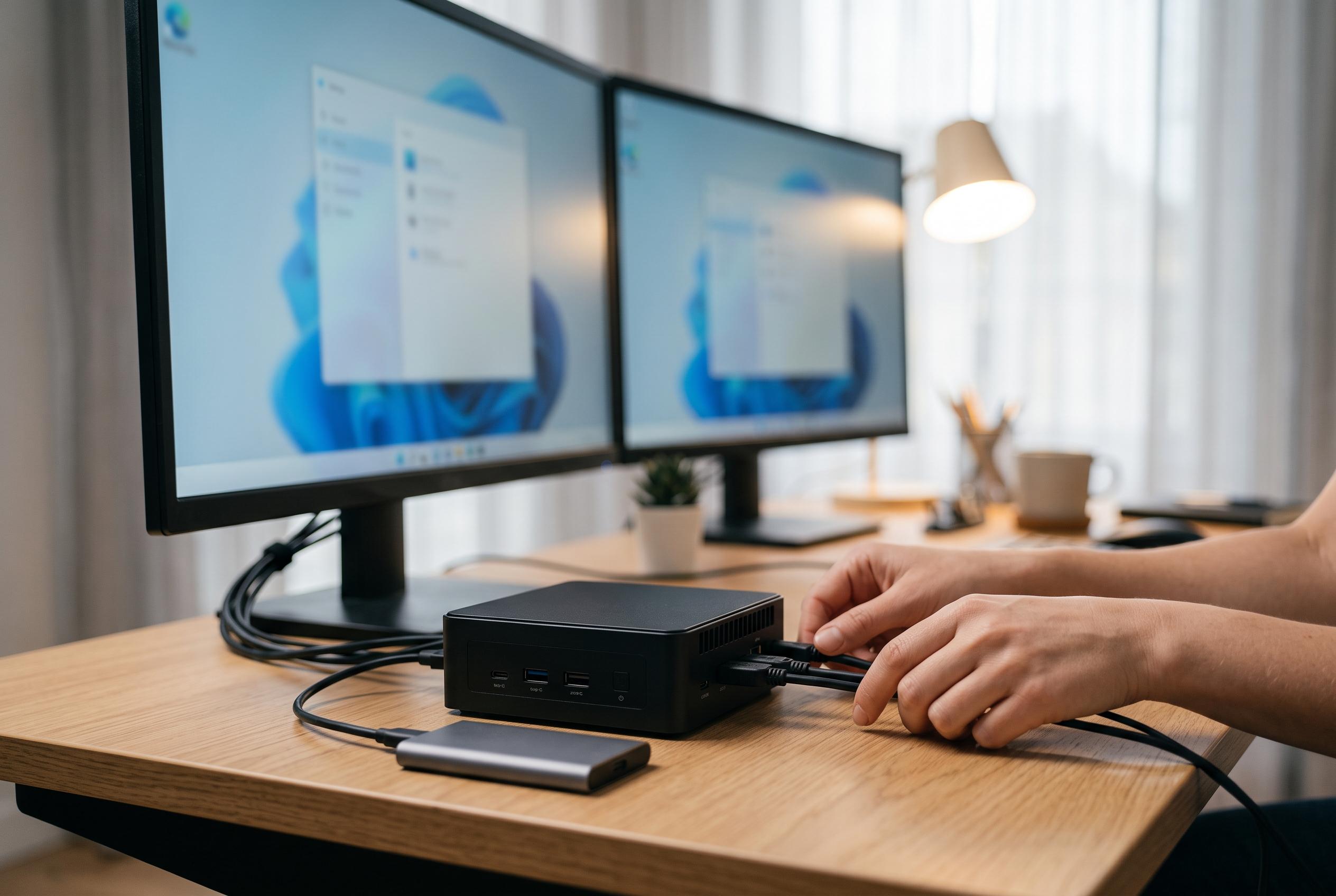

The Acemagic K1 presents a budget-friendly, compact Windows 11 device with broad ports and multi-monitor support, but with minimal room for future upgrades and modest performance geared towards productivity.
The Acemagic K1 is built around a matte plastic shell rather than a metal chassis, but the finish is tidy and the fit is consistent. PCWorld’s review noted even panel gaps, no sharp edges and only a minimal amount of branding. The layout is practical for a compact desktop: the front carries USB-C, two USB-A ports, a 3.5mm audio jack and the power button, while the rear adds HDMI, DisplayPort, Gigabit Ethernet, four more USB-A ports and the power input. Manuals and product listings also describe support for up to three 4K displays, making the K1 easy to slot into a multi-monitor office setup.
Inside, the test model used AMD’s Ryzen 5 7530U, a six-core, 12-thread chip from the Zen 3 family with a 15-watt design target. That places the machine firmly in the low-power productivity class rather than the high-performance segment. Integrated Radeon graphics are sufficient for office work, web use, video playback and light image editing, but not for demanding games or heavier creative workloads. Comparable budget mini PCs reviewed by TechRadar show how much performance can vary in this class depending on the processor and memory configuration.
The K1’s storage and upgrade path are more restrained. PCWorld reported a 512GB SATA SSD, which is slower than NVMe alternatives, and 16GB of soldered memory, so future expansion is limited. Accessing the interior is possible, but it is not especially straightforward, because the rubber feet must be removed before the base can be unscrewed. That fits the broader pattern seen in budget mini PCs: acceptable out-of-box value, but little room for easy hardware changes later.
For everyday use, the K1 appears aimed at buyers who want a small Windows 11 Pro desktop with low idle power draw, broad connectivity and a VESA mount for flexible placement. It is not a machine for graphics-heavy work, but it does offer enough ports and display outputs for a tidy office build. Acemagic’s newer showcase systems, by contrast, point to a much more ambitious direction, with retro-inspired shells hiding Ryzen AI and Intel Panther Lake-class hardware, dual NVMe support and faster wireless standards. The K1 remains the simpler, cheaper side of that portfolio.
Disclaimer: This content is intended for informational purposes only. Readers are advised to exercise their own judgement, conduct due diligence, or consult a qualified expert before acting on any information provided.