

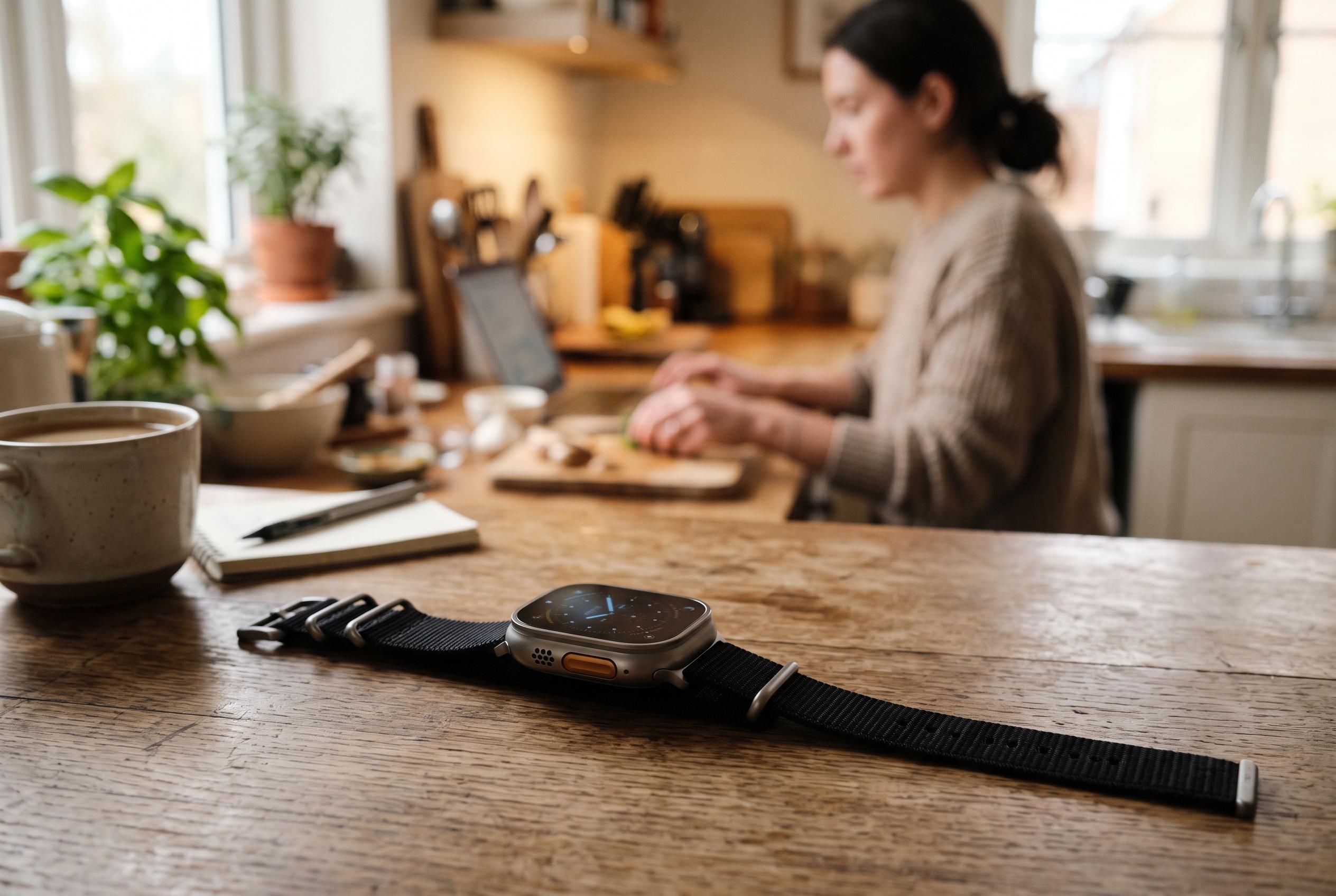

With a titanium case, sapphire glass and battery life measured in days rather than hours, Amazfit’s Balance Ultra is taking aim at Google and Samsung’s Wear OS dominance.
Amazfit’s Balance Ultra has emerged as one of the more striking alternatives in the Android smartwatch market, and one Android Authority writer argues it has become the most impressive watch he has worn in 2026. The broader context matters: for years, Google and Samsung have dominated attention in Wear OS circles, but Amazfit is now pushing harder into premium territory with hardware that is designed to compete on endurance, durability and fitness depth rather than app breadth alone. Notebookcheck and Amazfit’s own product information describe the Balance Ultra as a titanium-cased model with sapphire crystal protection, a 1.5-inch AMOLED display and a price of $599.99.
What sets the watch apart is its unusually assertive industrial design. The case uses Grade 5 titanium, adds a sapphire crystal display cover and includes a rotating crown, five physical buttons and an LED torch, giving it a more functional, tool-like feel than many mainstream smartwatches. According to Amazfit, the screen reaches up to 3,000 nits of peak brightness, which should help visibility outdoors, while the choice of black and black-brown finishes reinforces the device’s rugged positioning. That design language is not subtle, but it is clearly intentional.
Battery life is the feature that most strongly separates the Balance Ultra from the best-known Wear OS rivals. Amazfit says the 780mAh battery can last up to 30 days under typical use, and Android Authority’s hands-on account says the watch comfortably delivers more than a week and, in the writer’s case, around 10 days or more between charges even with GPS workouts, sleep tracking and always-on display use. That stands in sharp contrast to the far more frequent charging routine associated with flagship Wear OS watches from Google and Samsung, which the writer says remain excellent but less convenient for his own habits.
The Balance Ultra also aims to appeal to serious fitness users. Amazfit and Notebookcheck say it supports more than 180 workout modes, including dive support, advanced GPS, contactless payments through Zepp Pay, and health monitoring via the BioTracker 6.0 PPG sensor for pulse, blood oxygen, stress and skin temperature. Android Authority says the watch performs well for running and strength training, with buttons that are especially useful mid-workout and training metrics that include pace, stability and recovery-style readiness information. That puts it closer in spirit to Garmin than to a typical lifestyle smartwatch, even if the software approach differs.
That difference in software is central to the appeal. The watch runs Zepp OS rather than Wear OS, which means fewer third-party apps, no Gemini integration and no media downloads from Spotify or YouTube Music. Yet Android Authority argues that the trade-off is worthwhile because Zepp OS feels faster and easier to live with than Garmin’s more dated interface, while the Zepp companion app is presented as more straightforward than Garmin Connect. The result is a watch that may not satisfy users who prioritise app ecosystems, but could be highly persuasive for those who mainly want robust fitness tracking, good hardware and long battery life in one package.
Disclaimer: This content is intended for informational purposes only. Readers are advised to exercise their own judgement, conduct due diligence, or consult a qualified expert before acting on any information provided.



