

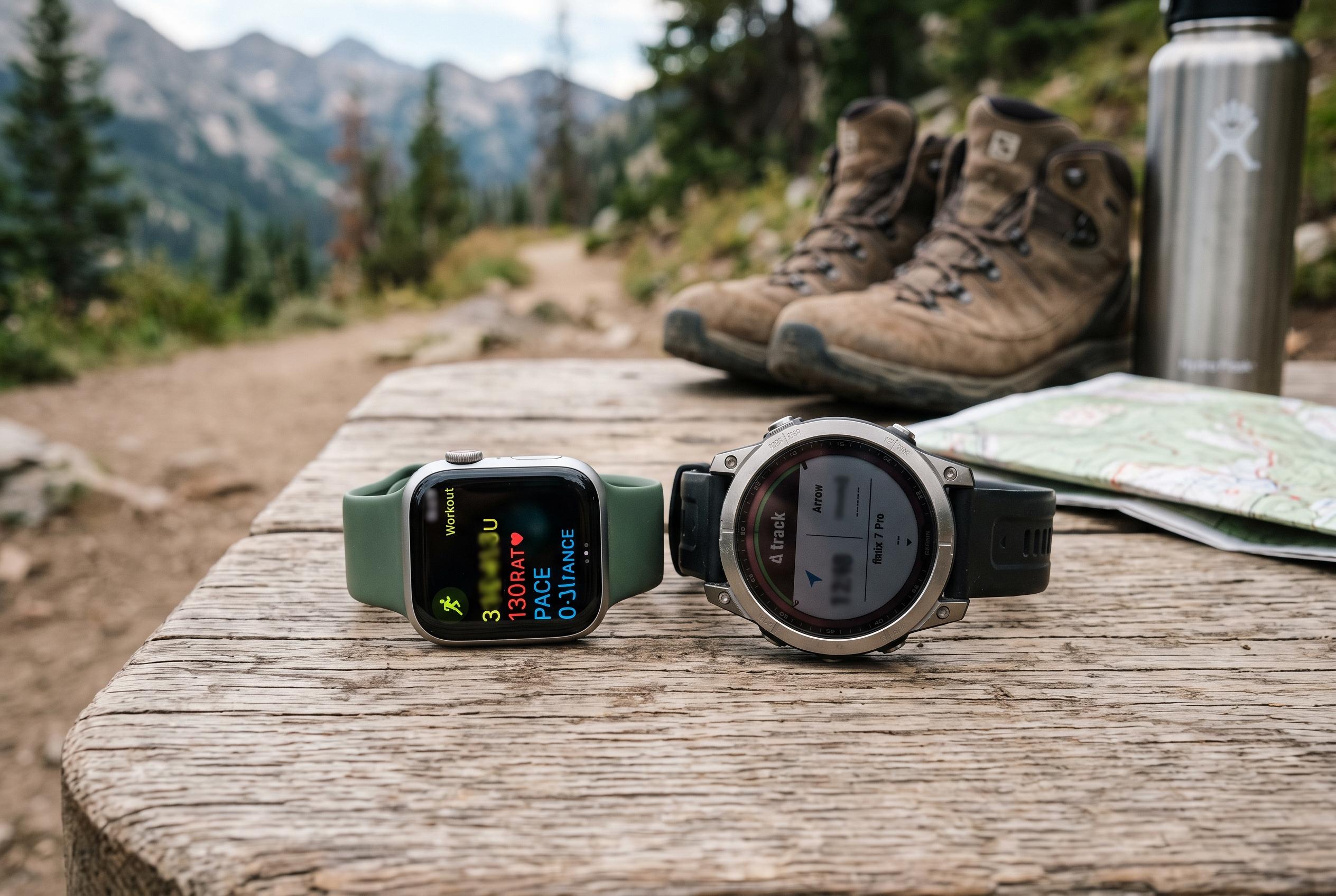

The Apple Watch Ultra 4 offers broader apps and smarter health features, but Garmin’s Fenix 9 Pro remains the stronger choice for battery life, navigation and built-in training.
The market for wearables has widened into a crowded field, but two of the most capable outdoor watches at the premium end remain the Apple Watch Ultra 4 and the Garmin Fenix 9 Pro. Both are built for demanding users, both offer cellular and satellite connectivity for use beyond mobile coverage, and both include safety functions designed to summon help after a fall or other emergency. In practice, they are aimed at similar conditions but very different kinds of wearer. According to ZDNet’s hands-on assessment, the Apple model leans towards smartphone-like versatility, while Garmin remains the more specialised training device.
Battery life is the clearest dividing line. ZDNet says the Apple Watch Ultra 4 now stretches to roughly three days in typical use, which is a clear improvement over earlier generations. Garmin, however, still operates on a different scale, with endurance measured in days and weeks rather than hours. Spec comparisons published by other reviewers put the Apple Watch Ultra 4 at up to 50 hours in normal use, or around 84 hours in low-power mode, while Garmin’s range is positioned at the top end of the premium sports-watch market. For people planning long expeditions, multi-day trips or simply wanting to avoid charging anxiety, the Garmin has the stronger case.
For training, Garmin still has the advantage in built-in sports guidance. ZDNet highlights the Fenix 9 Pro’s daily workout suggestions, configurable training targets and broad catalogue of on-device activity tools for running, cycling, hiking, golf, skiing and fishing. Those functions reduce the need for third-party software in many sports, which is part of Garmin’s appeal for endurance athletes and outdoors users. Tom’s Guide notes that both watches support LTE and satellite connectivity, but Garmin’s software approach remains more self-contained, with a narrower app ecosystem than Apple’s.
Apple’s strength lies elsewhere: in software breadth. ZDNet argues that the Ultra 4 is the better choice for users who want a large selection of third-party apps on the wrist, particularly for travel, productivity and sport-specific tools not covered by Apple’s own workout system. That includes specialist applications for golf, skiing and angling, alongside a wider range of messaging and utility software. The same review says Apple has also significantly improved its health interface, making its wellness data easier to interpret through clearer sections for sleep, readiness, fitness, cardiac signals and longevity.
Another practical distinction is hardware design. Garmin’s integrated LED torch remains one of its standout features, with white, red and green light modes and activity-linked behaviour that can serve as a safety aid in low light. ZDNet treats that as more than a novelty, especially for runners in darker months. By contrast, the Apple Watch Ultra 4’s case for selection rests on its broader ecosystem, stronger smart-watch feel and more ambitious on-device intelligence. TechRadar’s testing also suggests that both watches can be highly accurate for heart-rate monitoring, which means the decision comes down less to sensor quality than to whether the buyer values endurance and built-in coaching or app depth and a more general-purpose experience.
In ZDNet’s view, the Garmin Fenix 9 Pro remains the better pick for people who prioritise battery life, outdoor navigation and integrated training tools. The Apple Watch Ultra 4 is the stronger option for users who want a more versatile smart watch, richer app support and a clearer health dashboard, even if that means charging more often. Price may also matter: one comparison puts the Apple model at $799, while the Garmin sits at $1,100, reinforcing the idea that these are premium watches aimed at different priorities rather than direct substitutes.
Disclaimer: This content is intended for informational purposes only. Readers are advised to exercise their own judgement, conduct due diligence, or consult a qualified expert before acting on any information provided.



