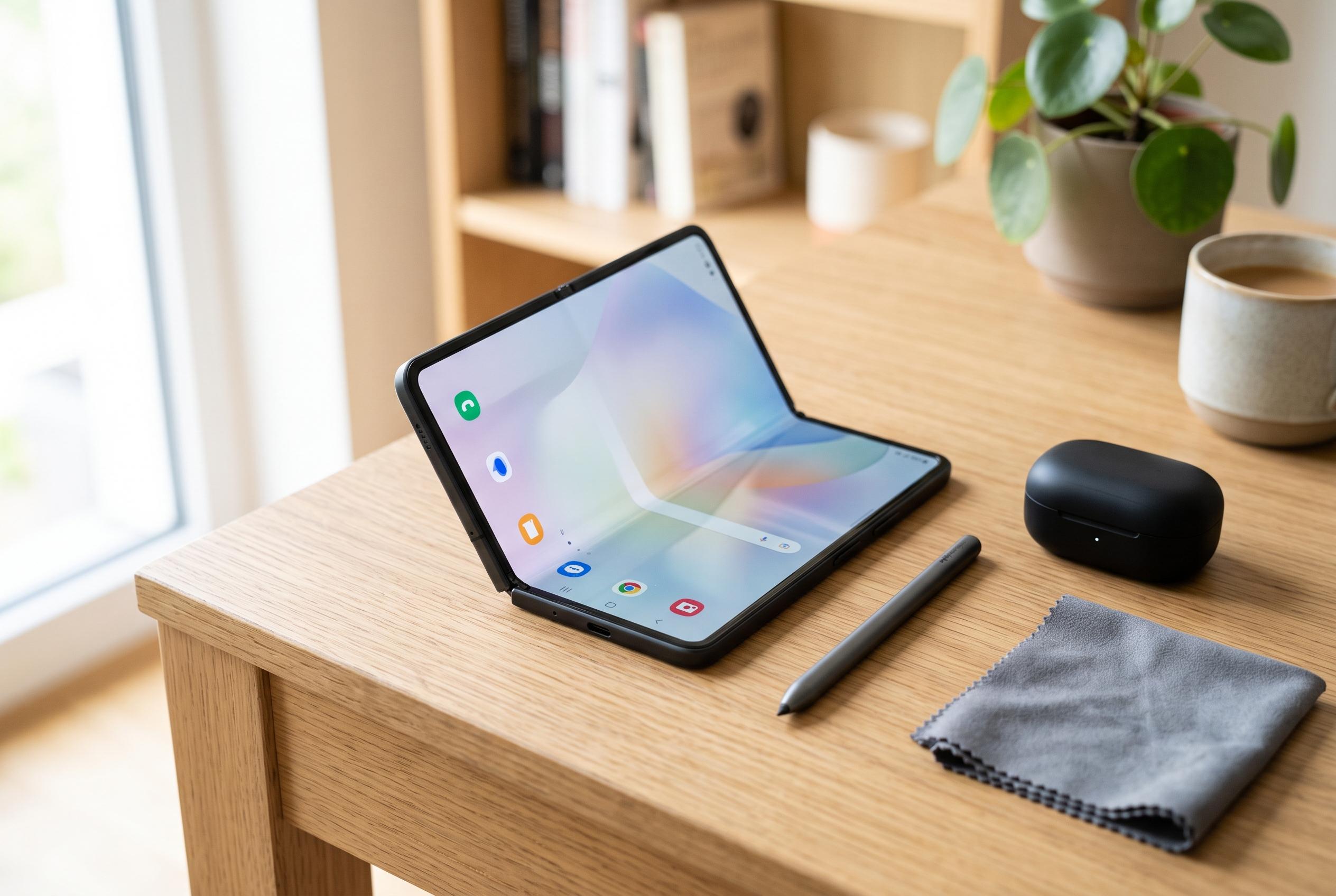

Apple’s foldable iPhone impresses when opened, with a light, glare-resistant display and intuitive multitasking, but its cramped folded design and missing Face ID make everyday use a struggle.
Apple’s latest foldable iPhone is, in essence, two very different devices bound together by a hinge. In practice, that means a compromise-rich handset that is awkward as a phone when shut, yet unusually impressive as a compact tablet when opened. The central question is not whether the design is clever; it is whether the trade-offs are acceptable enough for everyday use.
The closed form factor is the biggest weakness. Folded, the device is thicker and heavier than a conventional iPhone, and its narrower outer screen makes routine tasks feel cramped. App controls are pushed to awkward positions, the navigation model feels off-balance, and even basic interactions such as reaching for the back button or docked apps can feel unfamiliar. The review argues that these are not minor irritations but structural limits of the design, and that some of them are inherent to folding hardware rather than merely the result of first-generation implementation.
Opened up, however, the device becomes far more persuasive. The larger internal display is described as light in the hand, excellent for reading and well suited to video and split-screen multitasking. The article says Apple has finally found an intuitive way to do side-by-side app use, in contrast to the more awkward multitasking systems that have long frustrated iPad users. It also praises the matte display finish, which reduces glare and makes the screen feel unusually pleasant for prolonged use.
Even so, the review is deeply critical of the authentication system. The absence of Face ID is presented as the most serious flaw, with Touch ID on the side button described as slower and more intrusive in daily use. The piece notes that Apple has leaned on Apple Watch unlocking as a workaround, but argues that this only shifts the inconvenience rather than removing it. For users who do not wear an Apple Watch constantly, the article suggests that repeated unlocking will quickly become tiresome.
There are also practical complaints about the camera orientation, button placement and app compatibility. The camera arrangement is said to make framing awkward depending on whether the device is open or closed, while the physical controls can be accidentally triggered during folding. Older or unoptimised apps are another problem, often appearing as scaled-up iPhone interfaces rather than properly adapted software. According to the review, the experience improves markedly only once developers update their apps for the new display behaviour.
The article’s overall judgement is measured but clear: the device is an impressive engineering exercise, yet not a fully convincing replacement for a standard iPhone. It is portrayed as an unusually refined prototype rather than a finished product, with a superb tablet experience trapped inside a phone that remains uncomfortable to use in its folded state. For readers who want a pocketable mini-tablet and are prepared to tolerate its compromises, it may be compelling. For those who rely on their iPhone constantly throughout the day, the trade-offs may simply be too much.
Disclaimer: This content is intended for informational purposes only. Readers are advised to exercise their own judgement, conduct due diligence, or consult a qualified expert before acting on any information provided.