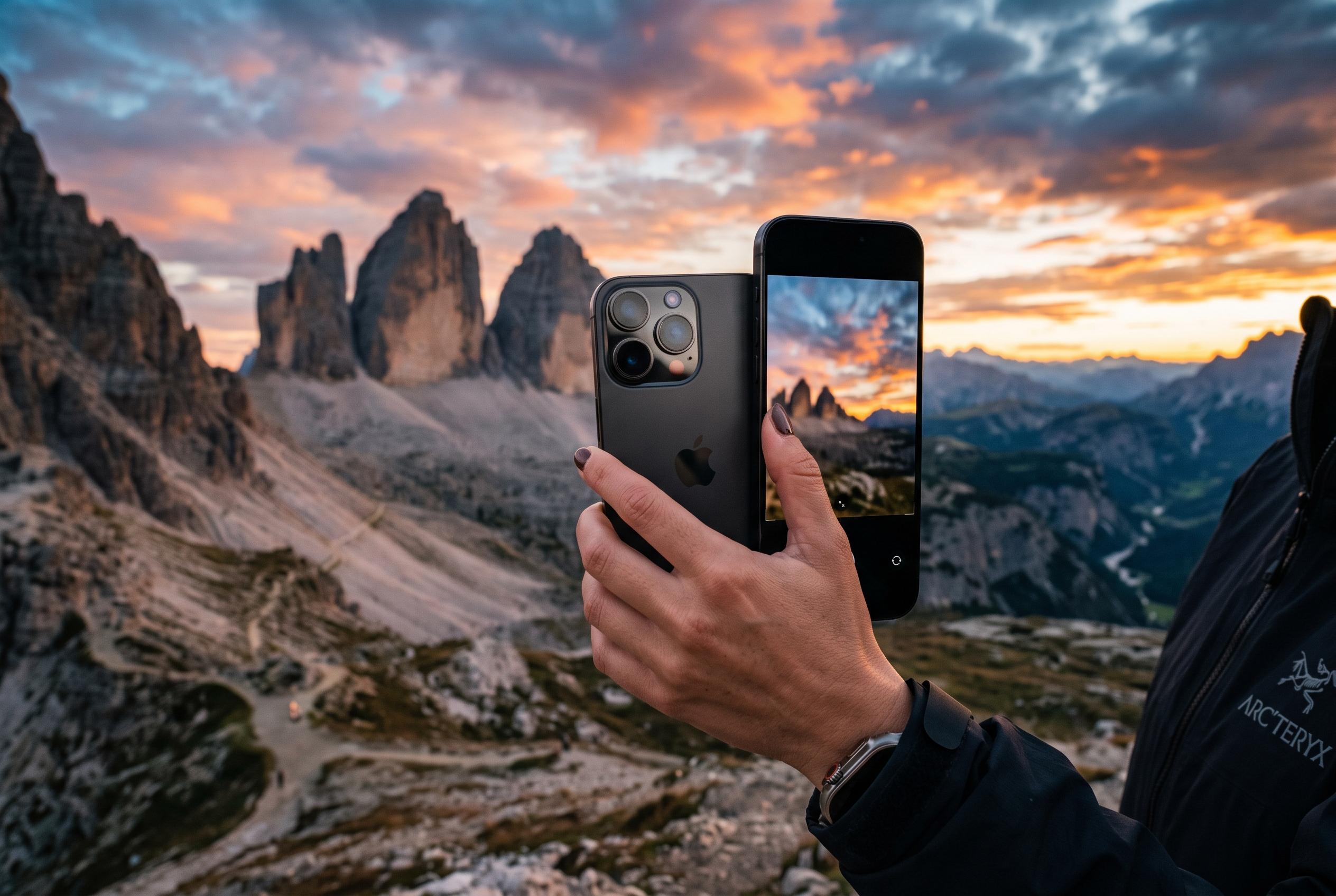

Austin Mann’s latest field test reveals how Apple’s innovative variable aperture system enhances photography in demanding outdoor conditions, offering users greater control and image quality.
Austin Mann has published his latest iPhone camera field test after spending a week with the iPhone 18 Pro at Dunton River Camp in south-west Colorado. His review focuses on Apple’s new variable aperture system, Pro Controls, Focus Tracking, Photographic Styles 3, Reference Image and 4K time-lapse, with sample images and video taken in demanding outdoor conditions. According to the published review, the test is intended to show how the phone performs in real use rather than in controlled studio shooting.
The variable aperture is the headline hardware change. Apple’s system lets the main camera move between four aperture settings, from f/1.48 to f/4, using a mechanical blade assembly rather than software simulation. Mann says the feature is best left in Auto for most situations, noting that it opened wide indoors and stopped down outdoors when more depth of field was useful. In low light, he found the wider setting especially effective, and he also preferred the starburst effect at f/1.8 when shooting into the sun because it comes from the lens itself rather than an applied filter.
Mann also highlighted gains for photographers who want more direct control. With focus peaking in Apple’s Camera app, he was able to set focus manually and adjust exposure separately, which helped when autofocus locked on to glass instead of the subject. Pro Controls, meanwhile, let him create motion blur without a third-party app, including a waterfall shot at 1/15 second and a panning image of riders at 1/60. Focus Tracking proved useful for close subjects moving in and out of a shallow focus plane, while the new Film texture and grain options in Photographic Styles 3 gave him a route towards a more analogue look.
Another addition, Reference Image, has its own Camera mode and works on the main camera at 1x and 2x, but not on the ultrawide or telephoto ranges. Mann says the key distinction appears to be that the file is signed, which he compares to an original document carrying a notary mark. He also notes that time-lapse has moved to 4K, matching the resolution of his review footage and making it possible to extract a high-resolution frame from a scene after the light improved. More broadly, the camera layout remains unchanged from the previous Pro model, something Mann regards as a positive after Apple’s recent shifts between telephoto focal lengths.
Disclaimer: This content is intended for informational purposes only. Readers are advised to exercise their own judgement, conduct due diligence, or consult a qualified expert before acting on any information provided.