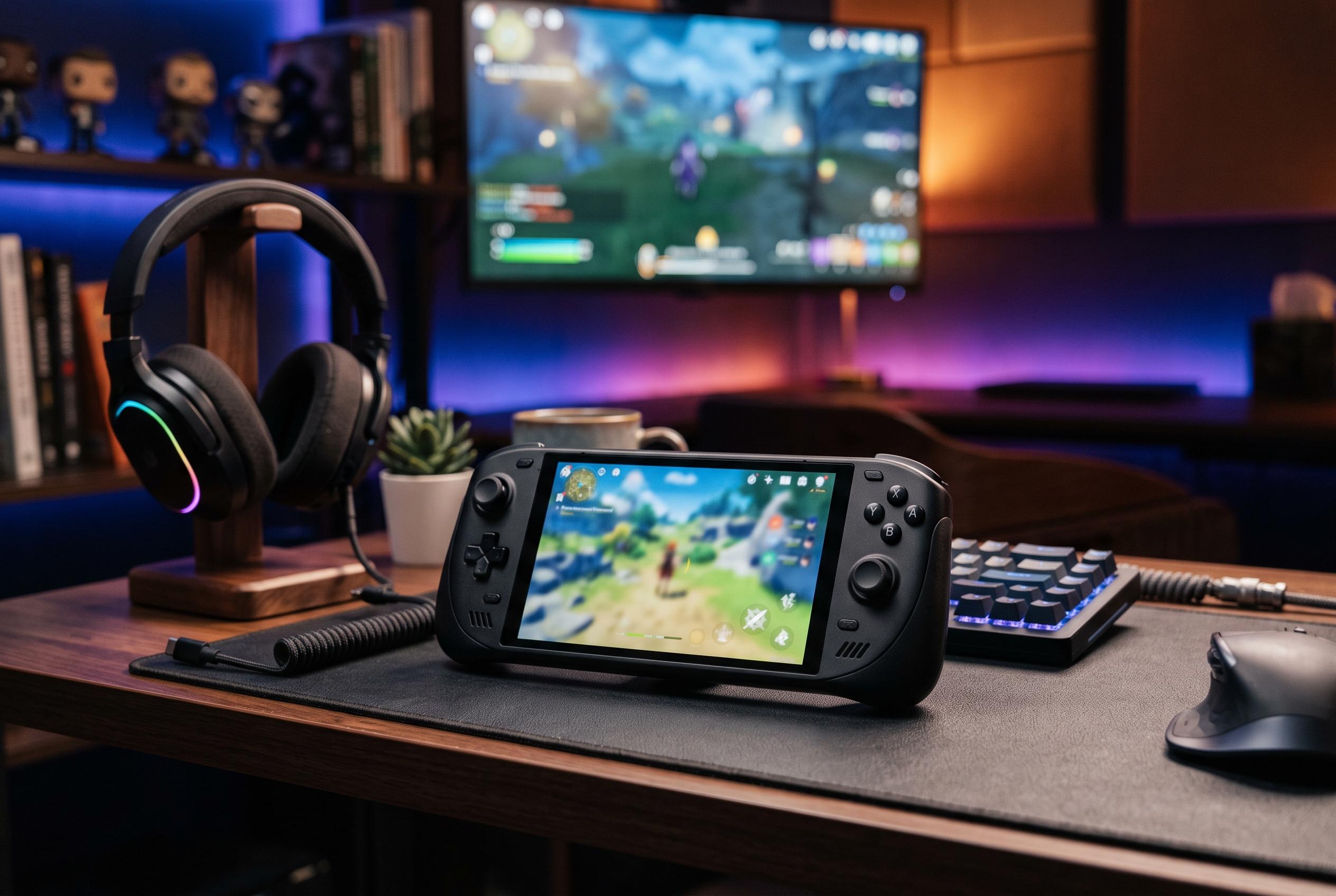

A SteamOS installation gives ASUS’s limited-edition ROG Ally X20 a lighter, more console-like gaming experience, but missing drivers and unfinished features keep it from feeling like a polished alternative to Windows.
ETA Prime has shown that ASUS’s limited-edition ROG Ally X20 can boot into SteamOS after replacing the factory Windows installation, turning the handheld into a Linux-based gaming machine rather than a conventional PC handheld. The appeal is clear: SteamOS brings Valve’s streamlined gaming interface, Proton compatibility for many Windows titles and a software environment that is often lighter than Windows on portable hardware. But the experiment also underlines how much work remains before the experience feels complete, particularly when it comes to drivers, audio and power management.
The hardware itself gives SteamOS a strong foundation. According to PC Gamer, the X20 is built around a 7.4-inch OLED panel with a 120Hz refresh rate and peak brightness of 1,400 nits, alongside AMD’s Ryzen AI Z2 Extreme processor, 24GB of LPDDR5X memory and a 1TB PCIe 4.0 SSD. Windows Central has also reported that the device uses an 80Wh battery and a translucent black shell with gold accents, marking it out as a collector-focused model rather than a standard retail revision. PC Gamer’s comparison with the earlier Ally X suggests that the X20’s main gains are in display quality, thermals and ergonomics, while raw performance remains broadly similar.
In ETA Prime’s testing, SteamOS ran a mix of demanding and lighter games at acceptable settings, helped by manual thermal design power adjustments. That matters because handheld performance is highly dependent on power limits rather than specifications alone. The report described playable results in titles such as Cyberpunk 2077 and Red Dead Redemption 2, with the more demanding games requiring reduced settings and lower frame targets. PCGamesN has similarly noted that SteamOS 3.8 can run surprisingly well on an Asus Ally-class handheld, although some quirks remain, reinforcing the idea that the software is usable but still imperfect outside Valve’s own hardware.
Battery life on the X20 appears to scale in the expected way with power draw. ETA Prime’s tests suggest around eight hours for light 2D or indie games at 6W to 8W, roughly three hours for mid-range titles at about 17W, and a little over two hours for AAA games at 25W. That range is credible for a handheld with an 80Wh battery and highlights one of SteamOS’s practical advantages: users can trade performance for endurance more directly than they often can on Windows. However, the same flexibility also depends on third-party tools, such as Decky-based TDP controls, which adds another layer of setup for users who want the best results.
The limitations are still significant. ETA Prime said audio configuration required a workaround, while docked operation, RGB control and a dedicated quick-menu button were not fully supported. PC Gamer’s verdict on the X20 also points to a broader question: even if the screen, cooling and materials are improved, the device may not justify the upgrade for existing owners unless those enhancements matter personally. Tom’s Guide’s current handheld rankings likewise show that buyers now have several credible alternatives, from the Steam Deck OLED to newer Windows-based models and Linux-capable rivals. For now, the X20 running SteamOS looks less like a finished product and more like a convincing demonstration of where handheld gaming could go once software support catches up with premium hardware.
Disclaimer: This content is intended for informational purposes only. Readers are advised to exercise their own judgement, conduct due diligence, or consult a qualified expert before acting on any information provided.