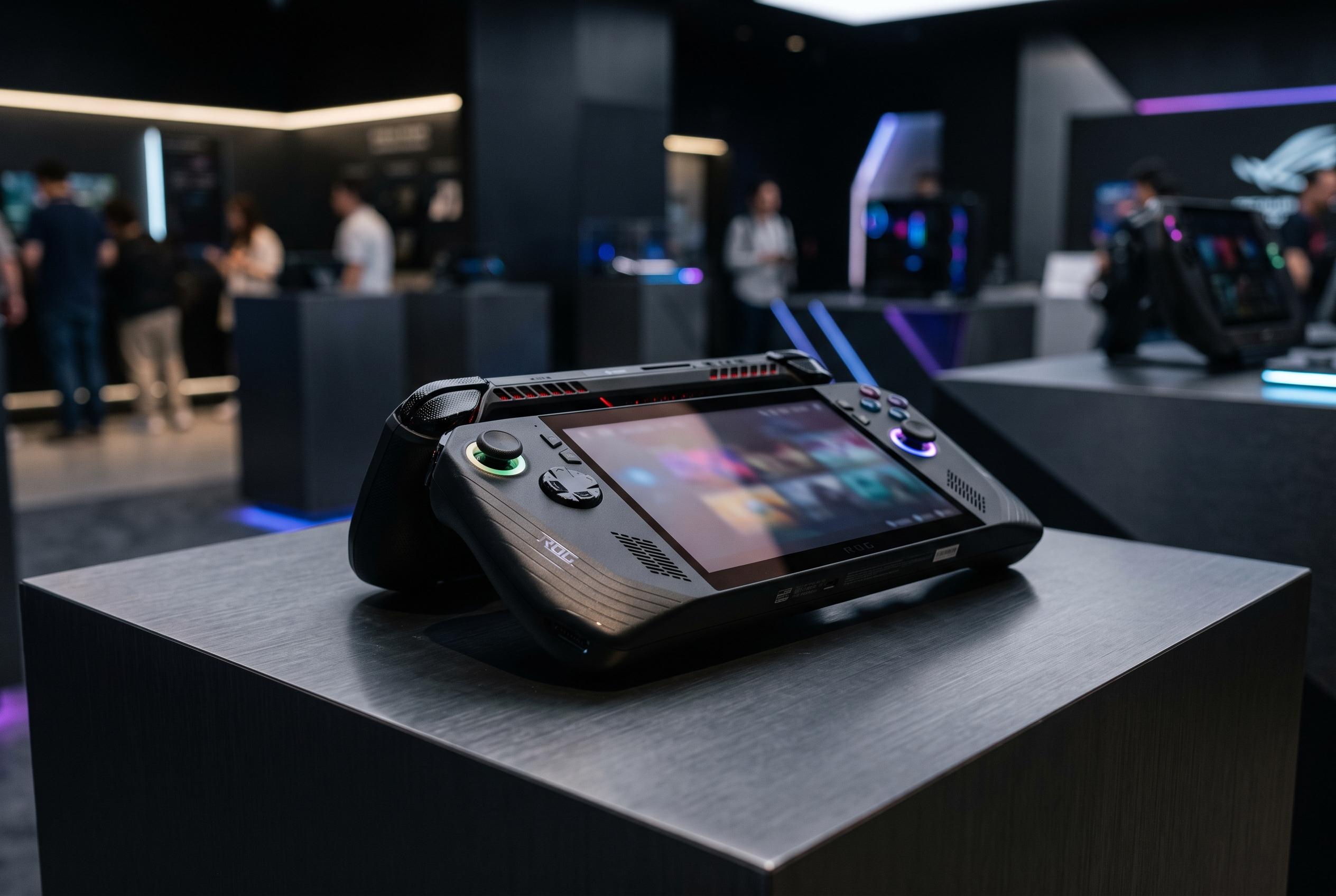

The Asus ROG Xbox Ally X20, showcased at Gamescom 2026, features a significant hardware upgrade in theory but faces practical constraints due to power, heat, and memory bandwidth limitations, making it more an iterative refresh than a revolutionary leap in portable gaming technology.
After a hands-on session at Gamescom 2026, the Asus ROG Xbox Ally X20 looked like a more polished handheld rather than a clear generational leap. Asus has paired the device with AMD’s Ryzen AI Z2 Extreme, a chip that combines Zen 5 and Zen 5c CPU cores, 16 RDNA 3.5 graphics compute units and a 50 TOPS XDNA NPU, with support for LPDDR5X-8000 memory and a 15W to 35W operating range. On paper, that is a substantial specification jump for a portable PC. In practice, the gains appear constrained by the same limits that have shaped handheld gaming for years: power draw, heat and memory bandwidth. (rog.asus.com)
Those limits are especially visible at the lower power settings that matter most for portable use. Benchmarks reported by PC Gamer and Notebookcheck indicate that the Z2 Extreme does improve results in some cases, but the uplift is often modest when the chip is held to handheld-friendly power levels, with memory bandwidth repeatedly identified as a constraint on its graphics performance. That matches the broader impression from the Gamescom demo: the silicon can scale when given more wattage, but the improvements are harder to notice once the device is unplugged and operating within the narrow thermal envelope that defines the category. (pcgamer.com)
The handheld itself remains the stronger part of the package. Asus says the X20 uses an OLED display and an improved cooling design, and its official materials position the machine as a premium portable Windows gaming PC with 24GB of memory and the Z2 Extreme at its core. That screen should be a meaningful upgrade for contrast and motion clarity, but it also increases the demand on the already power-limited APU. In other words, the better the panel becomes, the more obvious it is when the chip cannot sustain the frame rates needed to make full use of it. (rog.asus.com)
The result is a device that seems most convincing as an iterative refresh, not a reason for owners of recent handhelds to upgrade immediately. AMD presented the Z2 family as a step towards desktop-like performance in portable form, yet the current generation still appears hemmed in by the same practical ceiling: a shared memory system, limited battery headroom and Windows overhead that hardware alone cannot remove. For users with older hardware, the X20 may still feel like a meaningful step forward. For anyone already carrying a modern ROG Ally or Steam Deck OLED, it looks more like refinement than reinvention. (ir.amd.com)
Disclaimer: This content is intended for informational purposes only. Readers are advised to exercise their own judgement, conduct due diligence, or consult a qualified expert before acting on any information provided.