

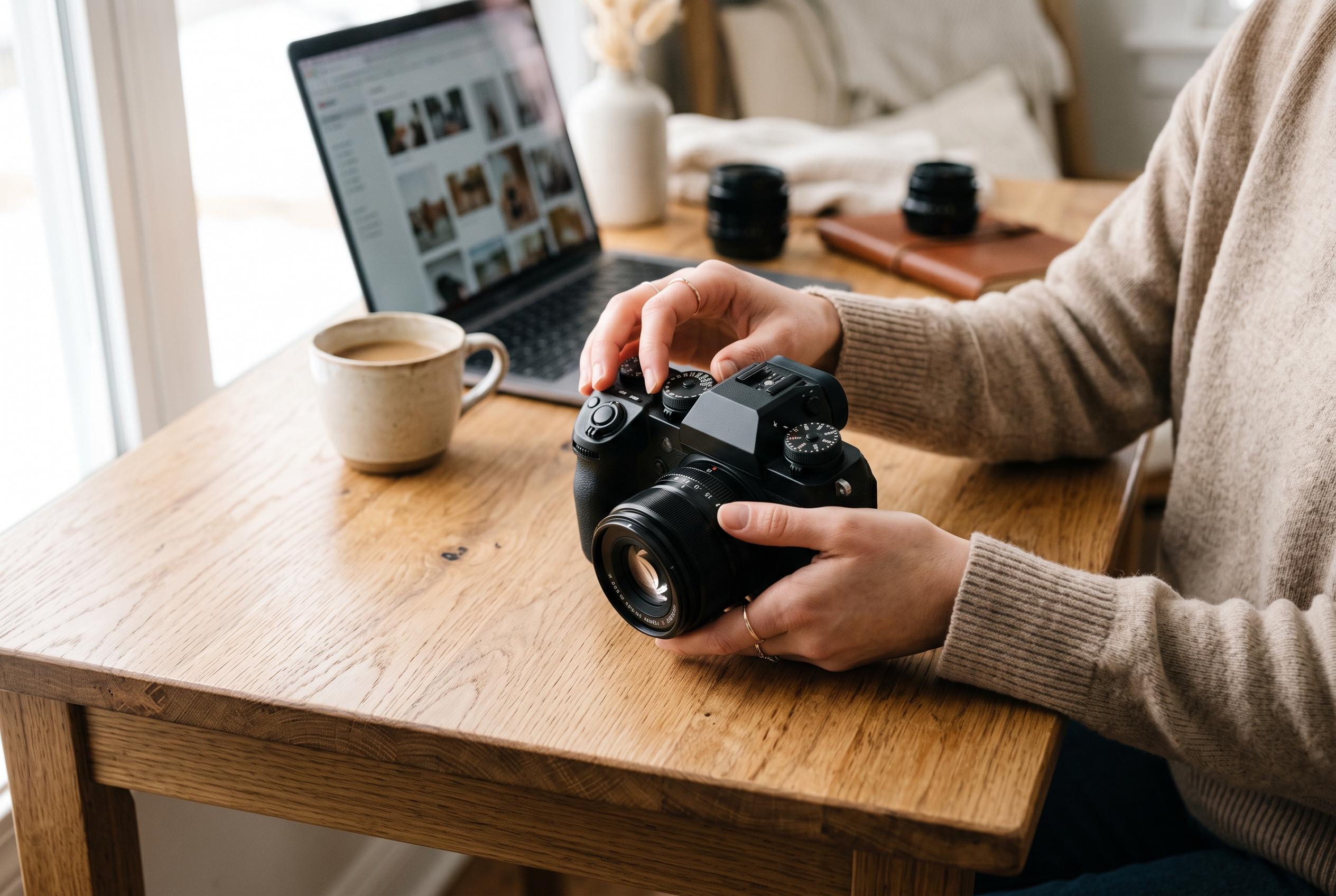

Canon, Sony, Panasonic and Nikon are competing to make full-frame performance easier to carry, with buyers increasingly choosing between autofocus, stabilisation, video features and handling rather than sensor size alone.
The market for compact full-frame mirrorless cameras has become crowded enough that the real question is no longer whether a small body can deliver serious image quality, but which compromises a buyer is prepared to accept. For photographers who want to shoot at night without carrying a heavy kit, the balance between portability, autofocus, stabilisation and high-ISO performance now matters as much as sensor size. That shift is reflected in recent sales data from Japanese retailer Kitamura, which showed Sony’s A7C II leading mirrorless sales in September 2026, with Canon’s EOS R8 Mark II also among the stronger performers. The wider trend suggests that many buyers are prioritising compact bodies with advanced features rather than the largest or most traditional designs.
Among the current options, Canon’s EOS R8 Mark II stands out for combining a 24.2-megapixel full-frame sensor with a DIGIC X processor, in-body image stabilisation and a noticeably more usable control layout than its predecessor. Digital Camera World’s hands-on review noted that the camera keeps the same sensor but improves handling, autofocus and burst performance, including a faster buffer and up to 40 frames per second shooting. Canon also retains uncropped 4K recording at up to 60p and Full HD at 180fps, making the body more versatile for creators who move between stills and video. At 546g, it remains light enough to carry daily, while the addition of a joystick and improved grip makes it easier to operate in fast-moving situations.
Sony’s A7C II takes a different route. Rather than chasing a more overtly styled body, it focuses on keeping the system small while offering a higher-resolution 33-megapixel sensor and the autofocus performance that has become a Sony strength. According to Digital Camera World, it is still one of the best choices for creators who want a very compact full-frame camera without giving up premium features. Its rangefinder-style electronic viewfinder and strong hybrid stills-and-video specification make it especially appealing to users who want one camera for travel, street work and content production. The retailer data also underlines its appeal: despite newer entrants and growing competition, the A7C II remained the top-selling mirrorless model in Kitamura’s September rankings.
Panasonic’s Lumix S9 addresses the same portability problem from a more video-led angle. By removing the viewfinder and flattening the body, Panasonic has made the camera easier to carry and simpler to use as a screen-first tool for vlogging and casual shooting. Its appeal lies less in traditional stills ergonomics and more in colour output, stabilisation and ease of use for creators who prioritise quick, attractive footage. That approach appears to be resonating with buyers who want a camera that feels closer to a dedicated content tool than a classic stills machine.
Nikon’s compact full-frame Z5IIC, announced for launch on 15 October 2026, adds another option to this increasingly competitive segment. T3 reported that the model uses a 24.5-megapixel FX sensor with the EXPEED 7 processor, omits a built-in viewfinder to preserve its small footprint, and includes a vari-angle screen, weather sealing and 7.5-stop in-body stabilisation. Nikon also claims subject recognition for people, animals and fish, plus 4K video at 60fps with N-RAW support. With prices starting at £1,349 in body-only form, it is clearly aimed at creators who want more control than a smartphone can offer, but in a body that remains practical to carry.
Taken together, the latest generation of compact full-frame cameras shows that light weight no longer has to mean a stripped-down experience. The Canon EOS R8 Mark II is the most obvious fit for users who want strong burst shooting, useful stabilisation and solid low-light performance in a small body. The Sony A7C II remains the broadest all-round option for hybrid creators, while the Panasonic S9 and Nikon Z5IIC target users with more specific priorities around video, screen-based shooting and simplified portability. The best choice now depends less on sensor format alone than on how each camera fits the way it will actually be used in the dark, on the move and in everyday life.
Disclaimer: This content is intended for informational purposes only. Readers are advised to exercise their own judgement, conduct due diligence, or consult a qualified expert before acting on any information provided.



