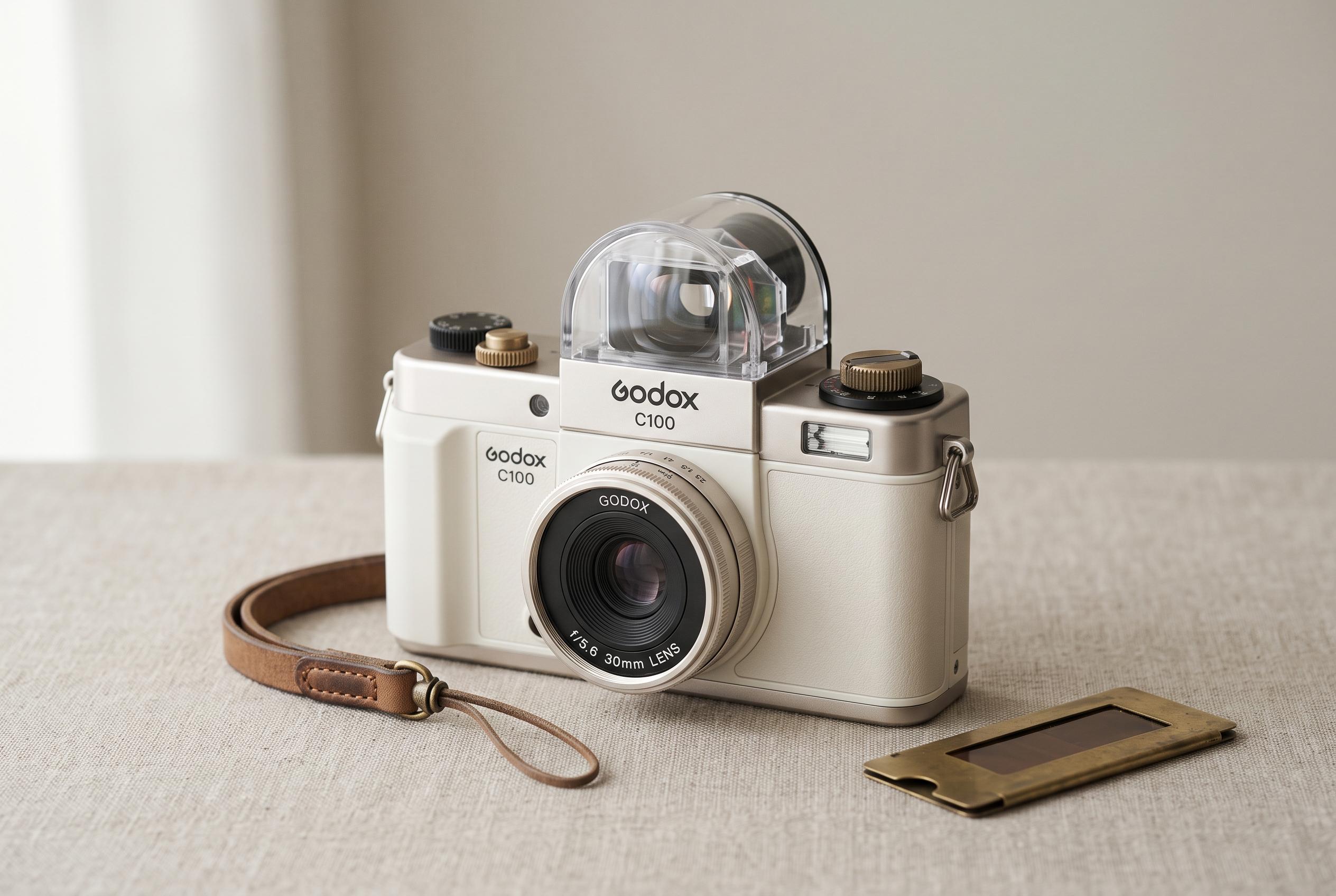

Godox’s new C100 camera enters a market nostalgic for inexpensive, low-resolution devices, blending retro aesthetics with a minimalist transparent viewfinder, though with notable practical compromises for casual shooters and film enthusiasts alike.
Godox’s C100 arrives in a market that has rediscovered the appeal of cheap, low-resolution digital cameras. As Reuters-style product coverage would note, that trend has been helped by the rise of novelty compact cameras that prioritise character over precision. The C100 fits that movement neatly, but it is also a reminder that novelty and practicality are not the same thing. The camera is being sold in the United States for $44.90 and in the UK for £39, with a microSD card required separately.
The design is the C100’s main selling point. Godox has built a tiny white plastic body that looks more like a retro gadget than a conventional camera, with a transparent viewing area in place of a normal rear display. The company says that display overlays only the most essential information, including framing guides, exposure data and battery status, while still letting the user see the scene directly. That approach is meant to make shooting feel more immediate and less menu-driven, and it also gives the C100 a strong visual identity.
In use, though, the concept is harder to live with than it first appears. The screenless layout makes framing awkward at arm’s length, and the wide lens means the view seen through the transparent panel does not always match what the sensor records. Godox does provide aspect-ratio guides, including 16:9, 4:3, 3:2 and 1:1, but the lack of a proper preview screen leaves the photographer guessing far more often than a point-and-shoot should. That can be part of the charm for casual snapshots, but it is a real limitation for anyone trying to compose carefully.
The C100’s strongest technical case is its usefulness as a light meter for film photographers. Godox says the camera includes a centre-weighted light meter, a feature that could give it value beyond novelty if it proves accurate in regular use. For analogue shooters, that is the most practical reason to consider it, especially because standalone meters often cost far more than this camera does. The company also says the camera supports instant OTG transfer and expandable storage up to 128GB.
Image quality appears to be very much in line with the broader low-fi digicam trend. Based on sample files reviewed by The Phoblographer, the camera produces 1,920 x 1,080 JPEGs of about 2MB, with limited dynamic range and modest detail. That places it closer to a playful digital toy than a serious creative tool. The appeal is not technical excellence. It is the experience of using a camera that feels deliberately incomplete, which will delight some buyers and frustrate others in equal measure. For anyone seeking dependable framing, clean results or street-photography reliability, a smartphone remains the better choice.
That leaves the C100 in an awkward but not insignificant position. It is easy to see why it has attracted attention: it is affordable, unusual and plainly designed to make photography feel less clinical. But it is also a camera that asks users to accept compromises in exchange for mood and novelty. For film photographers, the light meter may justify the purchase. For everyone else, the C100 is best understood as a deliberately quirky object that happens to take photographs, not as a replacement for a more capable camera.
Disclaimer: This content is intended for informational purposes only. Readers are advised to exercise their own judgement, conduct due diligence, or consult a qualified expert before acting on any information provided.