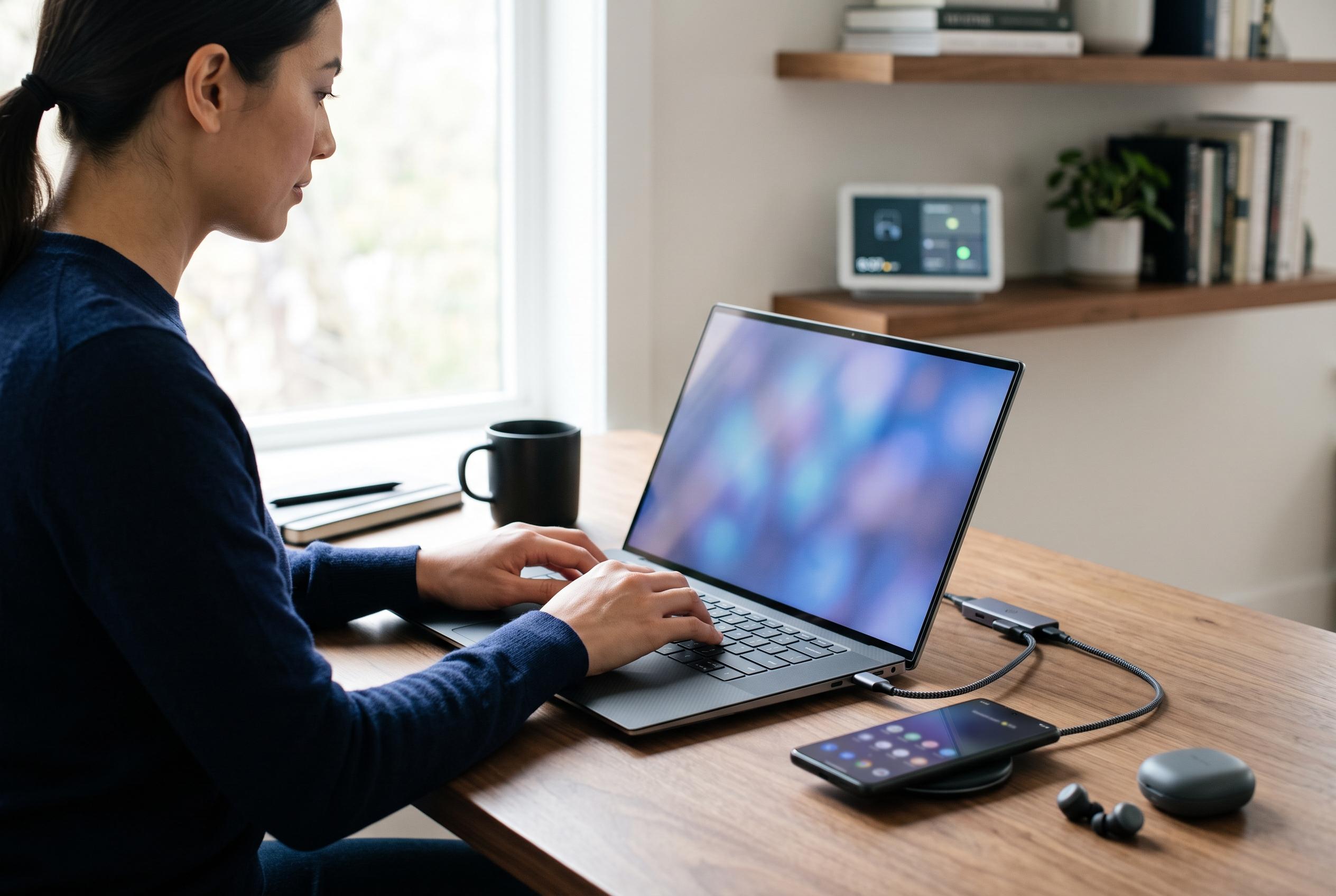

Google has launched its first Googlebook laptops, promising deeper Android-phone integration and a new premium category, but software teething problems and developer support challenges may hinder their success.
Google’s first Googlebook laptops have arrived, and early hands-on impressions suggest the company is trying to build something more ambitious than a ChromeOS refresh. The devices, which went on sale on Sunday, October 4, are pitched as Android laptops with deeper ties to Android phones, and that is where much of their appeal appears to lie. According to The Verge, the strongest impression so far is that the machines still feel close to Chromebooks in everyday use, but with a more obvious effort to make the laptop and phone behave like one system. Industry reporting also indicates that the first wave includes models from Acer, ASUS, Dell, HP and Lenovo, with starting prices from $899, placing them well above the usual Chromebook tier.
The most convincing part of the concept is the Android phone integration. The Verge found setup with an Android handset to be straightforward, beginning with QR-code pairing and a Google account sign-in before offering access to selected phone apps. Once configured, Googlebooks can surface phone notifications, expose phone files inside the laptop’s file manager, and move tasks from phone to laptop with a single action. These are not just cosmetic links. They are designed to keep users working on the laptop while still drawing on the phone as a live extension of the system, a pitch echoed by TechSpot, which said Google is positioning the machines as close companions for Android users.
But the software still looks unfinished. The Verge reported that app casting can be useful, yet also awkward: duplicate app drawers appear, desktop and mobile versions can run at the same time, and some casted apps show softened text or clumsy scaling. Google’s new desktop ratings inside the Play Store are meant to help users sort which apps are suited to larger screens, but The Verge found those labels to be imperfect in practice, with some applications tagged as desktop-friendly despite limited keyboard or mouse support. Similar concerns have surfaced elsewhere. Android Central and Tom’s Hardware both reported that Google has warned of compatibility issues on Intel-powered models because many Android apps were built with ARM architecture in mind, while Qualcomm-based systems are less exposed to that problem.
There is also a hardware flourish called the Glowbar, but it sounds more interesting than it proves to be. The Verge described it as a light strip on the lid that can flash Google colours, indicate battery state and change while speaking to Gemini, but said the effect is largely decorative rather than genuinely useful. A similar light strip on Lenovo’s optional AI Mouse appears to be little more than a configurable RGB accent rather than a meaningful system signal. That leaves the feature feeling like the start of an idea rather than a finished part of the platform.
Underneath the new branding, the core experience still resembles a Chromebook with added Android ambitions. The Verge said Googlebooks are fast and familiar in the same way Chromebooks can be, with the browser still central to the experience and Chrome still lacking some separation between Google accounts that users might expect from Windows or macOS. That continuity may help existing ChromeOS users adapt quickly, but it also means some longstanding quirks remain. App folders and context menus do not always layer cleanly above open windows, and keyboard remapping appears inconsistent on the built-in keyboard, even though external keyboards behave differently. The Verge said those rough edges were visible across multiple devices, suggesting they are software problems rather than isolated faults.
The wider question is whether Google can convince developers to treat Googlebooks as a serious new platform. TechRadar has noted that Google is now trying to define a premium laptop category, not just a cheaper web-first notebook, with hardware and pricing that place these machines closer to ultrabooks than budget Chromebooks. That makes the stakes higher: if app support does not improve, the system risks becoming a niche experiment with appealing ideas and partial execution. For now, the clearest verdict is that Googlebooks can already do some genuinely clever things with an Android phone, but the software still needs polish, consistency and far broader developer support before the category can feel complete.
Disclaimer: This content is intended for informational purposes only. Readers are advised to exercise their own judgement, conduct due diligence, or consult a qualified expert before acting on any information provided.