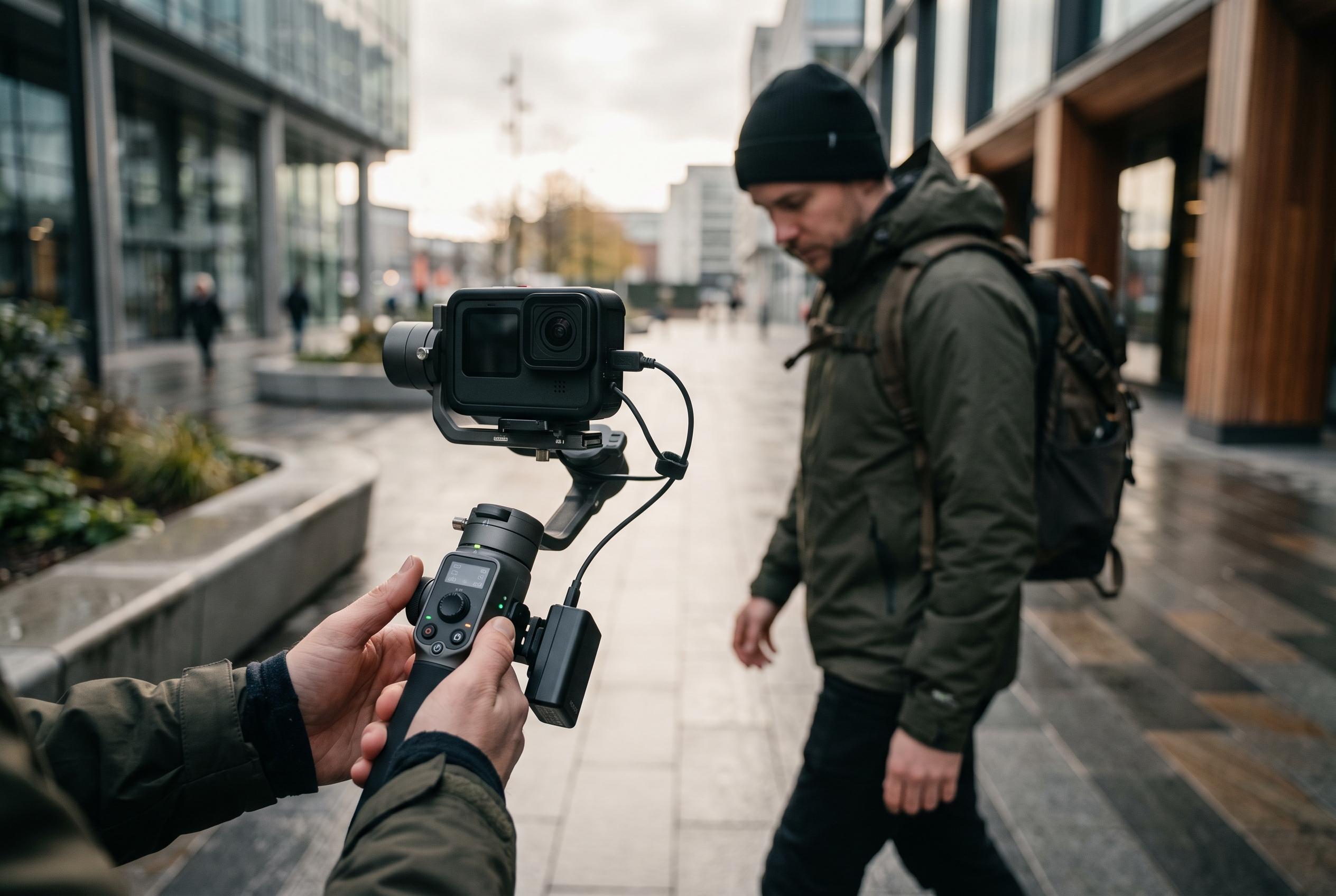

The Hohem iSteady MT3 Pro is set to lead the action-camera stabilisation market in 2026, thanks to its versatile payload, AI tracking, and seamless cross-platform capabilities, surpassing traditional in-camera stabilisation and budget options.
The latest testing from Short Film Central points to a clear front-runner for action-camera users in 2026: the Hohem iSteady MT3 Pro. Across more than 60 hours of shooting on trails, bike tracks and ski slopes, the review team said its combination of 2.5kg payload, built-in AI tracking and detachable touchscreen remote made it the most versatile option for mixed camera setups, especially for creators moving between GoPro, phone and mirrorless workflows. TechRadar’s separate review also singled out the MT3 Pro’s payload, tracking and battery performance, reinforcing its appeal as a stabiliser that is not limited to lighter action cameras.
That broader context matters because GoPro’s own HyperSmooth stabilisation, while strong, still comes with crop and limits on aggressive movement. A mechanical three-axis gimbal removes shake before it reaches the sensor, which preserves field of view and gives smoother motion on uneven ground. In practice, that difference was most visible in the article’s testing on wind, snow and rough terrain, where the strongest gimbals maintained steadier footage than in-camera stabilisation alone.
For buyers who want value rather than top-end flexibility, the Hohem iSteady Pro 4 remains the budget choice to beat. Short Film Central said it delivered dependable three-axis stabilisation, about 12 hours of battery life, and the useful ability to charge a GoPro through the gimbal. It is not as polished as newer hybrid models, and the app experience is less smooth, but it still covers the needs of most action-camera users who want a cheaper route to steadier footage.
The strongest alternative for hybrid creators is the Feiyu SCORP Mini 3 Pro, which appeared in several forms in the roundup, including a kit version with a carrying case, fill light, extension pole and articulating arm. B&H Photo lists the kit’s detachable grip handle, updated AI tracking, Bluetooth camera control and higher payload as key features, while Cubed3 highlighted its usefulness for solo filmmakers and vloggers who need a compact rig that can still handle serious camera work. The detachable remote handle was one of the clearest differentiators, because it allows framing and recording control from a distance without relying on a phone.
The article’s testing also drew a useful line between payload and real-world usability. Heavier mirrorless bodies and lens combinations are better served by models such as the MT3 Pro or the SCORP Mini 3 Pro Kit, while lighter action cameras can work well on cheaper options. That distinction is important for anyone adding cages, microphones or lights, because once the rig gets heavier, motor strain and balance become more relevant than headline battery claims. Digital Camera World’s broader 2026 gimbal buying guide makes the same point, stressing that payload balance, stabilisation quality and ease of setup matter more than feature lists alone.
Overall, the ranking reflects a market that has moved beyond simple action-camera stabilisation. The best current gimbals are now cross-platform tools for creators who switch between phones, GoPros and mirrorless bodies, often in the same shoot. For readers deciding between them, the practical lesson is straightforward: choose the MT3 Pro for maximum flexibility, the Pro 4 for value, and the SCORP Mini 3 Pro if a compact but more feature-rich hybrid kit is the priority.
Disclaimer: This content is intended for informational purposes only. Readers are advised to exercise their own judgement, conduct due diligence, or consult a qualified expert before acting on any information provided.