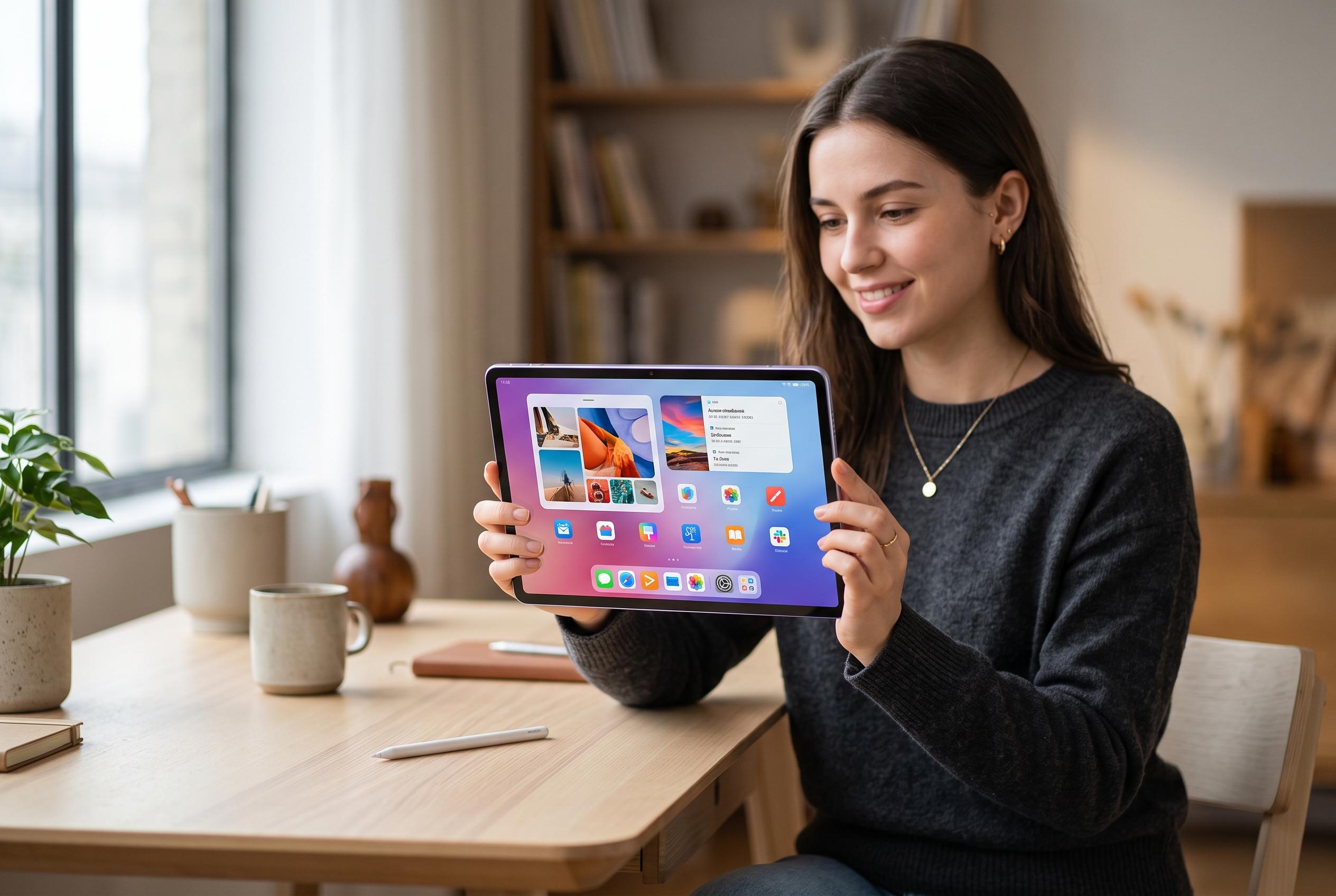

The Huawei MatePad Air (2026) combines sleek design and high-quality display with solid battery life, but software constraints remain a challenge for potential users.
Huawei’s MatePad Air (2026) is a reminder that the company still knows how to build hardware with real polish, even as its software limitations remain a defining part of the story. The tablet sits in Huawei’s annual “Air” line as a thin, light model aimed at people who want a large screen without the bulk of a heavier slate. In Europe, it launched from €849 for the 8GB version, with availability from August 1, 2026, according to product coverage cited by Gizmochina and Fone Arena.
The design is one of its strongest points. Huawei has kept the body to 5.3mm, paired it with a 12-inch display and held the weight to 509 grams. That makes it unusually portable for its size. The chassis uses aluminium, the bezels are slim and even, and the rear camera module is small enough to avoid disrupting the clean look. The review unit also came with the company’s keyboard accessory, which doubles as a case and stand and adds a more practical edge to what is otherwise a large-format tablet.
Display quality appears to be the headline feature. Huawei offers a 12-inch OLED panel with a 2,800 x 1,840 resolution, 144Hz refresh rate and PaperMatte anti-glare finish on some configurations, while the review unit described by Android Headlines used a standard OLED version. Either way, the panel is the reason many buyers will notice this tablet first: it is sharp, bright and well suited to stylus input, with reduced reflections that make it easier to use in varied lighting. The screen remains one of the few tablet panels that clearly tries to solve a practical problem rather than merely increase specification numbers.
Performance is less impressive on paper than in day-to-day use. Huawei’s Kirin T93C is a 7nm chip, well behind the most advanced processors used in rival tablets, and benchmark results reflect that gap. Even so, Android Headlines found the device smooth for routine work such as browsing, media playback, messaging and light content creation. The weak point is gaming, where demanding titles expose the hardware ceiling more quickly. In other words, this is a tablet that is competent for productivity and entertainment, but not a serious choice for users who prioritise heavy graphics workloads.
Battery life is another area where Huawei has put in a strong showing. The tablet carries a 10,100mAh cell and supports 66W wired charging, with a charger included in the box. Huawei says it can reach up to 16 hours of local HDR video playback and around 10 hours of online video playback. In testing, Android Headlines said the device exceeded that online-video claim and lasted about a week and a half in mixed light use, while a full charge took roughly an hour and 24 minutes. That gives it the sort of endurance that suits travel, study and long office days.
The main drawback remains software. The tablet runs HarmonyOS 4.3 and does not ship with Google services, which still matters for many users. Android Headlines said Huawei’s AppGallery leaves gaps, although MicroG and third-party stores such as Aurora Store can restore access to many Android apps, including several Google services. That workaround will not suit everyone, and some apps may still fail. But for users prepared to manage the software layer, the MatePad Air (2026) looks like a well-made, well-equipped tablet with a screen, battery life and accessory package that compare favourably with rivals.
Disclaimer: This content is intended for informational purposes only. Readers are advised to exercise their own judgement, conduct due diligence, or consult a qualified expert before acting on any information provided.