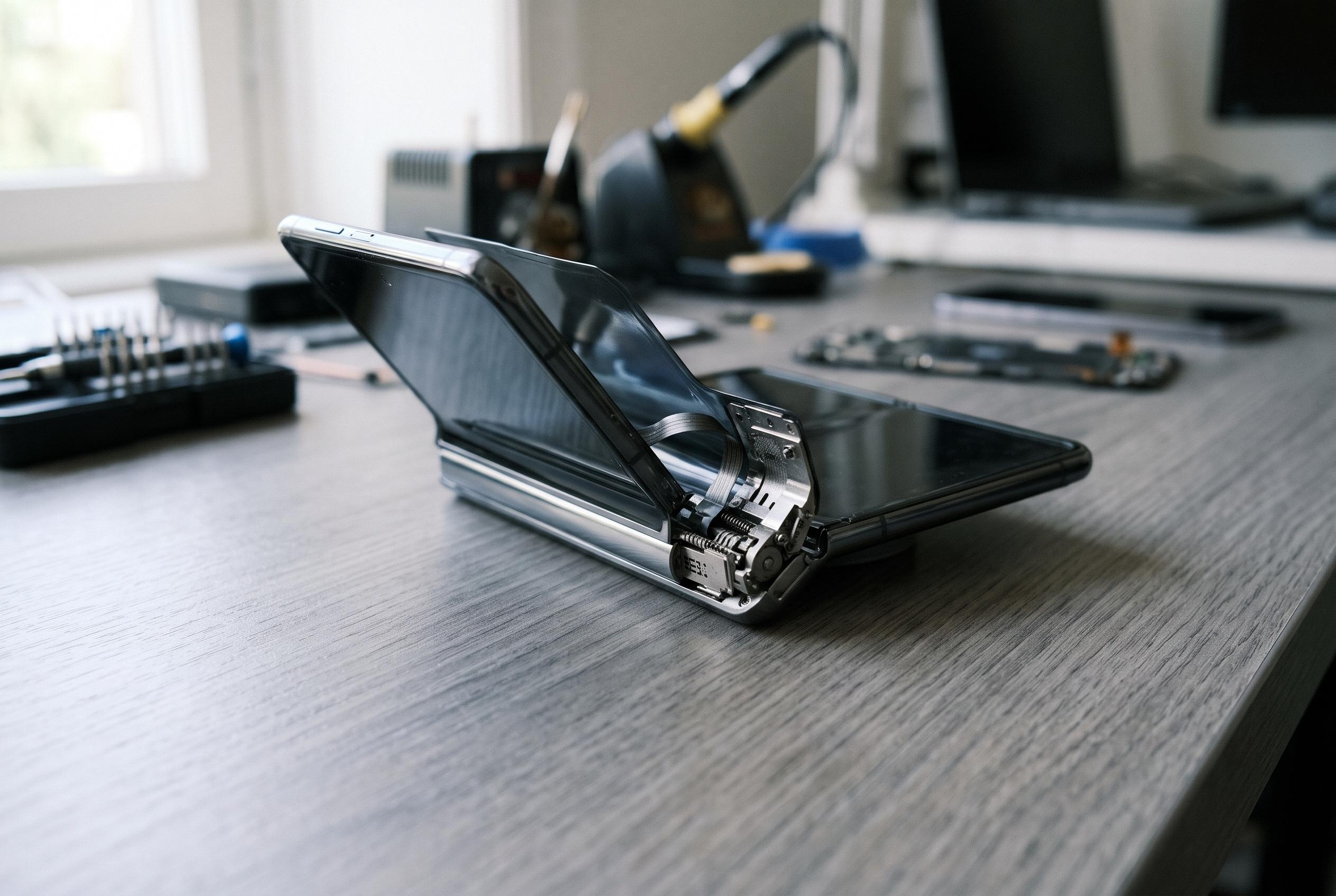

Apple’s first foldable earns iFixit’s highest repairability score for a foldable yet, but its intricate hinge design may be linked to reports of damaged inner displays.
iFixit’s first close look inside Apple’s iPhone Duo paints a mixed picture: the company’s debut foldable appears more serviceable than many rivals, yet the same hinge engineering that makes the device possible may also help explain reports of early screen failures. In its teardown, iFixit gave the phone a provisional repairability score of 5 out of 10, which it says is the highest it has assigned to any foldable smartphone so far. The score is not final, because replacement parts are not yet broadly available, but it still suggests Apple has made a more repair-minded foldable than many expected. According to MacRumors, the teardown also highlights a highly intricate hinge assembly that sits at the centre of both the device’s appeal and its potential problems.
The most notable concern is the possibility that the hinge is contributing to the display damage some owners say they have already seen. iFixit says the pattern of reported failures, often accompanied by a crunching sound and then bright lines across the inner screen, appears to cluster around the same area of the panel, close to the junction between the cable opening and the main hinge support. Using CT scans, teardown footage and Apple patents, the repair specialists built a three-dimensional model of the mechanism and identified several plausible stress points. One theory is that a central support bar may not be retracting cleanly as the phone closes, while another is that curved rails guiding the hinge could rise high enough to interfere with the display. iFixit did not reach a definitive conclusion, but it said the internal geometry offers credible leads. PhoneArena similarly pointed to pressure concentration around the folding area as a likely contributor to screen damage.
The teardown also shows how much engineering Apple has packed into the display itself. iFixit found that the matte nano-texture finish uses a surface of tiny rounded bumps to scatter reflected light, helping to disguise the crease. Under magnification, it also observed unusual oval-shaped subpixels arranged in differing directions, which could, according to an Apple patent, reduce diffraction artefacts and make the fold less visible. Around the selfie camera area, the pixel layout changes again, with larger gaps and more regular shapes to let light through to the under-display camera. Elsewhere, the repair specialists praised Apple’s use of clips rather than glue for the inner display bezel, making removal less destructive, while the outer panel also appears easier to lift than expected.
Battery replacement is another area where the iPhone Duo seems to outperform many foldables. iFixit found two cells, one beneath the back glass and the other under the outer display, with combined capacity of 19.073Wh. More importantly, both batteries use electrically releasable adhesive, allowing them to be removed without aggressive prying. That, iFixit said, is the best battery-removal experience it has seen in a foldable. The teardown also examined the logic board and the layered display structure that lets the panel flex during opening and closing. Even so, iFixit’s earlier caution still stands: repairability in a foldable does not automatically mean ease of repair, and expensive, tightly integrated parts such as the inner screen and hinge are still likely to remain difficult to service.
Disclaimer: This content is intended for informational purposes only. Readers are advised to exercise their own judgement, conduct due diligence, or consult a qualified expert before acting on any information provided.