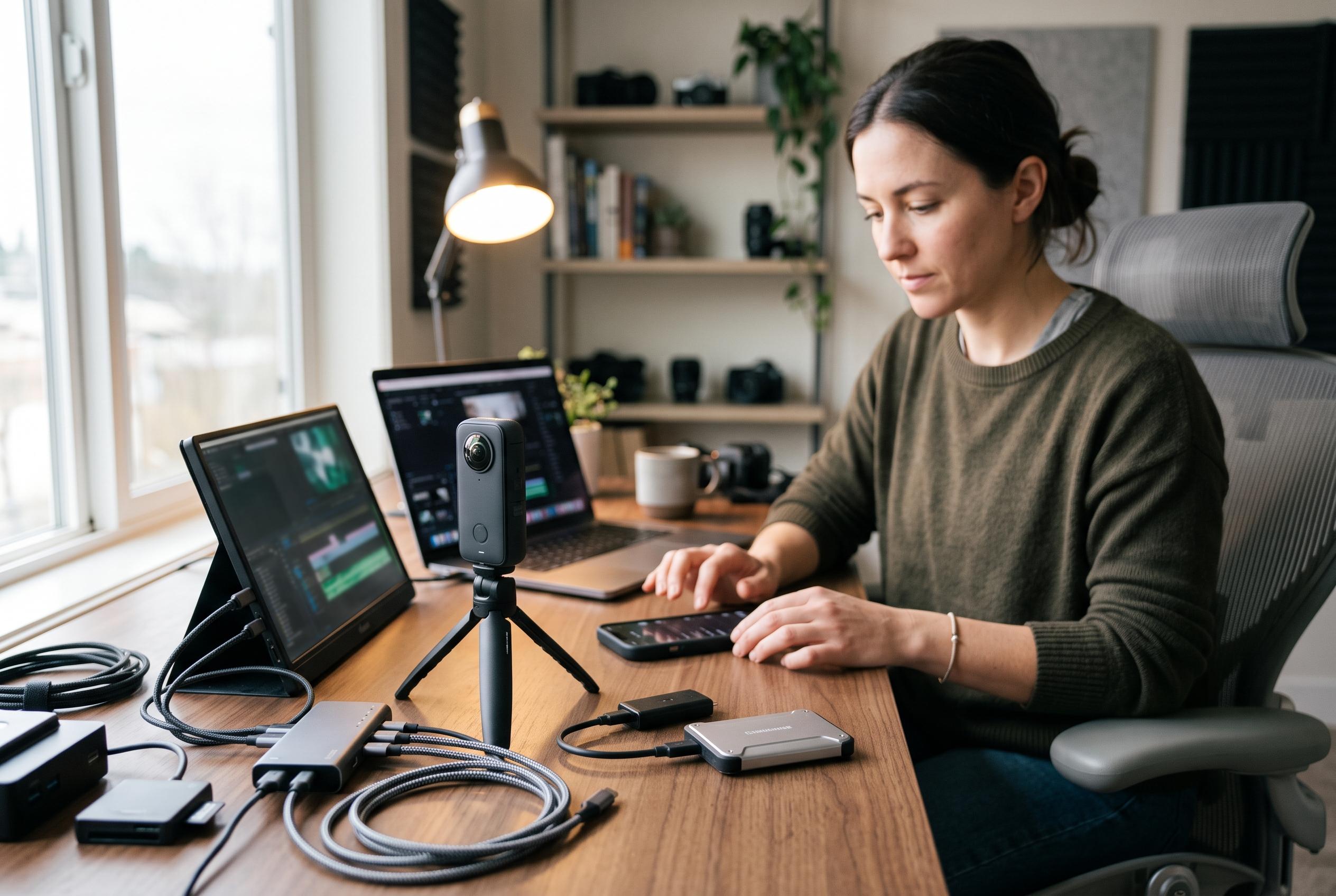

The Luna Ultra positions itself as a serious creator tool with 8K recording, dual lenses, and high dynamic range, but its demanding features may test even experienced users’ workflows and hardware setups.
Insta360’s Luna Ultra is being positioned as a serious creator tool rather than a casual vlogging accessory, but its appeal depends heavily on how much complexity a user is willing to manage. According to the review on Geeky Gadgets, the camera can record in 8K with 10-bit colour, and that gives it the sort of tonal range and fine detail aimed at professional post-production. TechRadar added that the system pairs dual lenses with a triple-chipset design, 14 stops of dynamic range and 8K at 30 frames per second, which places it among the more technically ambitious compact cameras now on the market. The trade-off is that this level of output creates heavier demands on storage, editing software and workstation performance.
That tension runs through several of the camera’s headline features. Geeky Gadgets noted that the Leica filters can reduce the amount of colour grading needed later, which is useful for faster turnarounds, while also warning that auto ISO can become overly aggressive in bright light and may need manual correction. T3 reported that Insta360 has since pushed the zoom system further with a firmware update, taking the in-camera range from 12x to 15x and adding six focal lengths, plus AI Remosaic processing to preserve more detail at higher magnification. The same update introduced Stage Mode for concerts and performances, together with revised audio options, while a new magnetic telephoto attachment can extend the effective reach to 22.5x. Even so, both reports suggest that image quality still softens as magnification rises.
The camera’s usability issues are more practical than theoretical. Geeky Gadgets said occasional file corruption remains a risk, which makes reliable storage and frequent backups essential for anyone using it on paid work. It also pointed out that many basic editing applications cannot comfortably handle the large 8K files, forcing users towards professional packages such as DaVinci Resolve Studio or Adobe Premiere Pro. TechRadar’s review, meanwhile, described the Luna Ultra as a dual-lens gimbal camera with a detachable two-inch OLED remote module, 47GB of internal storage and support for microSD cards up to 1TB, but also said autofocus and subject tracking could falter in busier scenes. That combination suggests a camera that is powerful on paper yet still dependent on disciplined workflow and compatible hardware.
Connectivity and accessory support also look uneven. Geeky Gadgets reported that when the Luna Ultra is paired with a smartphone, some physical controls and gimbal functions are disabled, while certain settings require disconnecting and reconnecting the phone, interrupting the shooting process. It also said Bluetooth accessory support is inconsistent, with the Mantis Pod among the accessories that do not work as expected. Against that, the camera still offers clear strengths for specific users: Geeky Gadgets highlighted its 4K portrait mode and remote operation, and Docam described it as Insta360’s first serious entry into the pocket-cinema-gimbal category, with Leica-branded optics and a starting price of about $769.99. For creators who value modularity, high-resolution capture and advanced lens options, the Luna Ultra may be compelling. For others, its demands, quirks and workflow penalties may outweigh its gains.
Disclaimer: This content is intended for informational purposes only. Readers are advised to exercise their own judgement, conduct due diligence, or consult a qualified expert before acting on any information provided.