

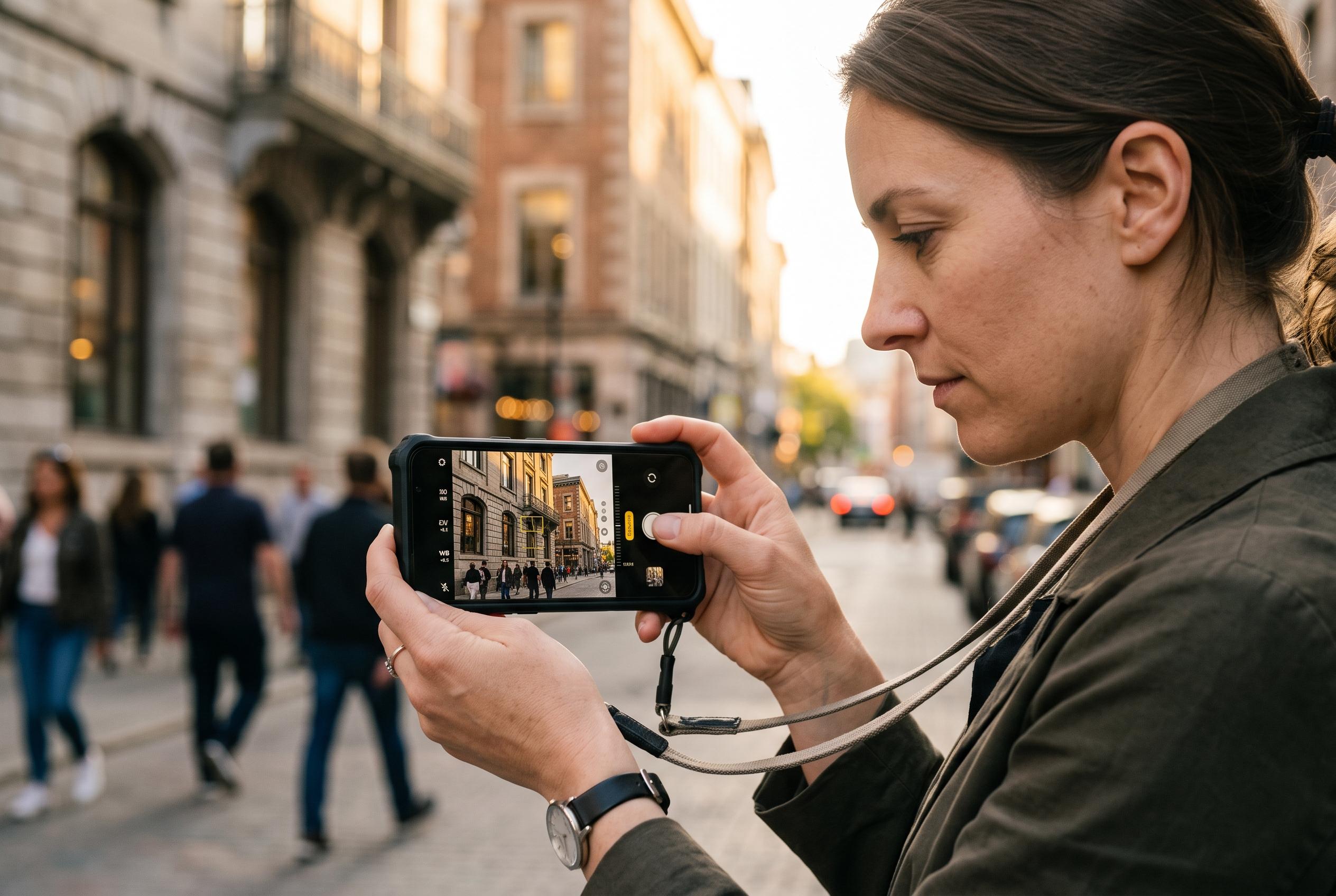

A field test by photographer Austin Mann suggests the iPhone 18 Pro’s defining upgrade is not its variable aperture, but the manual controls, focus tools and image-making options built around it.
Austin Mann’s field test of the iPhone 18 Pro at Dunton River Camp in south-west Colorado suggests that Apple’s latest camera update is less about a single headline feature than about a broader shift in how the phone can be used by serious photographers. The most important addition is the variable aperture on the main camera, which can move between ƒ/1.48, ƒ/1.8, ƒ/2.8 and ƒ/4.0. As reviewed by several outlets, that gives users more direct control over light intake and depth of field, while the phone continues to make automatic decisions when left in default mode.
Mann’s account places that hardware change in a practical setting rather than a spec sheet. He found the wider aperture especially useful for low-light work under the clear night skies around Dunton, where the camera could collect more light while still preserving enough control to shape the image creatively. He also argued that the feature is not only for specialists: by choosing the right aperture automatically in many scenes, the iPhone can improve everyday results for ordinary users as well as for photographers who want to intervene only when the shot demands it.
The biggest surprise in the review is Apple’s new Pro Controls. Mann said he expected variable aperture to be the main advance, but instead found manual focus, focus peaking and independent exposure control to be the most useful additions for deliberate shooting. That matters because separating focus from exposure is one of the main reasons photographers have long turned to third-party camera apps. The new controls allow closer handling of subjects, more reliable manual composition and more precise control over motion and depth.
Mann also singled out Focus Tracking as a more valuable tool than he first expected. On a phone with a very wide aperture and shallow depth of field, keeping close subjects sharp becomes harder, especially when flowers, people or the camera itself are moving. In his test, the feature proved particularly effective for macro and near-focus work, where it helped hold on to the chosen subject even when foreground distractions or wind made framing unstable.
Apple’s Photographic Styles 3 also figure prominently in the review, particularly the new film texture and grain controls. Mann’s view is that these settings are not superficial filters but serious image-making tools that change tonal character, highlight behaviour and perceived texture in a way that is difficult to replicate quickly in editing software. He noted that the grain behaves more like traditional film grain, becoming more visible in shadows, while the highlight glow can be adjusted to suit the scene. That said, he recommended using HEIF rather than ProRAW for most of these effects, since the styles do not apply to RAW capture.
The review also places Apple’s Reference Image feature in a wider context. Mann argues that the point is not just creative control, but trust. As AI-generated imagery and post-production tools make photographs easier to alter, a signed reference image can help prove what was originally captured. He suggests the feature could have obvious uses beyond journalism, including insurance documentation and second-hand sales, if Apple opens it to third parties. That argument fits a broader industry move towards content credentials and verified image provenance.
Apple’s new 4K time-lapse mode is a smaller update, but one that matters to anyone who uses the phone in video work. Mann welcomed the jump from 1080p, which makes the footage easier to mix into higher-resolution edits, and he praised the ability to export a still frame from a time-lapse sequence at full quality. He was less certain about the new adaptive time-lapse option, saying he had not yet fully worked out how it behaved in practice.
Taken together, the changes make the iPhone 18 Pro feel like a more complete camera rather than just a better automatic one. Mann’s conclusion is that Apple has widened the gap between technical correctness and creative intent. The camera now offers more ways to let in light, shape focus, slow motion down, blur it deliberately or restore a more film-like look, while still remaining approachable for everyday shooting. For him, that is the real advance: not merely sharper photographs, but more expressive ones.
Disclaimer: This content is intended for informational purposes only. Readers are advised to exercise their own judgement, conduct due diligence, or consult a qualified expert before acting on any information provided.



