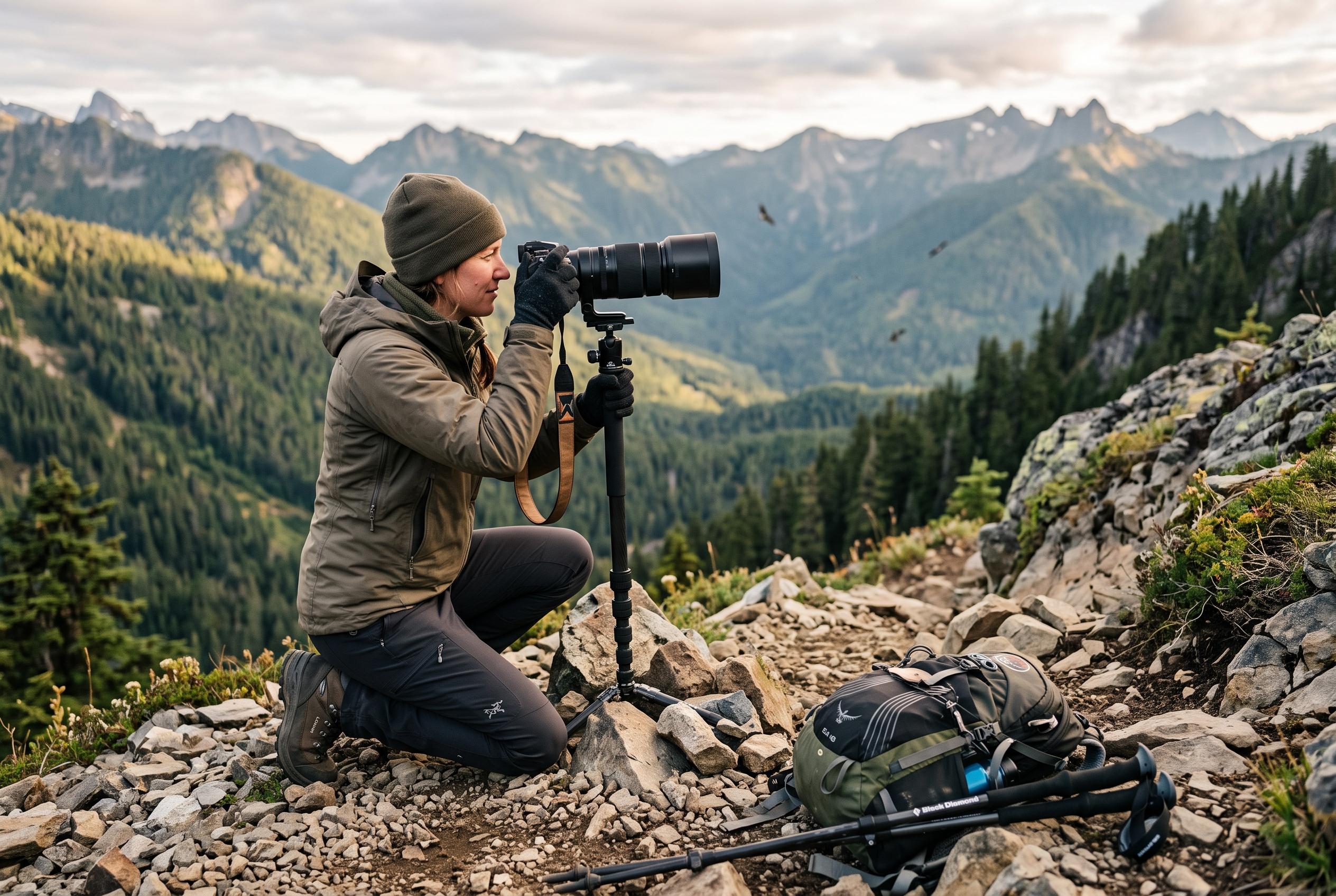

Advancements in ultra-lightweight monopods are transforming the way outdoor enthusiasts and wildlife photographers stabilise their cameras, offering a balance of portability, load capacity, and terrain adaptability that’s reshaping support gear for long-distance hiking and nature photography.
For wildlife photography and long-distance hiking, a monopod can offer a useful middle ground between a handheld camera and a full tripod. It is quicker to deploy, easier to carry and often sufficient for stabilising a telephoto lens when a scene changes too fast for more elaborate support. Recent buying guides and manufacturer information show that the best ultra-lightweight options now focus less on one defining feature and more on the balance between mass, folded size, load capacity and the type of terrain where the monopod will be used. According to Digital Camera World, the category remains popular because it reduces camera shake without adding the bulk associated with a tripod.
At the lightest end of the market, the Altura Photo 62-Inch Camera Monopod remains notable for its portability. Discover Cameras says it weighs 0.59 pounds and folds to 16.75 inches, while still extending to a useful 62 inches. That makes it a practical choice for small mirrorless kits and travel setups, though its 5-pound load rating is a real constraint once a heavier body or long zoom is attached. Camera Concepts and All About Photo both note the same basic design features: a four-section build, foam grip, wrist strap and retractable spike for firmer footing outdoors.
The Ulanzi TT35 takes a different approach by aiming at flexibility rather than absolute minimal weight. Ulanzi describes it as a 5-in-1 hiking tripod kit built from aluminium alloy and carbon fibre, with the ability to convert into monopod form and support up to 5kg. That broader design makes it more versatile than a simple single-stick support, especially for photographers who want one item that can adapt between handheld shooting and a steadier, more deliberate setup. Its Arca-Swiss and F38 plate compatibility also gives it an edge for users already invested in quick-release systems.
Among the more performance-focused options, the Neewer TP42 and the Sirui range stand out for different reasons. The Neewer TP42 combines a 1-pound aluminium body with a claimed 22-pound capacity, which is unusually strong for something this light and makes it attractive for hikers carrying larger telephoto lenses. Sirui’s higher-end carbon-fibre monopods push in the opposite direction, trading a little budget-friendliness for quieter locks, tighter folded dimensions and better vibration control. TechRadar’s review of the Sirui SVM-145P underlines how far this category has evolved, with features such as a foot pedal, rotation and tilt movement, and a payload rating suited to heavier outdoor kits.
For photographers who care most about compactness and load margin, the Gitzo GM2562T Series 2 Traveler remains one of the most distinctive products in the field. It folds to just under 14.2 inches, yet still reaches 55.9 inches and carries a quoted load of nearly 40 pounds. That combination is unusual even in the premium segment, and it makes the model especially appealing to those who need a monopod that disappears into a bag but still supports serious equipment. At the more affordable end of the heavier-duty bracket, Manfrotto’s Element MII offers a 35.3-pound capacity and a 62.6-inch extension, which makes it a sensible alternative for users who prioritise strength over the last few ounces of weight.
In practice, the right choice depends on the heaviest camera and lens combination you expect to carry, together with how far you need to walk. For long hikes, weight and folded length matter almost as much as raw capacity, since a compact monopod is easier to stow and less likely to snag on vegetation. Carbon fibre is generally the better option if you shoot often in cold weather or want stronger vibration damping, while aluminium can still make sense for buyers focused on value. Twist locks tend to be quieter in the field, and a tall maximum height is useful because most adults will want the viewfinder close to eye level when standing. For that reason, the most practical monopod is usually the one that best matches your own lens weight, walking distance and shooting position, rather than the one with the longest specification sheet. Digital Camera World’s 2026 buying guide, along with the manufacturer data for Altura Photo, Ulanzi, Neewer, Gitzo, Manfrotto and Sirui, supports that broader view of the category.
Disclaimer: This content is intended for informational purposes only. Readers are advised to exercise their own judgement, conduct due diligence, or consult a qualified expert before acting on any information provided.