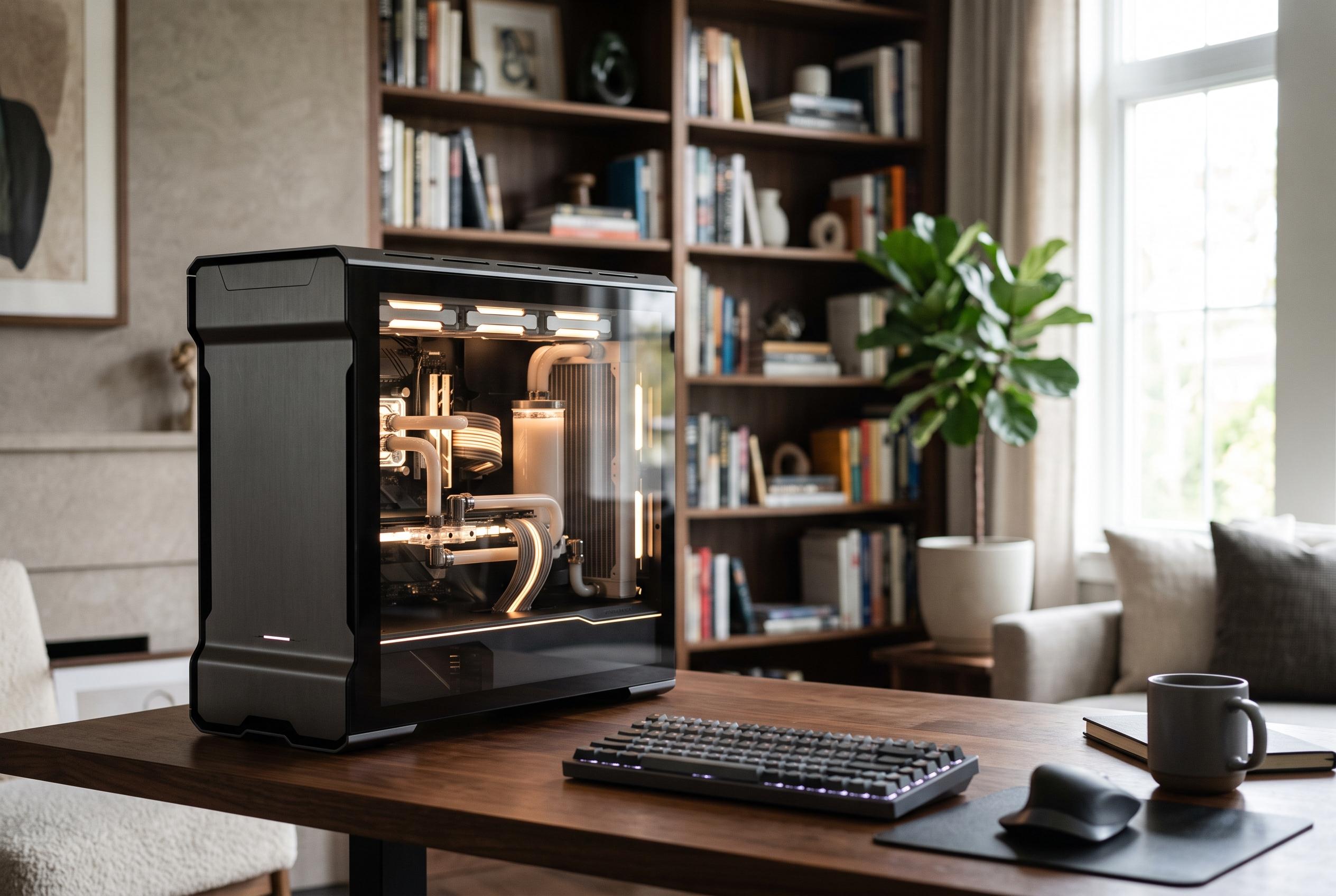

Maingear’s Zero series continues to impress with its sleek, display-piece-inspired chassis and top-tier specs, but its steep pricing and upgrade limitations may deter all but the most dedicated enthusiasts.
Maingear’s Zero series remains one of the more polished pre-built gaming desktops available, and the latest review from Gizmodo underlines both its strengths and its problem: this is a carefully engineered machine with a price tag that will put many buyers off. The refreshed model keeps the brand’s focus on restrained aesthetics, hidden cabling and quiet operation, while pushing into top-end territory with configurations that can climb to eye-watering levels. According to Gizmodo, the flagship Zero Champion build comes in at $6,500, while other coverage of the launch placed starting prices from roughly $2,699 to $2,799 depending on configuration.
The design is the main draw. Maingear’s curved glass chassis gives the system a more display-piece feel than a conventional tower, and the rear-connection layout keeps cables out of sight so the internal components remain visually clean. Gizmodo says the case is unusually easy to open for a glass-heavy design, with panels that are more straightforward to remove than on some earlier Maingear systems. Tom’s Hardware and Digital Trends both noted that the Zero line is built around a tidier internal layout, with MSI Project Zero-style motherboard support and a presentation that suits users who want the hardware to look finished even when the PC is switched off.
Maingear has also tried to make the machine feel more personal. The case includes space for small figures and display items, and the company sells optional 3D-printed shelves and LEGO mounts, or provides CAD files for users who want to print their own. That approach fits the wider Zero pitch described by GamesRadar+, which framed the series as a system intended to resemble a showcase cabinet as much as a gaming rig. The trade-off is practicality: the mATX layout limits expansion compared with larger boards, and the top-mounted I/O provision is narrow by premium-case standards.
Performance is where the price becomes harder to dismiss. Gizmodo’s review unit paired AMD’s Ryzen 7 9850X3D with Nvidia’s GeForce RTX 5090, and the machine delivered strong gaming results with low temperatures and little fan noise during sustained testing. The publication found that, in real-world games, the Zero trailed a higher-core-count Maingear MG-1 only slightly at 4K and 1080p, while matching it closely in GPU-heavy benchmarks. Tom’s Hardware’s separate MG-1 review similarly highlighted Maingear’s reluctance to clutter its systems with unnecessary software, which helps explain why the Zero feels quick to use as well as quick in games.
There are still caveats. Gizmodo reported occasional coil whine under heavy load, and the review sample used 32GB of DDR5 memory that was running below the speed listed on the specification page. The rear-connection design also makes some future upgrades less convenient, especially around the power supply and GPU cabling, and the mATX motherboard means users giving priority to storage or non-gaming expansion may find the platform restrictive. Even so, for buyers seeking a pre-built desktop that is neat, quiet and genuinely high-end, Maingear’s Zero appears to deliver the engineering discipline that many premium PCs promise but fewer actually achieve.
Disclaimer: This content is intended for informational purposes only. Readers are advised to exercise their own judgement, conduct due diligence, or consult a qualified expert before acting on any information provided.