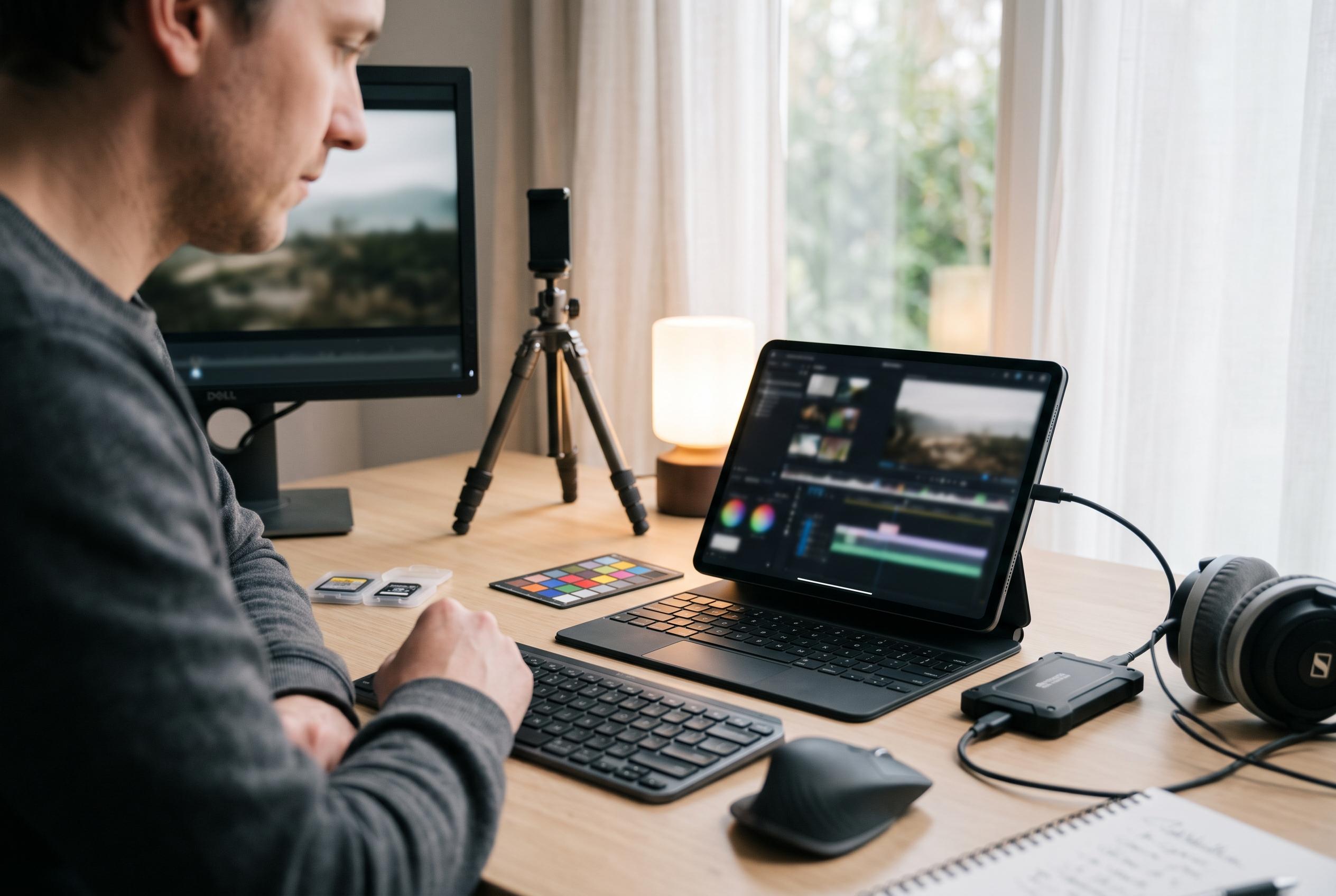

Recent guides highlight a clear divide in the iPad market for video editors, emphasising tailored models for different workflows, from budget-friendly options to high-end devices designed for demanding professional projects.
The market for portable iPad editing has matured into a clear split between budget-friendly models for straightforward cuts and high-end tablets for serious finishing work. Short Film Central’s 2026 guide argues that the best choice is not simply the newest or most expensive device, but the one whose chip, memory and screen match the footage being edited. That broad conclusion is echoed by other buying guides from Creative Bloq, Ceedo and Giftpals, which also place the iPad Pro line at the top for demanding workflows and the iPad Air M4 as the most balanced option for many editors.
For most travel editors, the crucial question is not whether an iPad can edit video, but which kind of project it can handle comfortably. Short Film Central’s testing suggests the older A13- and A14-based tablets remain perfectly workable for 1080p timelines and lighter 4K work, especially when paired with proxy files or an external SSD. By contrast, M-series iPads are the better fit for multicam projects, log footage and ProRes workflows. That view is consistent with TechDetects’ broader assessment of editing tablets, which emphasises the importance of powerful processors, accurate displays and mature editing apps rather than brand alone.
At the budget end, the iPad 9th generation still stands out for editors who need a dependable travel device without paying for premium extras. Short Film Central says it remains strong for LumaFusion and iMovie, with battery life and day-to-day reliability making up for its older design and modest storage. The iPad 10th generation improves the formula with USB-C and a brighter, more modern screen, while the newer A16-based 11-inch model adds better media decoding and smoother handling of phone-shot 4K files. These models are aimed at creators who mainly cut social clips, vlogs and simple client deliverables.
The mid-range story is more interesting. The renewed 2020 iPad Pro 11-inch offers ProMotion, Face ID and a premium feel at a lower price, and Short Film Central argues that the 120Hz display makes timeline scrubbing noticeably smoother. The iPad Air M4, meanwhile, is presented as the strongest value proposition for editors who want real power in a lighter package. Creative Bloq and Giftpals both highlight the same device as a particularly sensible choice for mobile work, pointing to its M4 chip and strong performance-to-price ratio. For many users, that makes it the most practical compromise between cost, size and capability.
At the top of the range, the 11-inch and 13-inch iPad Pro models remain the clear choice for professional work. Short Film Central singles out the M5-based versions for compact power and full workstation capability, while also noting that the 13-inch M5 model is the closest thing Apple offers to a laptop replacement for editors on the move. Ceedo likewise places the 13-inch M4 iPad Pro at the centre of professional video work, citing the Ultra Retina XDR display as a major advantage for colour-critical tasks. The appeal here is not only speed but confidence: these tablets are built for grading, HDR material and long editing sessions where display quality matters as much as processing power.
Storage and connectivity matter almost as much as raw performance. Short Film Central notes that a single hour of 4K ProRes can consume around 40GB, which makes 64GB or 128GB models a poor fit for most serious editors. Its advice is to aim for at least 256GB and use a USB-C or Thunderbolt external SSD for active projects. That recommendation is reinforced by the broader tablet guides, which consistently treat fast external storage as essential rather than optional.
The software ecosystem is another major reason iPads remain relevant for mobile editing. TechBloat’s overview of iPad editing apps highlights Final Cut Pro, DaVinci Resolve and LumaFusion as the key tools, with CapCut serving short-form creators who need speed and simplicity. In practice, that means the value of an iPad depends heavily on the editor’s workflow. A creator cutting quick social clips has very different needs from a documentary filmmaker working with log footage and external audio.
Taken together, the guides point to a simple hierarchy. The iPad Pro is the best option for professionals who need performance and display quality above all else. The iPad Air M4 is the best all-round choice for most travelling editors. The base iPads still make sense for lighter work and tighter budgets. The right answer, in other words, is less about prestige and more about matching the tablet to the job.
Disclaimer: This content is intended for informational purposes only. Readers are advised to exercise their own judgement, conduct due diligence, or consult a qualified expert before acting on any information provided.