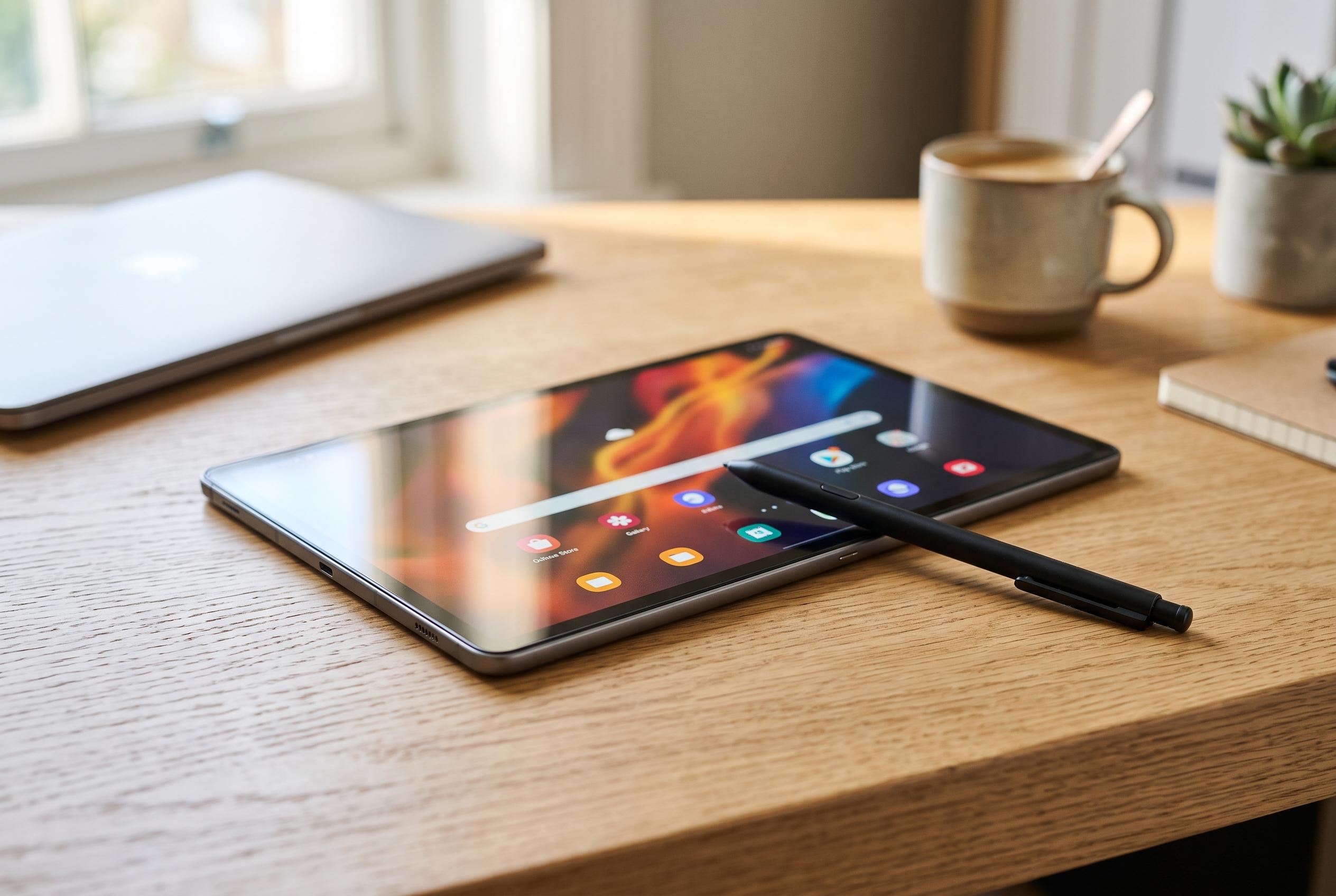

In the ₹30,000 segment, tablet buyers are increasingly valuing display quality, stylus support, battery life and connectivity options, with models from brands like Samsung, Lenovo, Redmi, Motorola, OnePlus and Realme competing on real-world performance rather than specifications alone.
At around ₹30,000, a tablet has to do more than open apps quickly. Buyers at this level are usually weighing screen quality, stylus support, battery life and cellular connectivity, because the gap between a useful device and an expensive disappointment is often decided by those details. Guides from Gadgets 360 and similar round-ups show that this segment is crowded with closely matched models from Samsung, Lenovo, Redmi, Motorola, OnePlus and Realme, which makes specification lists less useful than the way a tablet performs in everyday use.
The strongest choices in this bracket are the ones that feel complete rather than merely well-specced. A bundled pen can matter as much as a faster chip for students, note-takers and anyone marking up documents, while a 5G option can be worth paying for if the tablet will travel with its owner rather than sit near a home router. Updated listings from NDTV Gadgets 360 and other comparison sites suggest that many of the best-known models now compete by balancing display resolution, RAM, storage and productivity extras rather than by chasing one headline feature alone.
For buyers who want the safest all-round purchase, Samsung’s Galaxy Tab A11+ remains a sensible reference point, particularly in its 6GB RAM and 128GB storage 5G form. Lenovo’s Idea Tab Plus with Pen is more obviously aimed at handwriting and sketching, while Redmi’s Pad 2 Pro 5G appeals to users who want cellular connectivity without moving into a higher price tier. These are the sorts of devices that keep appearing in current under-₹30,000 recommendation lists because they cover the main use cases without making the buyer compromise too heavily on either portability or performance.
Entertainment-focused shoppers have a different set of priorities. Motorola’s Pad 70 Groove stands out when sound quality matters as much as visuals, with its multi-speaker setup making it a better fit for films and music than for pen-first productivity. Motorola’s Pad 60 Pro is pitched more as a clean Android tablet with a larger screen and a sturdier feel, while Realme’s Pad 3 is aimed at buyers who care most about battery endurance. That spread reflects how the category has split: some models are being shaped for media consumption, others for note-taking and light work.
Price, however, is not only about the sticker. The Indian tablet market increasingly uses instalment plans, exchange offers and bank discounts to bring mid-range devices within reach, and that can change the value equation considerably. A model that looks expensive at first glance may become more reasonable through no-cost EMI or a trade-in, particularly when seasonal promotions are running. For that reason, current buying guides stress timing almost as much as model selection, since the same device can shift in relative value over the course of a sale cycle.
The wider picture is that ₹30,000 is no longer the point where a tablet simply becomes bigger. It is the point where display sharpness, multitasking ability, stylus support and battery endurance start to define whether the device will feel like a serious daily tool. For many buyers, the best answer will still be a model with 5G and a bundled pen; for others, a cheaper Wi-Fi tablet may be enough. The right choice depends less on the brand badge than on whether the tablet will be used for reading, class notes, video calls, entertainment or all four.
Disclaimer: This content is intended for informational purposes only. Readers are advised to exercise their own judgement, conduct due diligence, or consult a qualified expert before acting on any information provided.