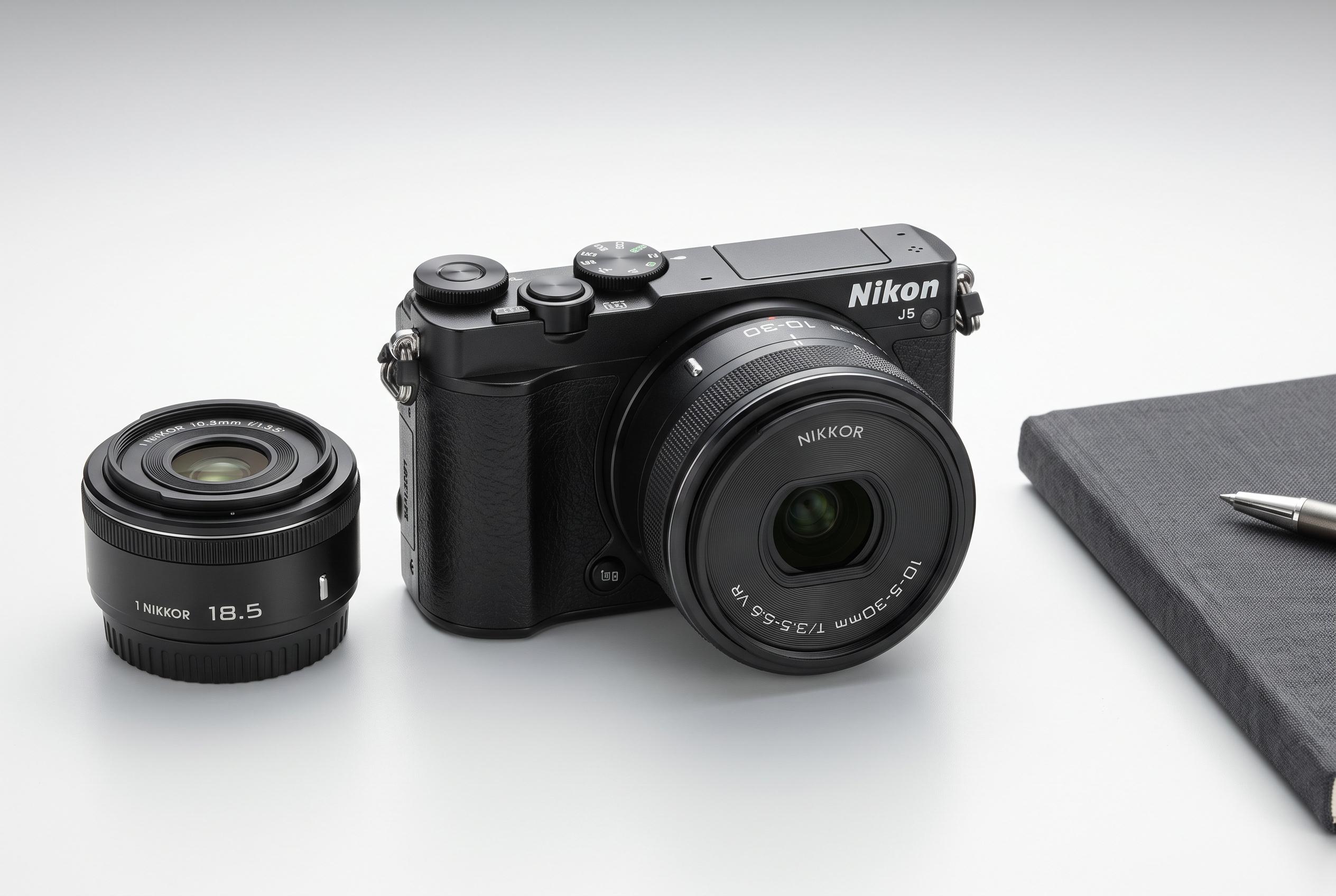

A look back at the Nikon 1 J5 reveals a compact, fast, and capable camera that was ahead of its time, finding renewed interest amid a resurgence in lightweight, interchangeable-lens photography.
The Nikon 1 J5 looks, in hindsight, like a camera released before the market was ready for it. Nikon’s final model in the Nikon 1 line paired a 20.8-megapixel one-inch sensor with RAW capture, a fast hybrid autofocus system and a compact body that made it far less conspicuous than many interchangeable-lens rivals. Reviews at the time from Tom’s Guide, Imaging Resource and Neocamera all pointed to the same conclusion: for such a small camera, it was unusually quick, unusually capable and surprisingly serious.
That speed was the J5’s defining feature. Tom’s Guide said the camera could shoot at 20 frames per second with continuous autofocus, while other reviews noted a much faster burst mode with focus locked. Imaging Resource and TechRadar also praised the tilting touchscreen, which could flip for awkward angles and selfies, though the lack of an integrated viewfinder was seen as a drawback. In practice, that combination made the J5 especially attractive to travellers and street photographers who wanted something light, discreet and responsive.
Image quality was another reason the camera earned a better reputation than it received. Imaging Resource said the new backside-illuminated sensor improved detail and dynamic range, while dkamera.de reported solid results in daylight up to ISO 1600. The camera also supported RAW files, which gave photographers room to recover detail and shape the final image in post-processing. That remained one of the J5’s strongest arguments against today’s smartphone photography: a larger sensor and dedicated optics still offer a different level of control.
The lens system helped too. Nikon’s 1 mount included compact native lenses, but the FT1 adapter also let users mount F-mount DSLR glass, giving the J5 far more reach and flexibility than its body size suggested. Thom Hogan’s Sans Mirror review highlighted the camera’s mix of stills features, Wi-Fi, NFC, creative modes and time-lapse tools, though it also noted the oddly limited 4K video mode at 15 frames per second. That weakness was echoed elsewhere, with reviewers saying the camera’s video specification felt more like an afterthought than a headline feature.
The result is a camera that seems more interesting in 2026 than it did when it launched. Smaller interchangeable-lens cameras are regaining appeal as photographers look for lighter, less intimidating gear, and the J5 already understood that brief years ago. Its biggest problem may have been timing and marketing, not capability. What Nikon built was a tiny camera that felt fast, capable and ahead of its moment , and, for many users, still does.
Disclaimer: This content is intended for informational purposes only. Readers are advised to exercise their own judgement, conduct due diligence, or consult a qualified expert before acting on any information provided.