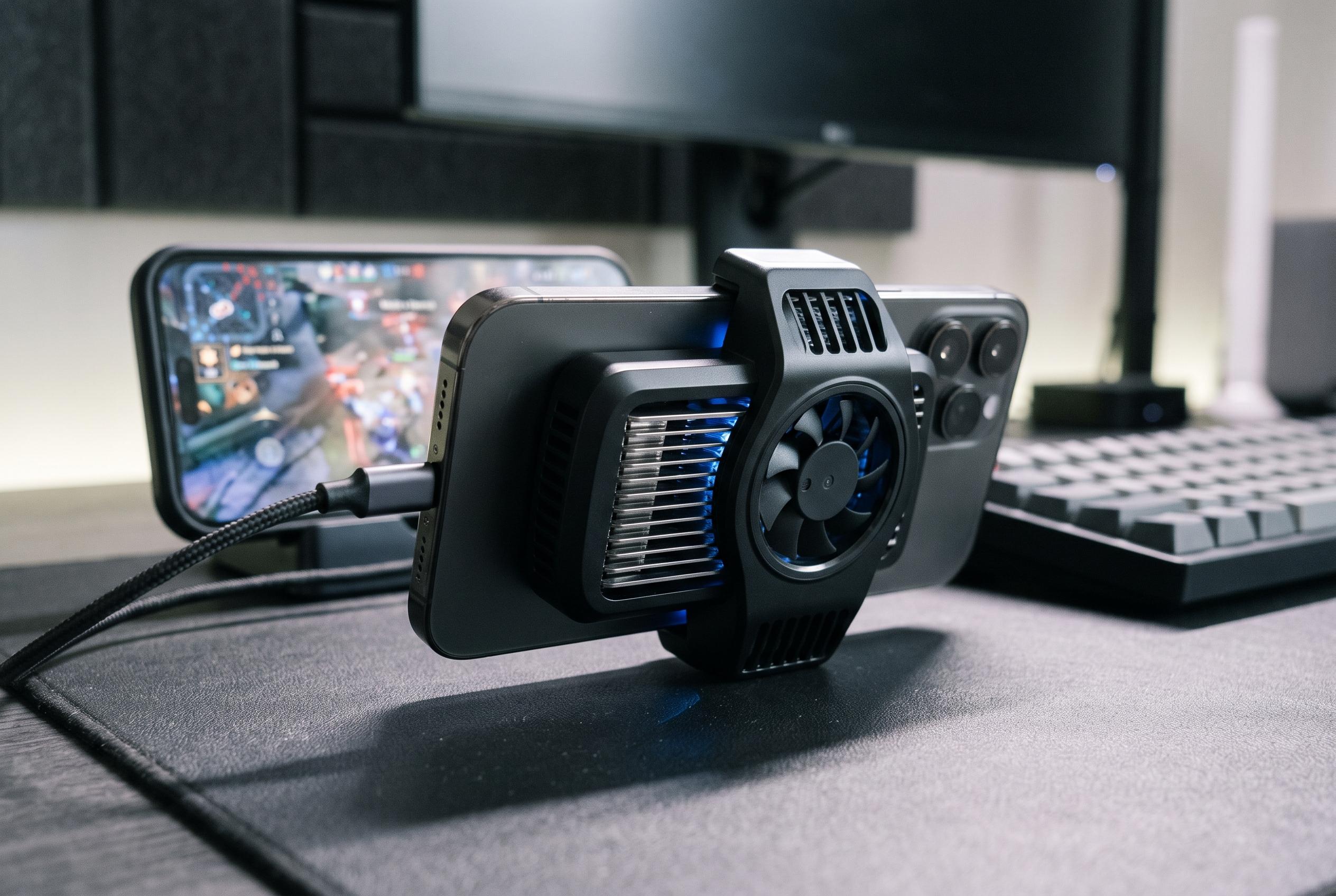

Testing with the iQOO 15 and iPhone 17 Pro Max found that REDMAGIC’s external cooler cut temperatures sharply and helped sustain performance, although it made little difference when games were already capped.
Modern smartphones can now handle console-style games and demanding mobile titles, but their compact enclosures leave little room for heat dissipation. As loads rise over long sessions, devices often reduce performance and dim the display to protect internal components. To examine whether an external cooler changes that experience in practice, a test of REDMAGIC’s Cooler 8 Pro paired the accessory with an iQOO 15 and an iPhone 17 Pro Max across several games and benchmark runs.
REDMAGIC positions the Cooler 8 Pro as a 36W thermoelectric accessory rather than a simple clip-on fan. The company says it uses an eighth-generation COLDLNG cooling design, a 1,640mm² TEC plate, an 11-blade fan and AI-based temperature control intended to limit condensation while sustaining performance. The brand’s own product material also describes magnetic mounting, three operating modes and support for MagSafe-compatible phones, while third-party launch coverage notes a quoted surface temperature drop of up to 80°C under heavy load and an idle low of -25°C.
In physical terms, the unit is small but not unobtrusive. The cooler measures 70x63x31 mm and weighs 113g, so it adds noticeable bulk once attached to a handset. It also needs external power, and the test showed that not every charger delivered the same output; a 45W GaN charger was sufficient for maximum performance, while a higher-rated realme adapter did not produce the same result. The device can attach by magnet or through a clip-on solution sold separately, although fit is less secure when a magnetic connection is not available.
The clearest results came from Genshin Impact, which imposes a sustained graphics load at maximum settings and 60fps. On the iQOO 15, the rear surface rose from 37C after 10 minutes to 42C after an hour without cooling, while frame rate slipped from 60fps to 50fps. With the REDMAGIC cooler fitted, the same phone held 27C by the end of the test and maintained a stable 60fps throughout. On the iPhone 17 Pro Max, temperatures without cooling reached 42C after an hour, compared with 25C with the accessory in place. The iPhone’s frame pacing also appeared smoother with cooling, even where the uncooked run was already close to the same average rate.
Red Dead Redemption, set to a 40fps performance mode, showed a different pattern. The iQOO 15 held its target frame rate with or without the cooler, but the accessory still lowered the rear-panel temperature from 37C to 30C by the end of the hour. The iPhone followed a similar line: the cooler cut the final reading from 37C to 25C, but visible performance gains were limited because the game was already capped near its target. Fortnite reinforced that distinction. Both phones sustained 60fps in each scenario, yet the cooler consistently reduced heat, most notably on the iPhone, where the rear surface finished the session at 29C rather than 40C.
Benchmark and stress testing told the same story. Synthetic scores in AnTuTu and Geekbench changed little, but 3DMark’s throttling tests showed that the cooled phones sustained higher and more stable performance over time. The improvement was more pronounced on the iQOO 15, although neither device became immune to throttling entirely. That is the most important practical conclusion: an external cooler is not a magic performance upgrade, but it can materially reduce heat and help a phone maintain its output during long, demanding sessions. For players who spend extended periods in heavy games, or for users experimenting with PC ports and emulator-style workloads, the case for one is strong. For more casual mobile gaming, the benefit will be far less obvious.
Disclaimer: This content is intended for informational purposes only. Readers are advised to exercise their own judgement, conduct due diligence, or consult a qualified expert before acting on any information provided.