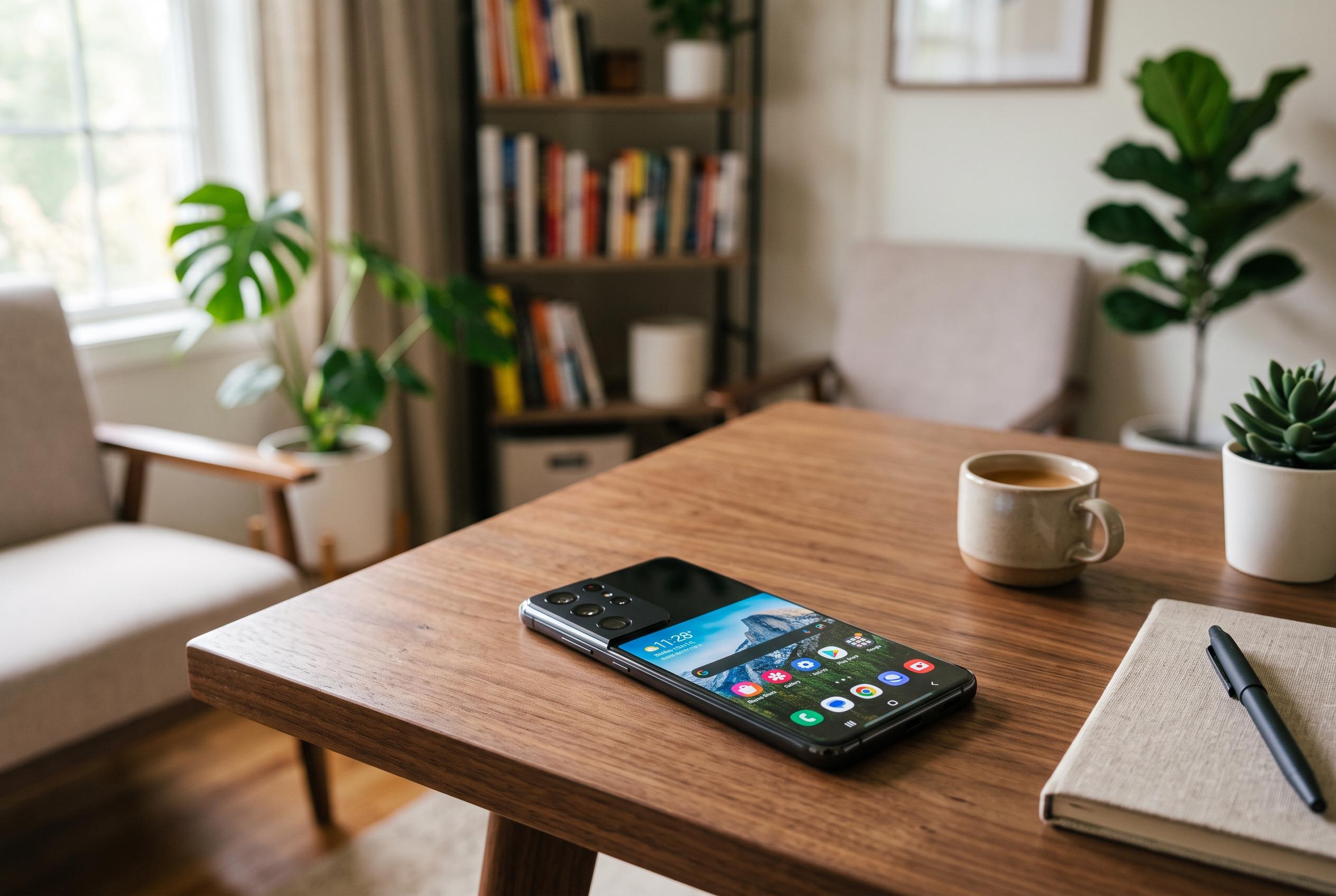

As component costs rise, Samsung and Xiaomi launch rival budget smartphones with contrasting strengths; Samsung offers longer software support and better display, while Xiaomi boasts higher battery endurance and larger screens.
Budget smartphones are getting harder to justify, and Frandroid argues that the new Samsung Galaxy A18 and Xiaomi Redmi 17 arrive at a time when component costs are pushing entry-level phones upwards. The site also notes that Samsung’s Galaxy A line has enjoyed strong commercial momentum in 2026, even as the wider market remains fiercely competitive. Against that backdrop, these two discounted models are pitched as practical choices for buyers trying to keep spending close to €200.
On design, neither handset aims for originality, but they take different routes. Frandroid says Samsung has kept its clean Galaxy look, even if the A18 has grown slightly heavier and thicker than before, while also stepping back to older Gorilla Glass 3 protection. Xiaomi, by contrast, has gone for a larger, more assertive body with RGB lighting on the rear and Gorilla Glass 7i on the front, making it the more eye-catching device of the pair.
The display comparison is more decisive. According to Frandroid, the Galaxy A18’s AMOLED panel gives it a clear advantage in contrast, black levels and overall image quality, alongside Full HD+ resolution and a 90Hz refresh rate. The Redmi 17 uses a 6.9-inch LCD at 1600 x 720 pixels, which is less refined, although Xiaomi offsets that with a 120Hz adaptive refresh rate for smoother scrolling.
Software support is another major fault line. Frandroid says Samsung’s One UI-based phone benefits from a promise of six years of Android and security updates, which is unusually strong at this price. Xiaomi’s HyperOS 3 brings more customisation, including its HyperIsland feature, but the company’s update commitment is shorter at three years.
Performance is modest on both devices, and neither supports 5G. Frandroid says the Redmi 17 uses a MediaTek Helio G91 Ultra, while Samsung equips the A18 with an Exynos 1610. Neither is meant for demanding gaming, but both should handle messaging, browsing, streaming and social media without difficulty. The real separation comes in battery life: Xiaomi’s 7,500mAh cell and 45W charging make it the endurance leader, while Samsung’s 5,000mAh battery and 25W charging look far more conventional.
For photography, the Galaxy A18 appears more versatile. Frandroid says Samsung adds an ultra-wide camera and a macro sensor to its 50-megapixel main unit, whereas Xiaomi keeps things simpler with a 50-megapixel main camera plus an auxiliary AI sensor and no ultra-wide lens. The Redmi 17 still has a case if battery life matters most, but the A18 is the more balanced package overall, helped by stronger display quality and longer software support. For buyers in this price band, Frandroid’s conclusion is that Samsung is the safer long-term pick, while Xiaomi is the better choice for those who prioritise screen size and endurance above everything else.
Disclaimer: This content is intended for informational purposes only. Readers are advised to exercise their own judgement, conduct due diligence, or consult a qualified expert before acting on any information provided.