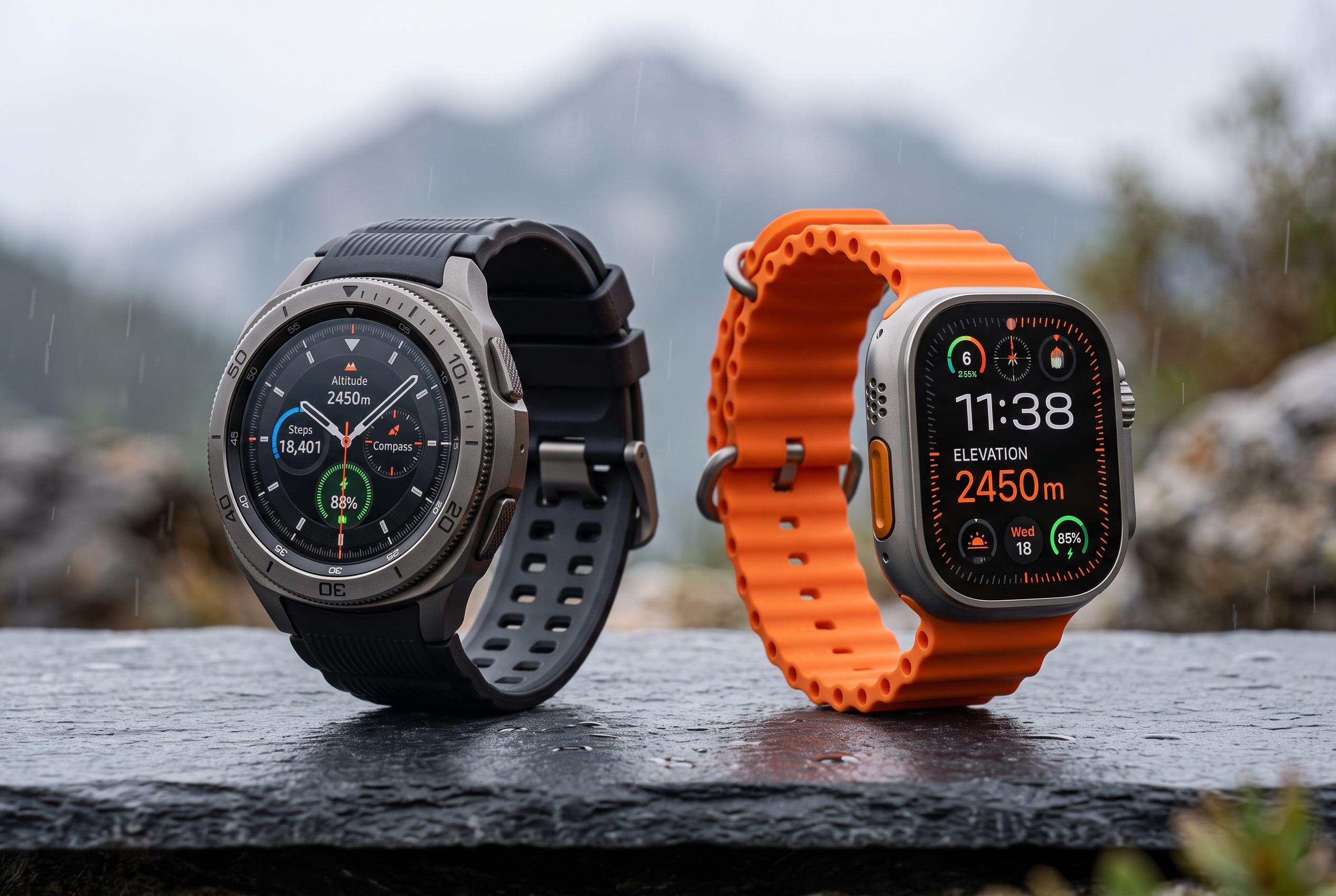

Samsung’s Galaxy Watch Ultra 2 and Apple Watch Ultra 3 compete in rugged design, health features, and battery life, but their success hinges on device ecosystems and user priorities.
Samsung’s latest Ultra model arrives as a direct challenge to Apple’s top-end wearable, but the real comparison is less about raw specifications than about which phone ecosystem each watch is built to serve. The Galaxy Watch Ultra 2 and Apple Watch Ultra 3 both aim at users who want a rugged case, premium materials, advanced health tools and long battery life, yet they do so with different priorities. Samsung leans into brightness, endurance and Android flexibility, while Apple focuses on a larger display, polished software and deep iPhone integration. Review coverage and official specifications point to a contest that is close on paper but more decisive in daily use, where the right choice depends heavily on the handset already in your pocket.
On design, both watches are unapologetically substantial, but they wear differently. Samsung has kept its rounded “squircle” approach and trimmed the profile, with a titanium case that weighs 61.5g and a design meant to feel more like a traditional watch. Apple’s Ultra 3 stays with its familiar rectangular form, using a Grade 5 titanium case that weighs 61.6g and measuring 49mm across. Apple’s official specifications list a 1.98-inch LTPO3 OLED display with 3,000 nits peak brightness, while Samsung’s published details highlight a 1.52-inch Super AMOLED panel that can reach 5,000 nits. In practice, Samsung appears to win for outdoor legibility, but Apple offers more screen area for messages, maps and complications.
The software divide is even clearer. Samsung’s watch runs Wear OS 7 with One UI Watch 9 and is built around Google services, including Maps, Wallet and Gemini, with extra benefits for Galaxy phone owners. Apple’s Watch Ultra 3 runs watchOS 26 and uses the S10 chip, giving it the smooth, tightly controlled behaviour that has long defined Apple’s wearables. Apple’s ecosystem still matters here: Siri, Apple Pay, Find My and Mac unlock features make the watch feel like part of a broader system rather than a stand-alone gadget. Samsung, by contrast, offers more room for customisation and broader Android compatibility.
Health and fitness tools are where both companies have pushed hardest. Samsung has added features such as Heart Health Score, Daily Cardio Load, Trail Run, Nutrition Alerts and improved diving functions, along with body composition analysis that remains one of its more distinctive additions. Apple counters with Hypertension Notifications, Sleep Score, sleep-apnoea detection, Training Load and workout-focused tools such as Heart Rate Zones and Workout Buddy. Apple’s health sensor list is extensive, covering heart sensors, blood oxygen, temperature, depth and water temperature. Samsung’s package is broader in some areas, but Apple’s fitness platform remains more mature and better integrated into its app and health services.
Battery life and value may ultimately decide the purchase for many buyers. Samsung’s 800mAh battery is rated for up to 60 hours with always-on display use, while Apple says the Ultra 3 can last up to 42 hours in normal use and up to 72 hours in Low Power Mode. Apple also emphasises faster charging, with a short top-up delivering many hours of use. On price, Samsung starts at $699.99, undercutting Apple’s $799 entry point. That makes the Galaxy Watch Ultra 2 the stronger hardware value on its own terms, especially for Android users. But the Apple Watch Ultra 3 is the more convincing option for iPhone owners because its advantages are less about isolated features and more about how completely it fits the rest of Apple’s platform.
Disclaimer: This content is intended for informational purposes only. Readers are advised to exercise their own judgement, conduct due diligence, or consult a qualified expert before acting on any information provided.