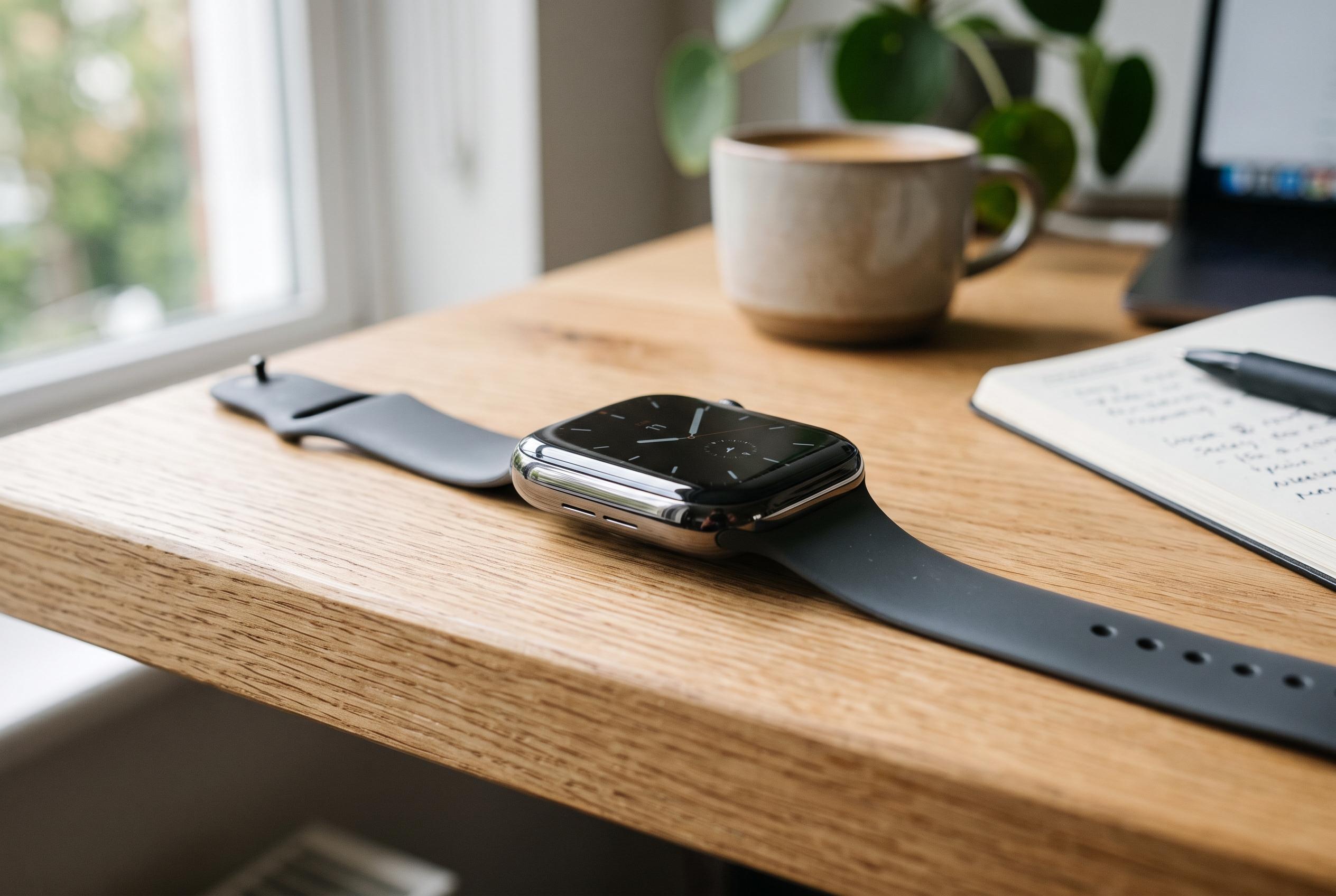

Samsung’s latest Galaxy Watch9 receives praise for its display and health tech, but battery life remains a significant concern, especially for LTE users and heavy wearers, according to Notebookcheck testing.
Samsung’s latest flagship smartwatch has drawn praise for its display and health features, but Notebookcheck’s testing suggests battery life remains its clearest weakness. In normal use, the publication found that enabling the device’s health tools and OLED screen quickly reduced charge by around 60% to 70% over 24 hours, leaving little headroom for heavier users.
That shortfall becomes more pronounced on the LTE model, where eSIM use adds extra drain, and during outdoor sessions that rely on satellite tracking. Notebookcheck said such workloads make it difficult for the watch to last a full day, which is a serious limitation for a device positioned as a premium health companion.
Charging is also relatively slow. According to the test, a fully depleted Watch9 takes nearly an hour and a half to recharge completely. For users who wear a watch overnight for sleep monitoring and then again through the day, that leaves little flexibility and makes the charging cycle feel more intrusive than on competing models.
Samsung launched the Galaxy Watch9 in July 2026 with a faster Snapdragon Wear Elite chip, Wear OS with Samsung’s One UI 9 Watch and battery sizes of 390mAh for the 40mm model and 445mAh for the 44mm version. Samsung’s own product information and launch materials also emphasise the health sensor suite, LTE option and AMOLED display, while pricing starts at about $379 in the US and around €400 in Europe depending on model and connectivity. Even so, the comparison that Notebookcheck draws with Xiaomi’s Watch 5 is telling: Xiaomi uses a silicon-carbon battery and a 900mAh cell, roughly double the capacity of Samsung’s larger model. If Samsung wants to close that gap in future versions, battery density rather than processor speed may be the more important upgrade.
Disclaimer: This content is intended for informational purposes only. Readers are advised to exercise their own judgement, conduct due diligence, or consult a qualified expert before acting on any information provided.