
As humidity remains a silent threat to photography gear, new innovations and insights into storage options, from balanced dry cabinets like the Ruggard 80L to security-focused metal units, are reshaping how photographers protect their investments in an increasingly climate-sensitive environment.
Humidity remains one of the most overlooked threats to camera gear, and it is often the slowest. Lenses, bodies and accessories can look fine for months before fungus, corrosion or dust begin to do lasting damage. The practical answer is a cabinet that keeps humidity stable, offers enough room for a growing kit and, where needed, adds proper locking and physical protection.
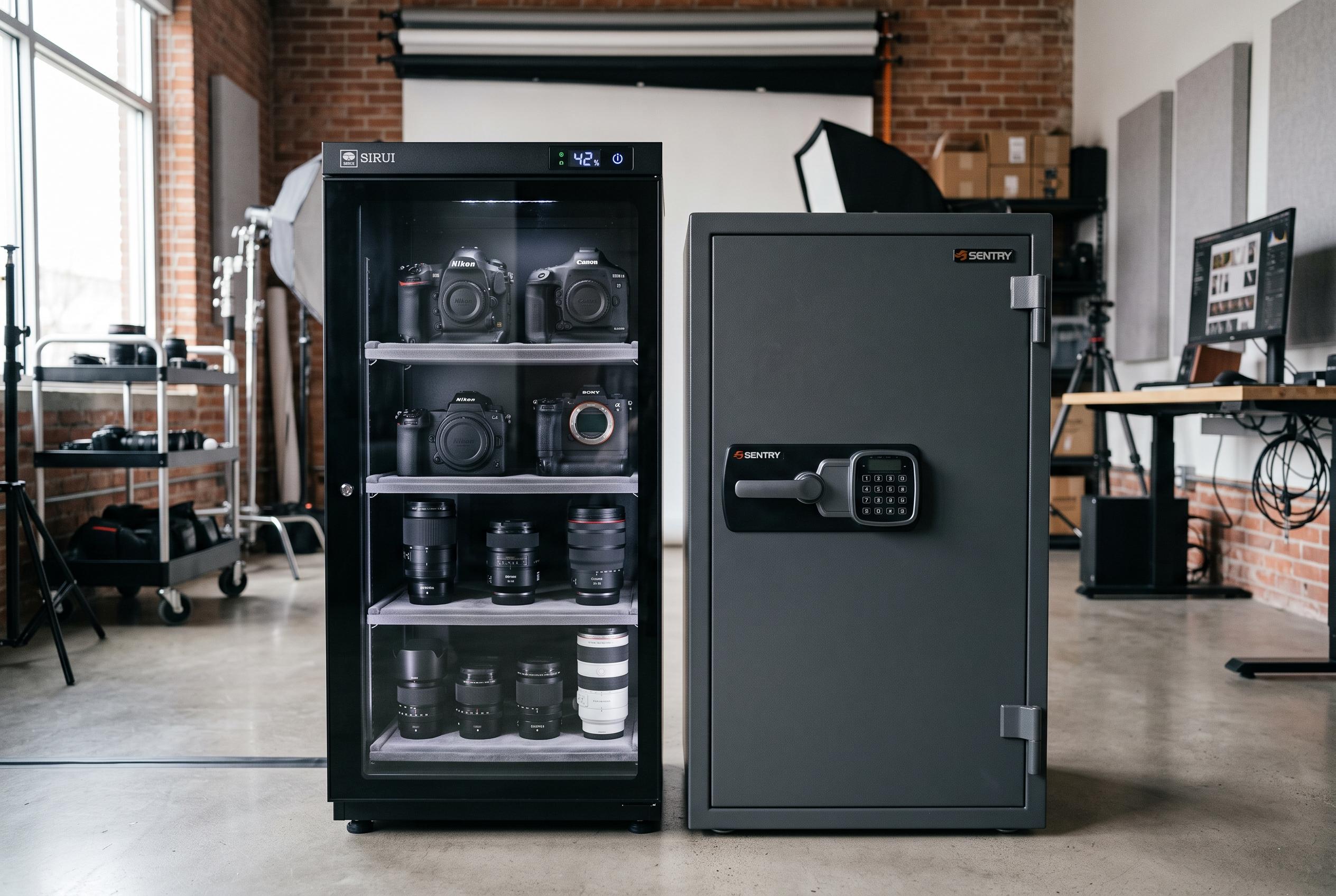
Among the dry cabinets, the Ruggard 80L stands out as the most balanced choice for most photographers. It combines silent electronic humidity control, a lockable door and enough space for several bodies and a substantial lens collection. Photoworkout also highlights the Ruggard 80L as a strong electronically controlled option, while similar buying guides stress that low noise, energy efficiency and a clear display matter as much as capacity. For users with larger working kits, the FORSPARK 100L remains the more practical studio cabinet because of its greater volume and flexible internal layout.
Choice of size matters almost as much as humidity control. Shuttergroove advises that 30L cabinets suit a small body-and-lens set-up, while 50L to 80L is the safer range for photographers with multiple systems or accessories. That matches the testing here: smaller cabinets can feel cramped quickly, while larger 100L-plus units are better for studios, shared workspaces and collectors who want room for future purchases. The risk, as several guides note, is buying to fit today’s kit rather than tomorrow’s.
Humidity settings are where many owners go wrong. The safest working range for camera storage is generally around 40% to 55% relative humidity, which is dry enough to discourage fungus but not so dry that lubricants inside lenses are over-stressed. Photographers in tropical climates usually need cabinets that can reach lower settings, which is why models with a 25% floor, such as the FORSPARK and INTBUYING units, are more versatile than cabinets with a narrower range. In drier regions, a slightly higher setting is usually enough.
There is also a clear divide between active dry cabinets and passive metal storage units. The latter, such as the CJF, Wanfu, INTERGREAT, BESFUR and Letaya cabinets, are better suited to security and organisation than moisture control. They work well in offices, garages and workshops where the main concern is locking away gear, organising accessories and keeping dust at bay. For video teams, according to FindOfficeFurniture, the ideal layout often mixes visible, lockable storage for frequently used items with deeper steel cabinets for backup kit and larger accessories.
That distinction is important for buyers with mixed needs. A lockable steel cabinet can be the right answer for batteries, cables, media cards, tripods and cases. But for lenses, especially vintage glass, it is not a substitute for active humidity regulation. Alibaba’s equipment-storage guidance makes the same point: dry cabinets are designed to prevent fungal growth and long-term deterioration, while rack or furniture-based systems are mainly about scale and access.
For most readers, the decision comes down to how much gear they own, how humid their environment is and how much convenience they want. A smaller dry cabinet makes sense for a hobbyist with a modest kit. A mid-size 50L or 80L model is the sensible default for enthusiasts. A 100L or larger cabinet is the right fit for studios and working professionals. For anyone storing expensive lenses in warm, damp conditions, the cost of proper cabinet storage is minor compared with the price of replacing damaged optics.
Disclaimer: This content is intended for informational purposes only. Readers are advised to exercise their own judgement, conduct due diligence, or consult a qualified expert before acting on any information provided.