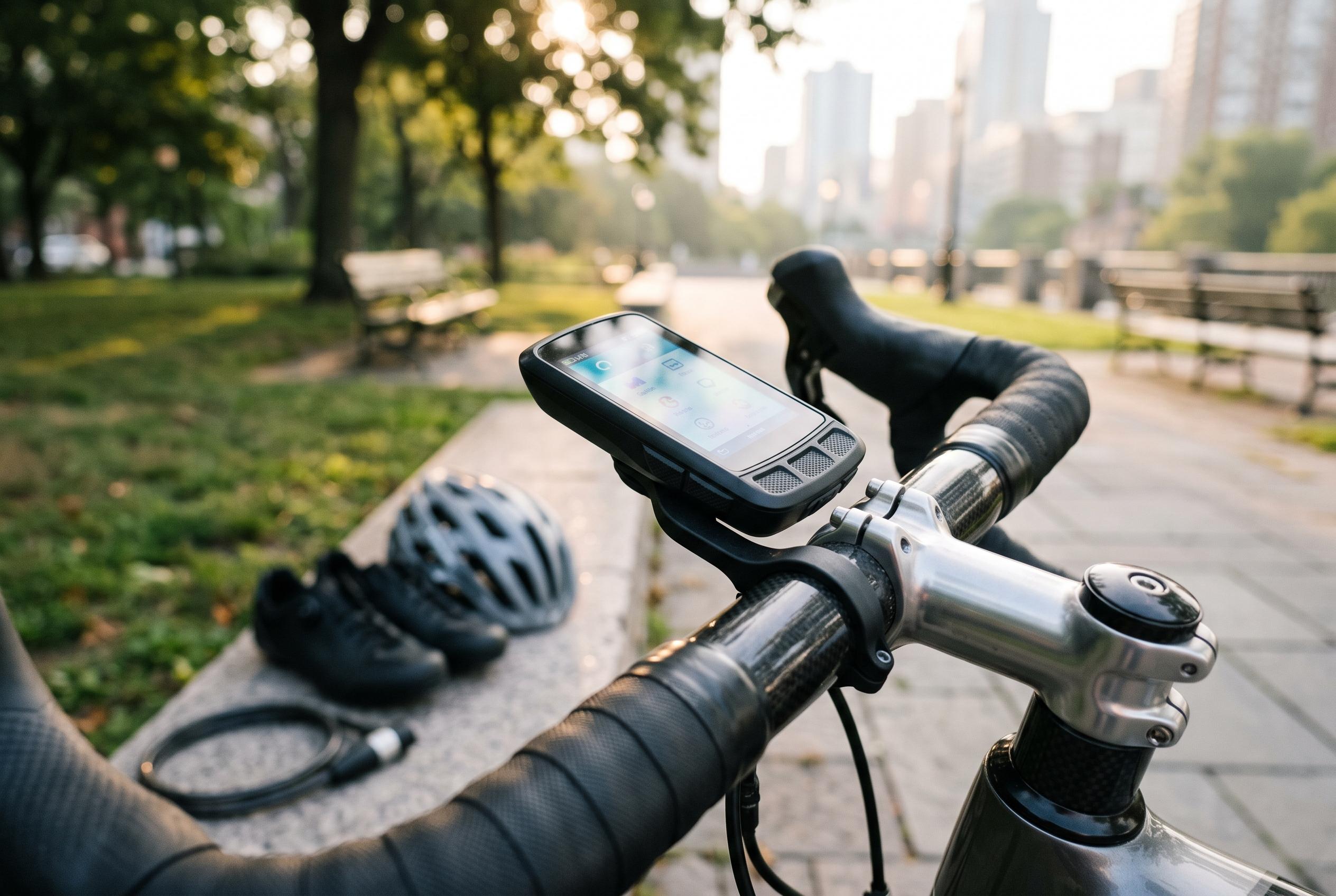

Wahoo updates its popular ELEMNT BOLT with a vibrant new display, dual-band GPS, and improved navigation, targeting riders who want a lightweight and practical bike computer without the clutter.
Wahoo’s third-generation ELEMNT BOLT is a measured update to one of the most recognisable compact bike computers on the market. The core idea remains intact: a small, button-driven head unit for riders who want navigation, workout data and sensor support without a cluttered cockpit. What has changed is the hardware beneath that familiar format, with a brighter, more colour-rich screen, dual-band GPS, far more storage and a quicker-feeling interface.
The biggest difference is the display. Wahoo has replaced the older, more limited panel with a 2.3-inch TFT screen that shows 16 million colours and a higher-resolution layout. Reviewers at BikeRadar and Cyclingnews said the new screen is a clear step forward, especially for route lines, junctions and other map details that can be difficult to read on smaller computers. Even so, the physical limits of a compact display remain. Riders who regularly navigate unfamiliar roads may still find a larger unit easier to interpret at a glance.
Wahoo has also kept the BOLT focused on physical controls rather than touch input. That decision suits the product’s size and use case. Buttons are easier to operate in rain, with gloves or at speed, and they avoid the sensitivity problems that can come with touchscreens on a small device. OutdoorGearLab described the unit as simple and efficient, while TRI247 noted that it integrates neatly with Wahoo’s wider ecosystem. The trade-off is that more involved tasks, such as setting up destinations or changing certain preferences, still lean heavily on the phone app.
Navigation is one of the BOLT 3’s stronger areas. Wahoo includes turn-by-turn directions, downloadable maps and route functions such as retracing a ride or returning to the start. The computer also syncs with major route platforms, including Strava, Komoot and Ride with GPS. BikeRadar reported strong tracking accuracy and quick satellite acquisition, while Cyclingnews said the device handled navigation well despite its modest footprint. Dual-band GPS is an important part of that improvement, helping the unit stay more dependable in places where signal reflections can cause problems.
The software experience is less consistent. Wahoo has moved device configuration into its main app, which makes sense for riders who already use its trainers, sensors or radar systems. The setup flow is designed to be straightforward, and the Ready-To-Ride dashboard brings routes, workouts and connected devices into one place. But Cyclingnews and Cyclist both reported occasional sync or pairing frustrations, and BikeRadar noted that some functions are not as convenient to adjust directly on the device. The hardware now feels more polished than the software layer supporting it.
Battery life is respectable rather than class-leading. Wahoo says the BOLT 3 can last up to 20 hours, which should comfortably cover most training rides and long sportives. Independent testing has generally landed below that headline figure in real use, which is normal once screen brightness, GPS mode and sensor connections are taken into account. For most road riders, that remains enough. For ultra-distance use, where battery endurance becomes a central specification rather than a convenience, there are more specialised alternatives.
The BOLT 3’s other major advantage is its physical footprint. It remains light, compact and unobtrusive on the bars, and that matters to riders who do not want a large computer dominating the cockpit. For racing, fast group rides and structured training, the format is especially appealing. 220 Triathlon and TRI247 both pointed to its compact design as one of its defining strengths, although smaller screens inevitably reduce the amount of information that can be shown comfortably at once.
That balance defines the product as a whole. The ELEMNT BOLT 3 is not trying to be the most powerful or most expansive cycling computer available. It is aiming to be a refined, practical one. For riders who value simplicity, predictable controls and a device that disappears into the ride, it makes a persuasive case. For those who want the largest possible maps, the richest on-device configuration or the deepest feature set for the money, larger rivals from Garmin, Hammerhead or even Wahoo’s own range will still look more compelling.
Disclaimer: This content is intended for informational purposes only. Readers are advised to exercise their own judgement, conduct due diligence, or consult a qualified expert before acting on any information provided.