

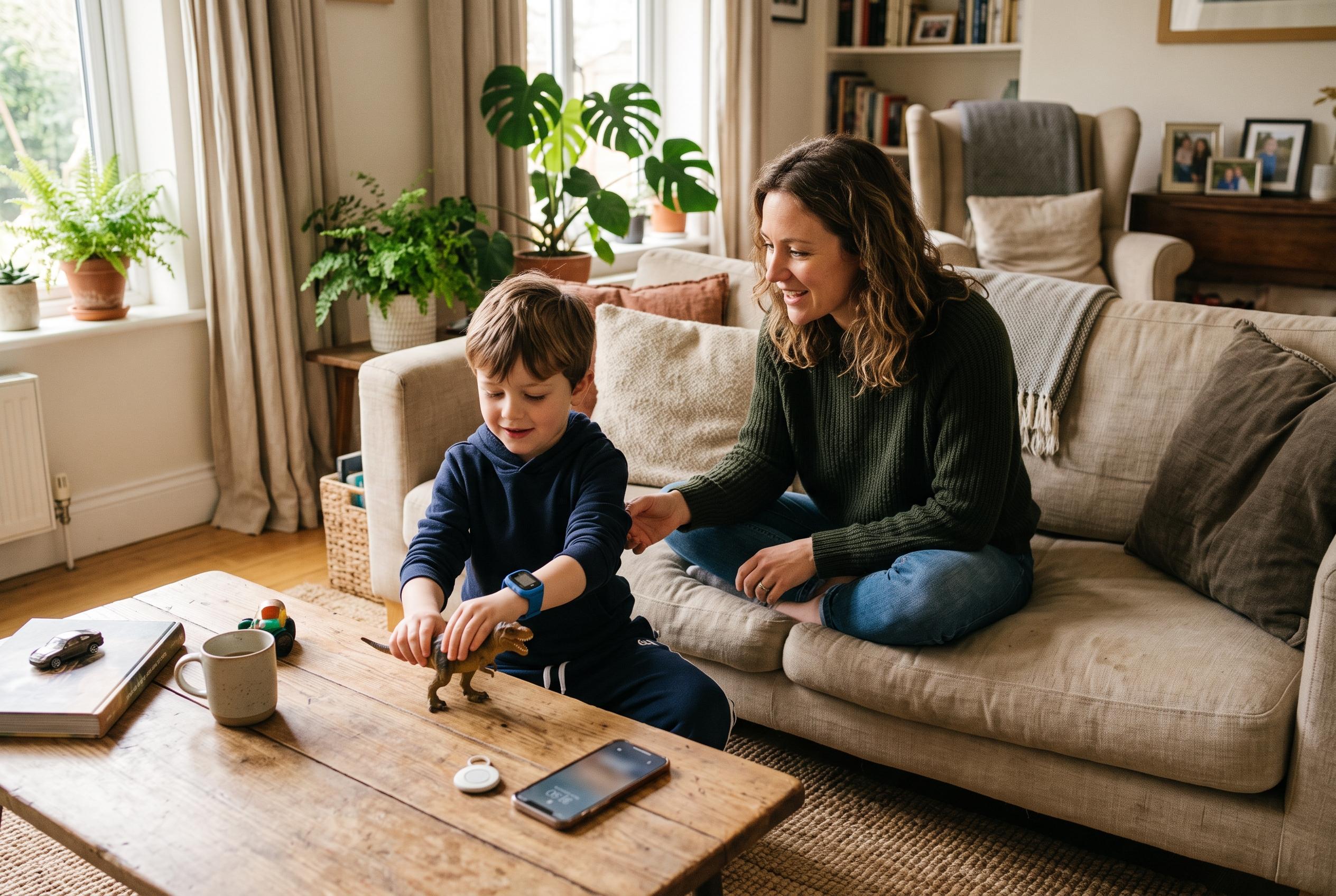

From standalone LTE watches to Bluetooth tags, the right device depends on whether families need live location, tighter phone controls or a low-cost backup.
For families trying to keep track of a child in crowded public spaces, the right tracker is less about novelty than reliability. The best devices now split into three clear categories: full cellular wearables, phone-based systems with tighter controls, and low-cost Bluetooth tags that depend on nearby phones to relay a location. That distinction matters, because a device that works on its own can provide near real-time visibility, while a Bluetooth tag may be useful only in populated areas and only when another compatible handset is close enough to pick it up.
The Bark Watch is the most rounded option for younger children. Bark says the device runs on standalone LTE, so it does not need a parent’s phone nearby, and it deliberately leaves out the internet, app stores, browsers and games. That makes it a safety-first smartwatch rather than a mini smartphone. According to Bark, the watch supports approved contacts, GPS location tracking, an SOS button, and monitoring for texts, photos and videos. The company also says the device is water-resistant to 5ATM and IP68 standards, and that the required monthly plan includes cellular service, parental controls and a Bark subscription for the whole family.
For many parents, the appeal is not just tracking but the way Bark combines communication and oversight in one place. The company positions the watch as a tool for children who are not ready for a full phone, especially those who need to call or text family without access to social media or other distractions. Independent reviewers have also highlighted the simplicity of the design, although battery life is often cited as a practical limitation, with some testing suggesting nightly charging is necessary. Bark’s own support material describes the watch as a device for children who need talk, text and location sharing without third-party apps.
The Bark Phone targets a different stage of childhood. It uses Samsung Galaxy A-series hardware with Bark’s controls built into the operating system rather than added as a removable app. That matters because it makes the system harder to bypass. The company says the phone monitors texts, emails and more than 30 apps for worrying content, including signs of bullying, sexual material and self-harm language. In testing cited by reviewers, alerts were triggered by messages in encrypted apps and by attempts to access explicit material through the browser, which suggests the system reaches further than simpler parental-control tools.
Families dealing with a genuine elopement risk may find AngelSense better suited to their needs. The device is designed to be difficult to remove and is aimed at children and adults with special needs who may wander. According to AngelSense and third-party reviews, the tracker blends GPS, WiFi triangulation and mobile-network positioning, can update every 10 seconds in emergency mode, and supports listen-in and two-way calling. That makes it more specialised than a general-purpose tracker. The trade-off is cost: the device and subscription are materially more expensive than the simpler options, and the battery usually needs daily attention.
Tracki sits in the middle ground as a dedicated GPS tracker rather than a child-specific product. It is built for people, pets, vehicles and luggage, which gives it a broader feature set than many child trackers. Because it uses cellular GPS rather than Bluetooth, it can report location at a distance without depending on a nearby parent phone. That makes it attractive for travel, rural settings and families that want monitoring without adding a handset or smartwatch. The downside is that battery life varies sharply with update frequency, so parents must choose between faster tracking and longer runtime.
For low-cost backup tracking, Apple AirTag remains the obvious choice for iPhone households. It has no monthly fee and works through Apple’s Find My network, which means its usefulness depends on passing near enough iPhones for the location to update. That makes it best as a bag or coat tag rather than a primary safety tool. Samsung’s SmartTag2 plays the same role for Android families through SmartThings Find. It offers longer rated battery life than the AirTag, but it shares the same structural limitation: it is a Bluetooth tag, not an independent cellular tracker, so it is not designed for live stand-alone tracking.
What families choose should depend on the child’s age, the level of independence involved and how much oversight is actually needed. A younger child walking to school or going between activities may need a wearable with live location and calling. An older child may be better served by a locked-down phone that can grow with them. A child with a known wandering risk may need a more specialised device that cannot be removed easily. And for families who only want a discreet backup in a backpack, the cheapest tag may be enough, provided it is matched to the right ecosystem.
The market in 2026 is therefore less about one “best” tracker than about fit. Bark’s Watch and Phone are strongest where families want communication, location and monitoring in one account. AngelSense is the specialist choice for elopement risk. Tracki is the more traditional GPS answer for families that prioritise live location over content oversight. AirTag and SmartTag2 remain budget tools, but they are support devices rather than substitutes for a true child-safety tracker.
Disclaimer: This content is intended for informational purposes only. Readers are advised to exercise their own judgement, conduct due diligence, or consult a qualified expert before acting on any information provided.



