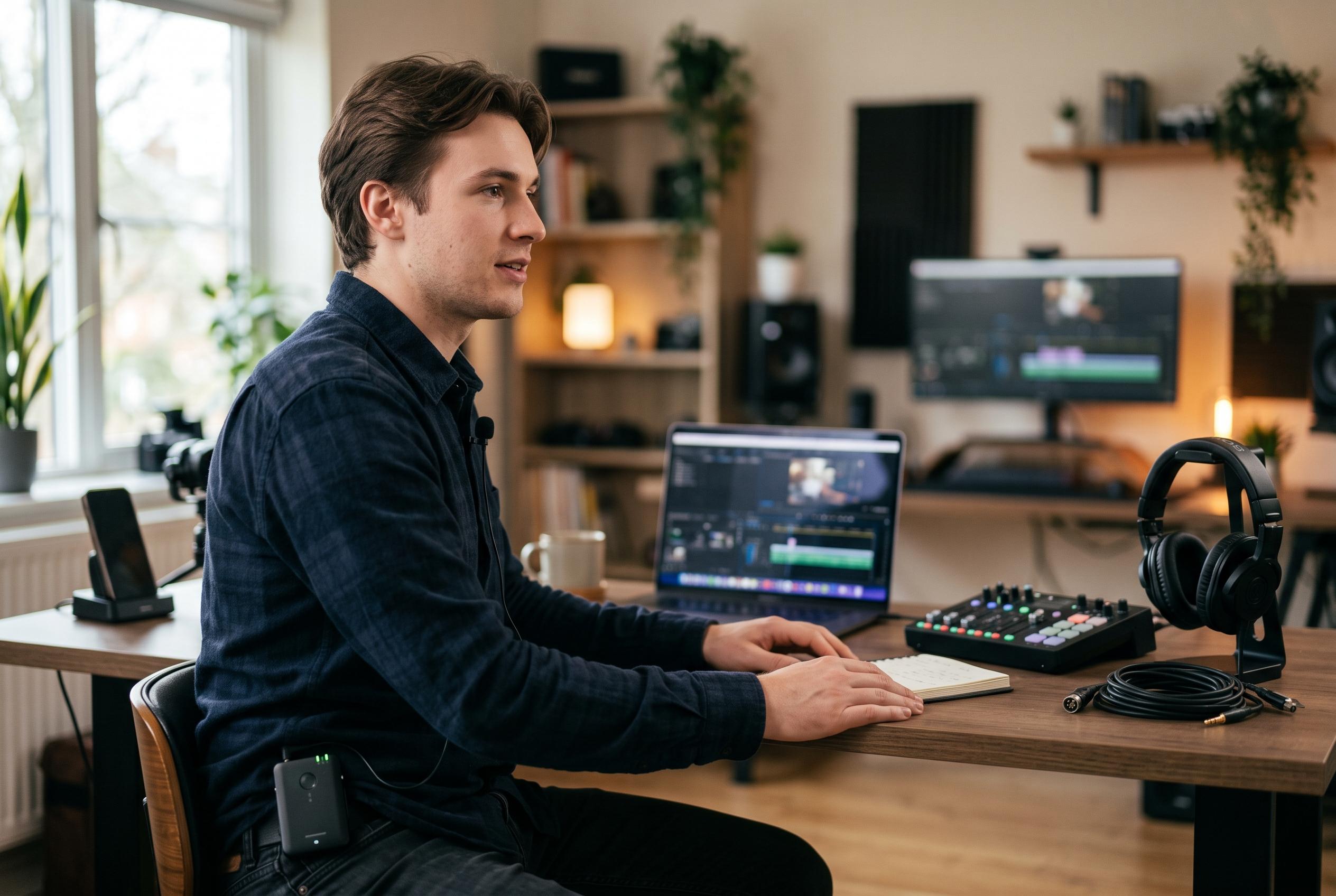

As the landscape of content production evolves, the focus shifts from brand prestige to workflow suitability, with feature-rich and portable wireless lavalier microphones leading the way for video, streaming and podcasting in 2026.
Choosing a lavalier microphone is less about brand names than about workflow. For video recording, live streaming and podcasting, the best option is the one that keeps speech intelligible, resists handling noise and fits the way you actually record. According to the roundup, the strongest all-round choices lean on wireless convenience, long battery life and broad device support, with the DJI Mic 2 and Rode Wireless PRO positioned for users who want more advanced features, while lower-cost models such as the PQRQP 3-in-1 target casual creators. The practical question is whether a mic can stay reliable in a busy room, on a moving shoot or during a long session without constant adjustment.
Among the premium options, the Hollyland Lark M2 and DJI Mic Mini stand out for portability and endurance. Hollyland says the Lark M2 offers dual anti-interference technology, a 300-metre range and up to 40 hours of battery life, which makes it suitable for long filming days and mobile production. DJI says the Mic Mini reaches up to 400 metres and can run for up to 48 hours with its charging case, while also adding two levels of active noise cancellation and automatic limiting to reduce clipping. For creators who need a compact system that can handle interviews, vlogs and multi-device setups, those specifications put both models in a strong position.
The more professional-oriented choices remain relevant for users who need tighter production control. Rode’s Wireless PRO is still the most feature-rich option in the list, largely because it includes 32-bit float recording and timecode support, which can reduce audio recovery problems and simplify editing. That matters most in structured shoots, especially where audio drift or clipped levels can be costly to fix later. The Shure BLX14/CVL takes a different route, relying on UHF stability, a cardioid lavalier capsule and replaceable AA batteries. For presenters, educators and event work, that combination is often more useful than extra digital features.
At the budget end, convenience is the main selling point. The Mini Mic Pro is notable because Best Buy describes it as instant plug-and-play, with no app or Bluetooth pairing required, and includes both USB-C and Lightning adapters. The PQRQP 3-in-1 and GoorDik USB-C Mic also aim at straightforward compatibility across phones, tablets and computers, while offering noise reduction and simple controls. These products will not match the refinement of higher-priced systems, but they are often enough for calls, short videos and entry-level content creation.
For most buyers, the right choice depends on how often the microphone will be used and where. A creator recording on a phone may value the DJI Mic Mini’s size and battery life. Someone working in louder environments may prefer Hollyland’s noise resistance. A filmmaker or podcaster who wants more edit-proof audio may justify Rode’s higher price. The underlying trend is clear: the best lavalier microphones in 2026 are no longer defined only by sound quality, but by how well they fit the pace, device mix and technical demands of modern content production.
Disclaimer: This content is intended for informational purposes only. Readers are advised to exercise their own judgement, conduct due diligence, or consult a qualified expert before acting on any information provided.