

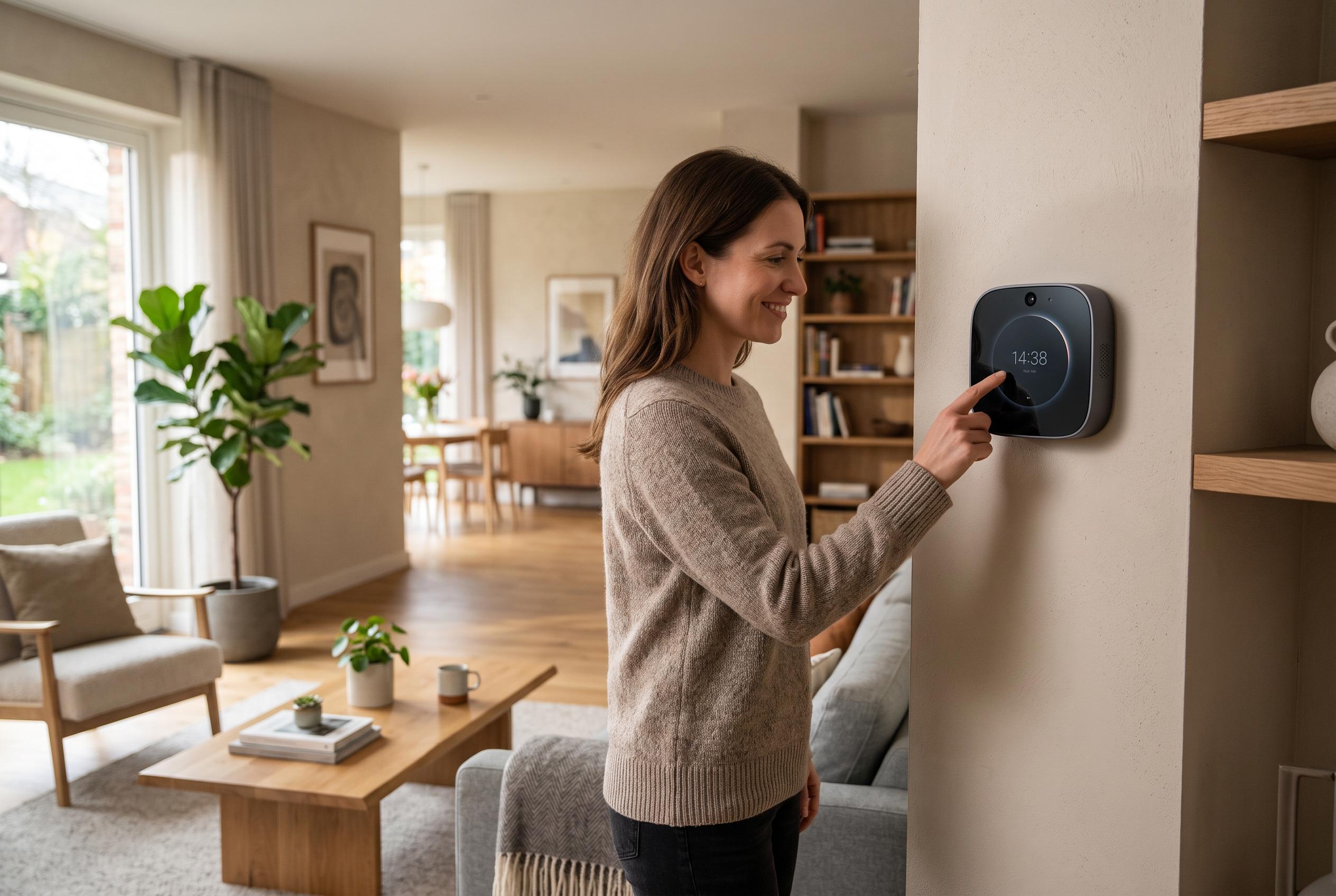

Apple’s new $299 HomeView combines a display, speaker, camera and home controls in a compact hub, but its closed software and lack of video apps limit its ambitions.
Apple has added a new smart home product to its line-up with the HomeView, a compact hub that combines a display, speaker, camera and voice assistant in one device. The company positions it as a central control point for connected homes, but also as a more personal screen that adapts to the person standing in front of it. According to Apple, the 7-inch Liquid Retina display can recognise up to six users, shifting content and controls to suit each household member.
The HomeView is designed around a mix of practical functions rather than a single use case. It can manage HomeKit-enabled devices through a custom control panel, take FaceTime calls with a 12MP Centre Stage camera, play music through its integrated audio system and show shared photo albums as a digital frame. Apple says Siri has been rebuilt for the device with more context-aware responses, on-screen replies and tighter links to everyday tasks such as recipes, reminders and home control. The company has also added support for messages and a nightstand view that can show the time, weather and notifications.
The hardware reflects that broad brief. Apple is offering the HomeView in four colours and in both tabletop and wall-mounted versions. What Hi-Fi? notes that the audio system includes a down-firing woofer, full-range drivers and passive radiators, with computational audio adapting output to placement, including when the unit is fixed to a wall. MacRumors reports that the device is powered by an A18 chip and Apple Intelligence support, which suggests Apple is treating it as a more capable home computer than a simple smart speaker.
Yet the HomeView is also notably limited in ways that may matter to buyers expecting a general-purpose home screen. Geeky Gadgets points out that it does not support video streaming apps such as Apple TV or YouTube, and it does not allow third-party app installation. That means it is not trying to become an iPad replacement for the kitchen counter or bedroom wall. Instead, Apple appears to be narrowing the product around communication, home control and light media tasks, while keeping the software environment tightly closed.
That approach may suit Apple users who already rely on iPhone, HomeKit and iCloud, especially in homes where simple controls and recognisable interfaces matter more than broad app support. The official pricing of $299 and the scheduled launch on 13 November 2026 make the HomeView relatively accessible by Apple standards, while its wall-mounted option could appeal to households looking for a fixed control centre. But the absence of video apps and third-party software means its appeal is likely to be strongest among users who want a dedicated smart home hub rather than a multifunction entertainment device.
Disclaimer: This content is intended for informational purposes only. Readers are advised to exercise their own judgement, conduct due diligence, or consult a qualified expert before acting on any information provided.



