

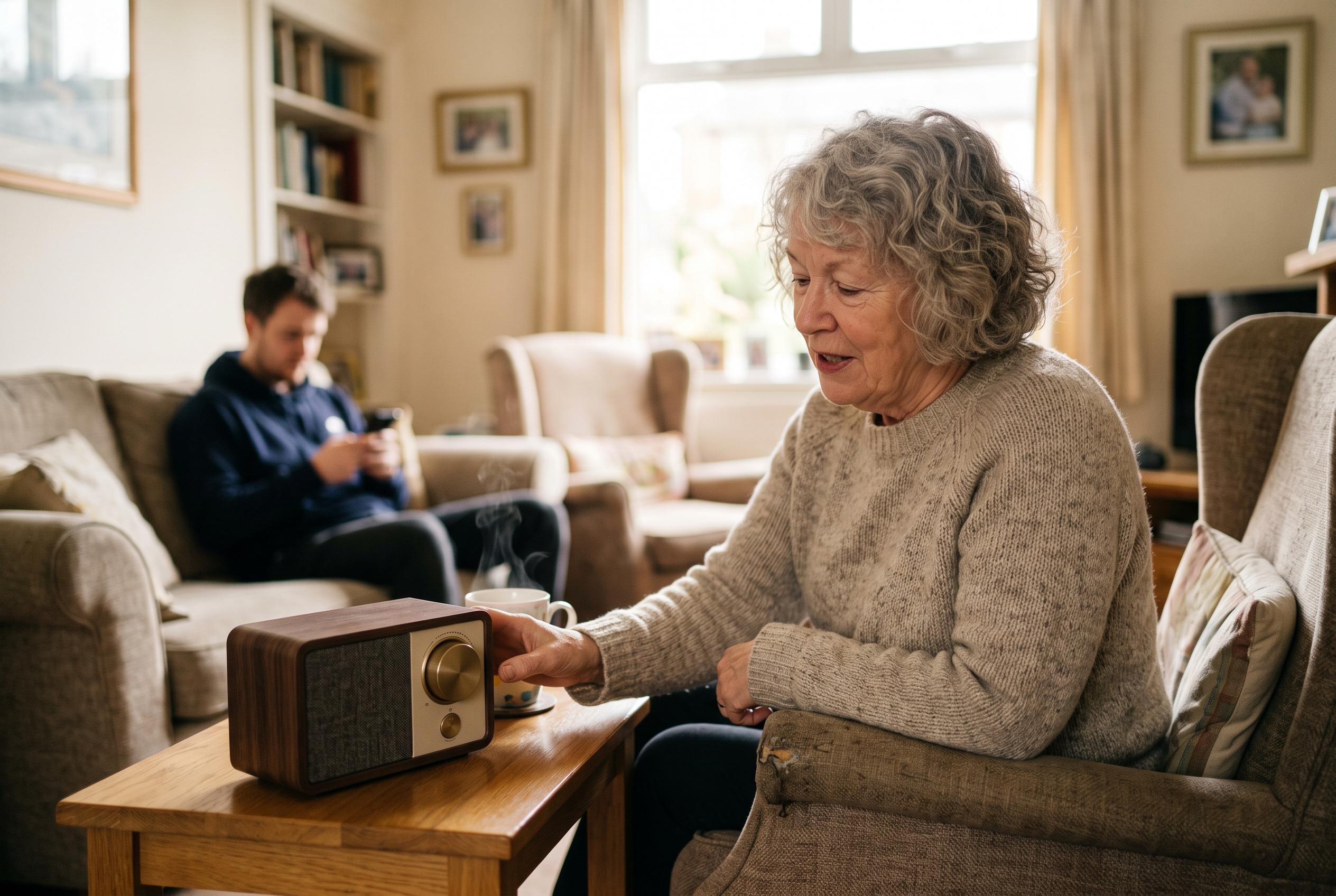

The voice-first companion swaps touchscreen menus for a radio-style interface, while family members manage reminders and messages through a separate app.
Ato is being pitched as a voice-first AI companion for older adults, but its design language is deliberately domestic rather than futuristic. According to Yanko Design, the device has been developed by Boostep with a rounded cream enclosure, a woven front and a bright orange button, making it look more like a tabletop radio than a smart speaker or tablet. The aim is to replace small icons and layered menus with something that can be understood and operated through touch and speech alone.
That physical simplicity is central to the product. Instead of asking users to tap through apps, Ato gives them a single obvious starting point: press the button and speak. A large side-mounted volume dial adds another tactile control, a choice that makes sense for users who may prefer physical cues over on-screen sliders. Yanko Design says the device has already moved through physical prototypes, suggesting the concept is now beyond the purely speculative stage.
The companion model still depends on a smartphone, but chiefly for relatives and carers. According to the product information on Ato’s website, family members can send messages, set reminders and manage the device through a Family App, while the older adult interacts with the unit by voice. That split is practical: the technical work is done elsewhere, while the person using the device at home is spared the burden of managing software.
Ato’s makers are also positioning it as something more active than a simple reminder system. The company says the device supports proactive check-ins, conversation, radio and spoken updates, and its website adds brain games such as word puzzles, trivia, storytelling and guided discussion. Those features are meant to encourage engagement and routine rather than leave the device idle until someone asks it to do something. The idea is companionship with structure, not an attempt to substitute for human contact.
The hardware is compact enough to sit on a side table, and the company says it works through Wi-Fi and USB-C power rather than an internal battery. That keeps the product small, but it also means placement will depend on access to both a socket and a stable connection. The Ato site says the device is assembled in San Francisco and was shaped by more than 2,500 early users in a closed beta over the past six months. A separate company release says it has already placed more than 1,300 devices in the field, with users averaging 82 years old, which suggests the product is already being tested in real homes rather than only in concept images.
Questions over privacy and safety remain important. Yanko Design reports that Ato says it does not store audio recordings or allow relatives to read conversation transcripts, though it does keep selected personal information to support future interactions. The company also says the device is not a medical product and cannot contact emergency services, an important limitation for families considering it as part of a wider care arrangement. In other words, Ato is being sold as a convenience and companionship tool, not as a replacement for proper alarm or medical alert systems.
Pricing and availability are also moving targets. Yanko Design said the device was listed at $179 plus shipping, with deliveries planned for February 2027. But Ato’s launch page now says pre-orders are open at a discounted $149, down from a regular $179, and that shipping is expected in December 2026. The same page says unlimited conversation requires a paid membership, while basic messaging, reminders and radio remain free. That makes the real cost of ownership more complex than the headline price alone, particularly for households deciding how much ongoing use they expect from the service.
Disclaimer: This content is intended for informational purposes only. Readers are advised to exercise their own judgement, conduct due diligence, or consult a qualified expert before acting on any information provided.



