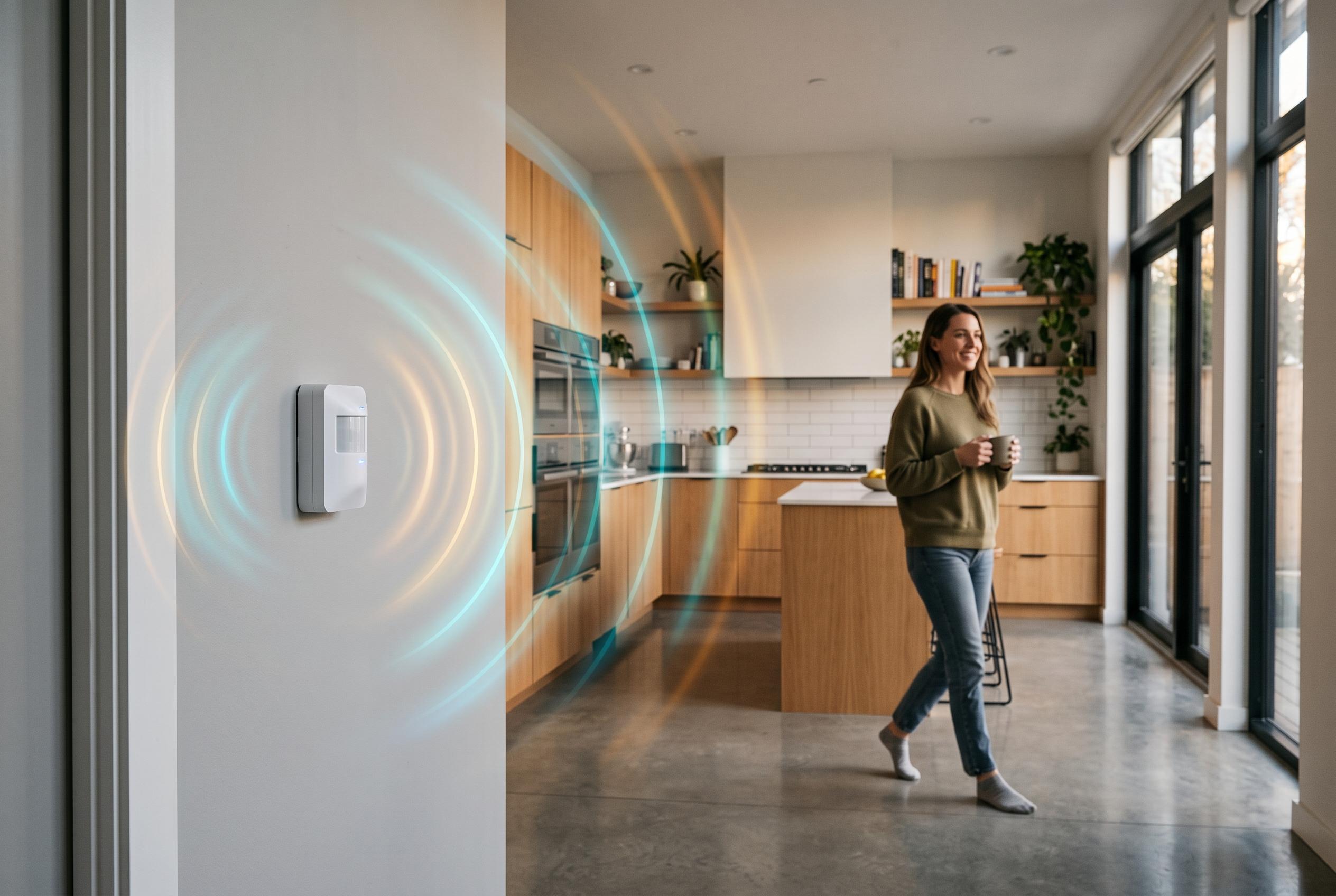

A new open-source system called ESPectre leverages existing Wi-Fi signals and inexpensive ESP32 devices to enable motion detection without cameras or microphones, offering a low-cost and privacy-conscious alternative for smart home monitoring and control.
ESPectre is an open-source motion detection system that turns an ESP32 and ordinary 2.4GHz Wi-Fi into a room-presence sensor, without cameras, microphones or wearables. The project, published by Francesco Pace, is designed to work with Home Assistant through ESPHome and is pitched as a low-cost option for home automation, with the creator saying basic hardware can cost about €10 and setup takes roughly 10 to 15 minutes. A companion site for the project, along with Home Assistant community discussion, describes support for several ESP32 variants, including the S3, C6, C3 and the original ESP32. According to those materials, the system can be used for security, lighting control, energy saving and care monitoring.
The core idea is that movement changes the Wi-Fi channel state between a router and the sensor. ESPectre analyses those changes, known as channel state information, to decide whether a room is idle or in motion. The project documentation says the production firmware uses an automated signal-selection process, adaptive thresholds and filtering to improve reliability, while a new machine-learning detector can run on-device without calibration. The developer says the ML mode is experimental, but a snapshot build is already available for users who want to test it.
Placement matters. The project recommends positioning the sensor about three to eight metres from the router for best results, at desk height, and avoiding large metal obstructions or enclosed corners that can reduce signal diversity. It also notes that one sensor can cover roughly 50 square metres, with multiple units needed for larger homes. The system does not attempt to distinguish between people and pets; it is designed to detect generic movement rather than classify the source of that movement.
ESPectre sits within a broader push towards non-visual sensing in the smart home. The project’s documentation distinguishes between its production-focused ESPHome build and a separate research-oriented Micro-ESPectre platform for rapid algorithm development. It also points to planned capabilities such as gesture recognition, human activity recognition, people counting and indoor localisation. For now, however, the emphasis remains on a simple proposition: low-cost presence detection with no camera feed, no audio capture and native integration into Home Assistant.
Disclaimer: This content is intended for informational purposes only. Readers are advised to exercise their own judgement, conduct due diligence, or consult a qualified expert before acting on any information provided.