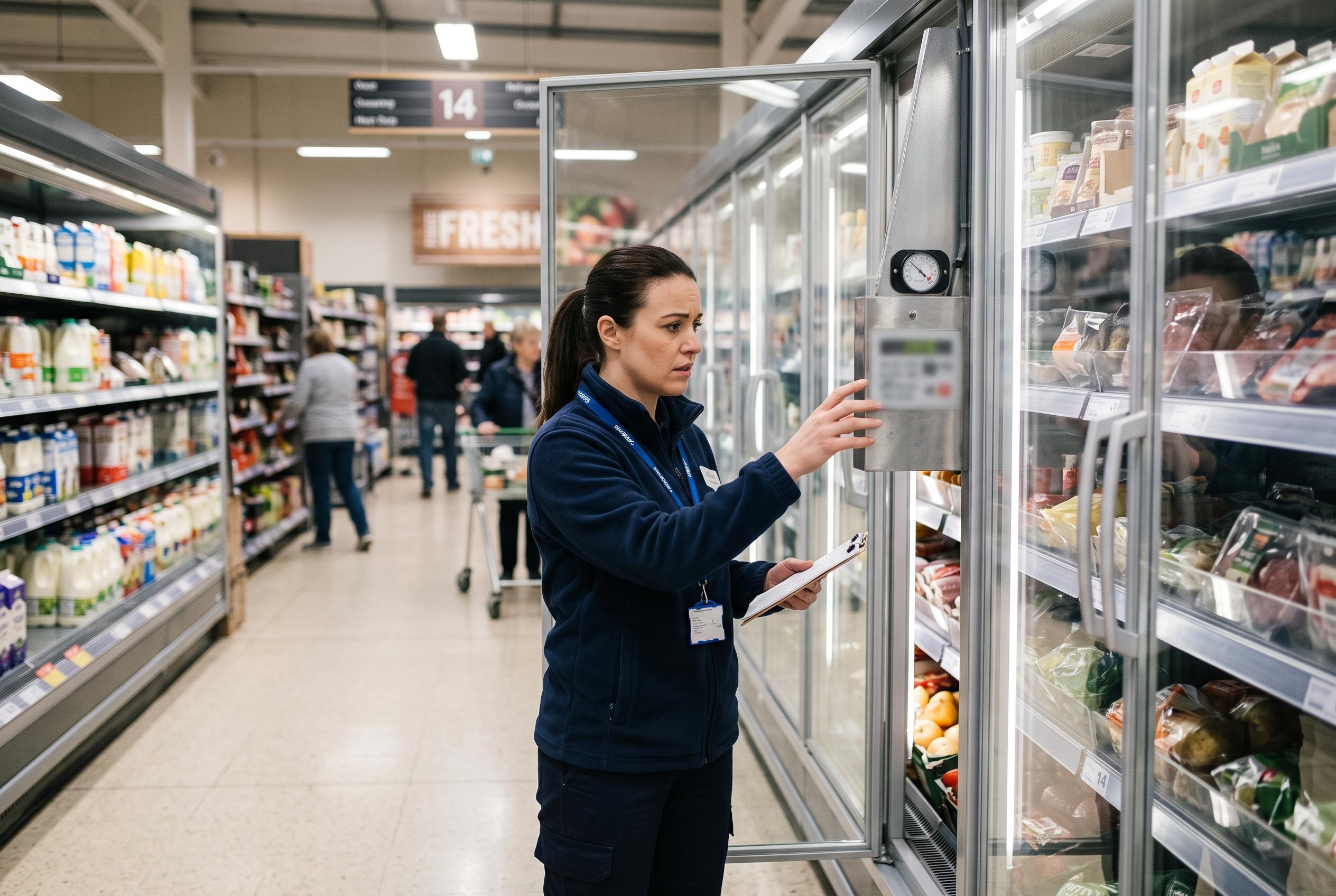

Attackers remotely drove connected refrigeration systems into defrost mode, spoiling food and causing fires while highlighting the security risks of using supermarket cooling as a flexible energy resource.
A cyberattack that remotely altered refrigeration settings in French supermarkets has exposed both the fragility of connected retail systems and the growing importance of refrigeration to modern energy management. According to reports from The Guardian, CBS News and Le Monde, hackers manipulated controllers used in stores across France, forcing some units into defrost mode and pushing temperatures as high as 50°C. The result was spoiled food, smoke and, in some cases, small fires, with retailers including Intermarché, Coopérative U and other major chains affected.
The attack appears to have exploited a broader weakness in supermarket control infrastructure rather than a single brand-specific flaw. Ars Technica, as relayed in the lead report, said the targeted controllers from Danfoss, Dixell and Copeland all contained critical vulnerabilities that could give attackers administrator-level access, while the devices were also exposed to the public internet without VPN protection. Copeland has said the compromised equipment was an obsolete, end-of-life generation, underscoring how legacy hardware can remain operational long after its security support has become inadequate.
The incident has wider significance because supermarket refrigeration is both a major cost centre and a substantial power load. The US Environmental Protection Agency’s National Centre for Environmental Economics has previously estimated that refrigeration can account for 40 to 60 per cent of a typical supermarket’s energy use, while hydrofluorocarbons used in cooling systems can sharply increase their climate impact. Researchers have therefore been testing whether refrigerated cabinets can behave like “cold batteries”, storing cooling when electricity is abundant and easing demand when the grid is strained. Trials in Finland and the United Kingdom have shown that the idea can work in practice, provided the controls are precise enough to avoid delays in recovery after defrost cycles and to prevent damaging surges when compressors restart.
That tension between efficiency and exposure is now at the centre of the debate around supermarket cooling. A 2025 report cited by the lead article from the Environmental Investigation Agency argued that natural refrigerants can reduce emissions and operating costs, and said Carrefour has already derived sizeable savings from low-global-warming-potential equipment. Yet the French attack has demonstrated that the same connectivity used to coordinate refrigeration for maintenance, monitoring and grid flexibility can also create a single point of failure. For retailers, the immediate priority is less ambitious than turning fridges into grid assets: it is ensuring that the systems keeping food cold are not left open to anyone with malicious intent.
Disclaimer: This content is intended for informational purposes only. Readers are advised to exercise their own judgement, conduct due diligence, or consult a qualified expert before acting on any information provided.