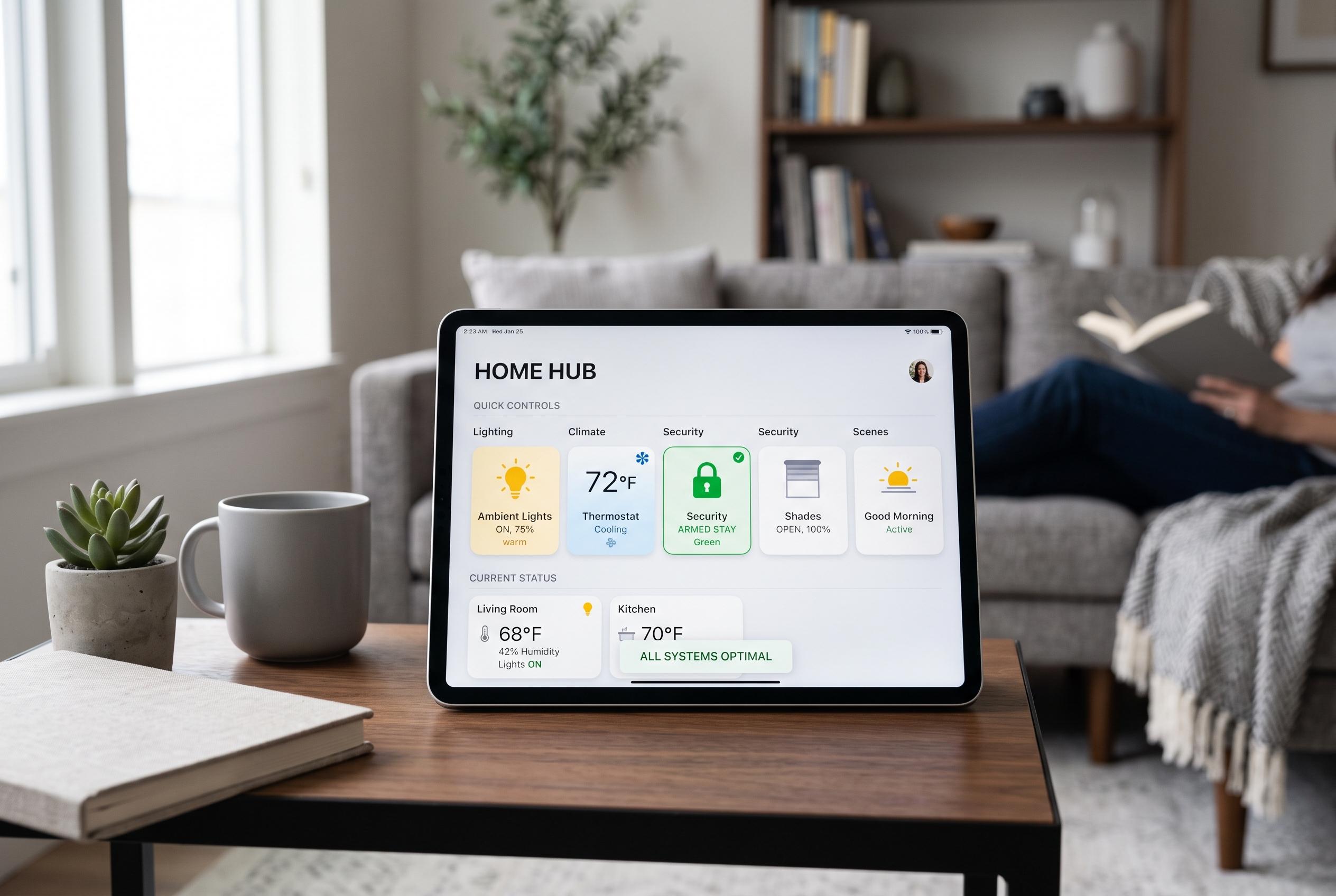

The latest Home Assistant update introduces purpose-built triggers and conditions directly into the main platform, making automations more intuitive and resilient by focusing on user intent rather than technical entity states.
Home Assistant’s latest release is making a quiet but important change to one of the most frustrating parts of smart home setup: writing automations that do what users mean, rather than what the software happens to expose. The 2026.7 update brings purpose-specific triggers and conditions into the main product, moving them out of Labs and making them available by default in both the interface and YAML configurations, according to Home Assistant. The aim is straightforward: let users build rules around intent, such as a room getting too cold or a person arriving home, without having to wrestle with entity states and trigger types.
That matters because traditional Home Assistant automations often depend on technical details that are not obvious at first glance. Users have had to decide whether a sensor should be handled as a state trigger, a numeric state trigger or a device trigger, then learn exactly how a specific integration reports values. Home Assistant’s own release notes say the new system is designed to remove that layer of guesswork by presenting automation building blocks in more natural terms. Existing automations continue to work, so the change is additive rather than disruptive.
The practical benefits are clearest with sensors that do not behave consistently. Temperature thresholds, battery warnings and motion detection are all examples where older automations could become fragile if a device changed, if a value briefly disappeared or if a sensor reported an unexpected state. In the new model, a user can select a purpose-specific option such as battery low or temperature crossing a threshold, and Home Assistant handles the underlying logic. That does not eliminate the need for a device to be configured properly, but it does reduce the amount of manual threshold-setting and state checking.
The same approach also makes room-based automations easier to maintain. Instead of tying a lighting routine to one motion sensor by name, users can now aim it at an entire area, so the automation keeps working if a sensor is added, replaced or removed. Home Assistant says this is one of the main design goals of the release: automations should describe a place, an event or an outcome, rather than a single hardware component. For homes with multiple sensors covering the same room, that is a material improvement in reliability and maintenance.
Earlier Home Assistant releases laid the groundwork for this shift. According to the company’s release notes, 2026.1 and 2026.2 expanded the range of purpose-specific triggers and conditions, starting in Labs and gradually adding events such as button presses, calendar changes and person arrivals. The July release turns that experiment into a default part of the platform. For users who have left old automations untouched for fear of breaking them, the message is simple: the next version of smart home automation may be less about memorising entity behaviour and more about expressing what should happen.
Disclaimer: This content is intended for informational purposes only. Readers are advised to exercise their own judgement, conduct due diligence, or consult a qualified expert before acting on any information provided.