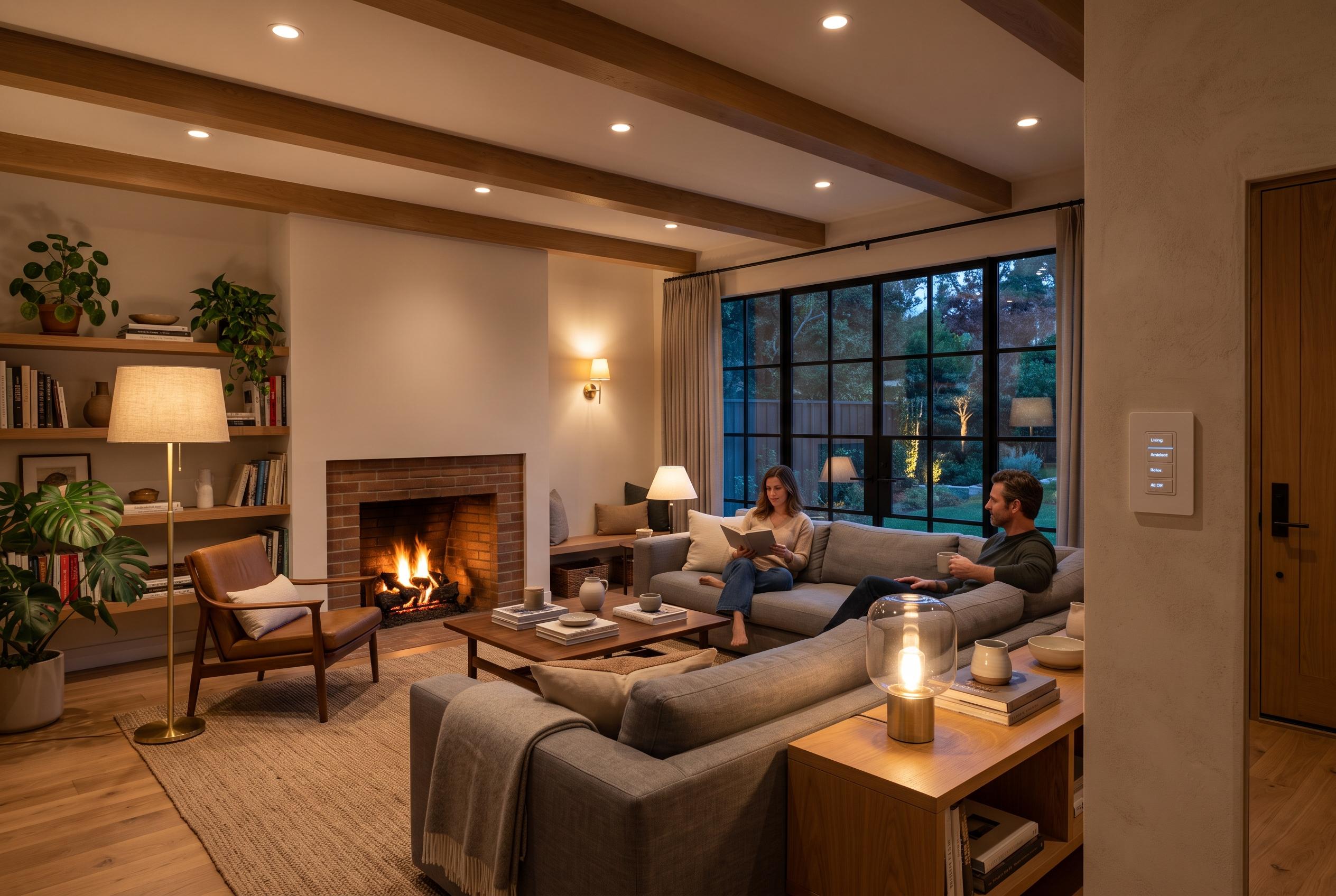

Experts highlight how combining multiple light sources at various heights enhances warmth, practicality, and visual appeal, with smart controls making adjustments effortless for homeowners.
A single ceiling fitting may be the easiest way to light a room, but it is rarely the most effective. Lighting specialists quoted by TechRadar argue that a layered approach, using several sources placed at different heights and in different parts of a room, can make a home feel warmer, more practical and more visually resolved without any structural changes. In simple terms, layered lighting treats light as part of the room’s design, not just a way to switch it on.
The basic idea is to combine ambient, task, accent and decorative light so each source has a clear job. Ambient light provides general brightness, task light supports activities such as reading or cooking, accent light draws attention to features or textures, and decorative lighting adds character. Interior design guides from Livingetc, Lumens and Redfin all make the same point: a room lit from only one point often looks flat, while multiple layers create depth, comfort and flexibility.
Placement matters as much as fixture choice. Paulmann’s Tom Amelung tells TechRadar that lights should follow how a room is used, rather than being arranged in a rigid grid. He says bright overhead spotlights can make a space feel harsh, while lights above worktops help avoid shadows during cooking. Livingetc and Vaia similarly advise zoning a room, matching light level to function and using dimmers to control the mood as the day changes.
Smart lighting makes this easier to manage. Philips Hue says connected fittings allow users to alter brightness, colour temperature and ambience without changing the room layout, which is useful in open-plan spaces that serve several purposes. Govee’s Jerry Lin says features such as automatic daytime tuning and advanced colour control can adapt light to routine and atmosphere, while Lumens notes that smart controls can also improve efficiency by reducing reliance on one always-on overhead source.
For households wanting a quick start, the advice from the lighting brands is straightforward: add a table or floor lamp, introduce a wall light or strip where appropriate, and use dimming to balance the layers. Philips Hue suggests a bedroom setup might include an overhead fixture, bedside lamps, softer accent lighting and concealed strip lights, with each source dimmed to avoid visual clutter. Ideal Home’s guide to the 5-7 lighting rule makes a similar case for using several sources in social spaces, arguing that multiple lights are often enough to transform how a room feels at night.
Disclaimer: This content is intended for informational purposes only. Readers are advised to exercise their own judgement, conduct due diligence, or consult a qualified expert before acting on any information provided.