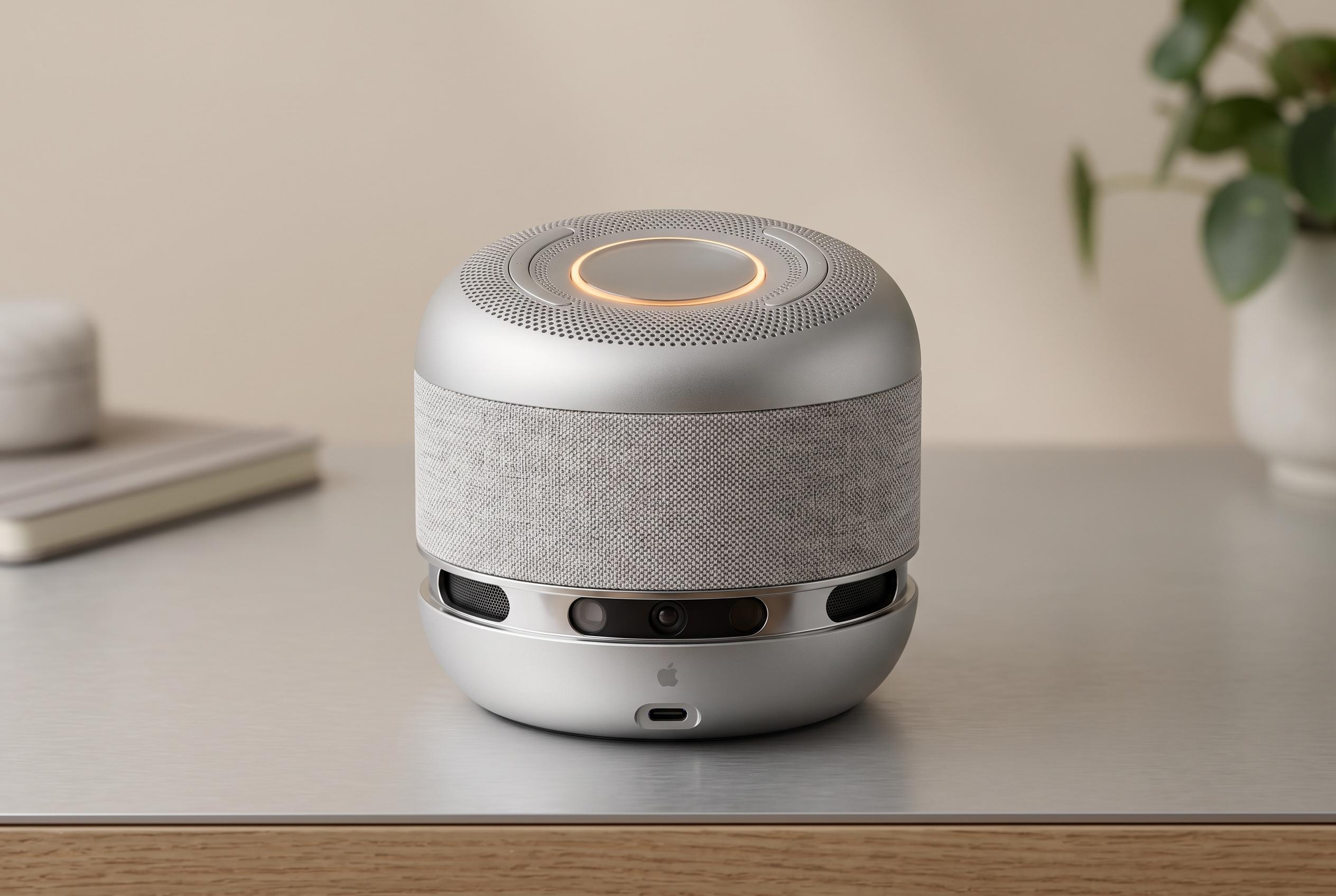

OpenAI is developing a compact, screenless smart speaker with expressive physical features and advanced environmental sensing, aimed at transforming home AI interaction by 2027, in collaboration with former Apple designer Jony Ive.
OpenAI is preparing a screenless smart speaker with an unusual rounded form that is meant to sit easily in the hand, according to people familiar with the matter cited by Bloomberg. The device is said to be roughly the size of a hockey puck, with moving components intended to give it a more expressive, less mechanical feel than a conventional speaker. The reported design suggests OpenAI wants its first consumer hardware to look and behave more like a companion than a standard home assistant.
The product appears to be central to OpenAI’s broader push into consumer devices. The Los Angeles Times reported in July that the company sees the speaker as a new kind of home computer for the AI era, while MacRumors said the device is being developed with former Apple designer Jony Ive and is expected to launch in early 2027. Reports across the summer have converged on the same basic idea: a portable, screen-free device built around voice interaction rather than a display.
Several accounts have also pointed to a built-in camera and environmental sensing. Digital Trends reported that the speaker may be able to identify nearby objects and conversations, while the same report said biometric authentication could allow users to approve purchases in a way similar to Face ID. MacRumors similarly reported that the speaker could learn from its surroundings and use facial recognition for secure transactions. If accurate, those features would move the product well beyond a simple speaker and into the category of context-aware home hardware.
Pricing has been another area of consistency, although estimates vary. Bloomberg said the device is likely to cost more than $300, while other reports have placed it closer to the $200 to $300 range. Investing.com reported that OpenAI has assembled a team of more than 200 people to work on a wider family of devices, including smart glasses and a smart lamp, and said the speaker would not arrive before February 2027 at the earliest. That wider hardware effort suggests the speaker is only the first step in a more ambitious product line.
For OpenAI, the challenge will be to make a voice-first device feel genuinely useful rather than novelty-driven. The reported combination of portability, camera-based awareness and animated physical elements indicates an attempt to create a more human-like interface for ChatGPT. Whether consumers will pay premium pricing for that promise will depend on how well the company can turn conversational AI into something that is reliable, private and helpful inside the home.
Disclaimer: This content is intended for informational purposes only. Readers are advised to exercise their own judgement, conduct due diligence, or consult a qualified expert before acting on any information provided.