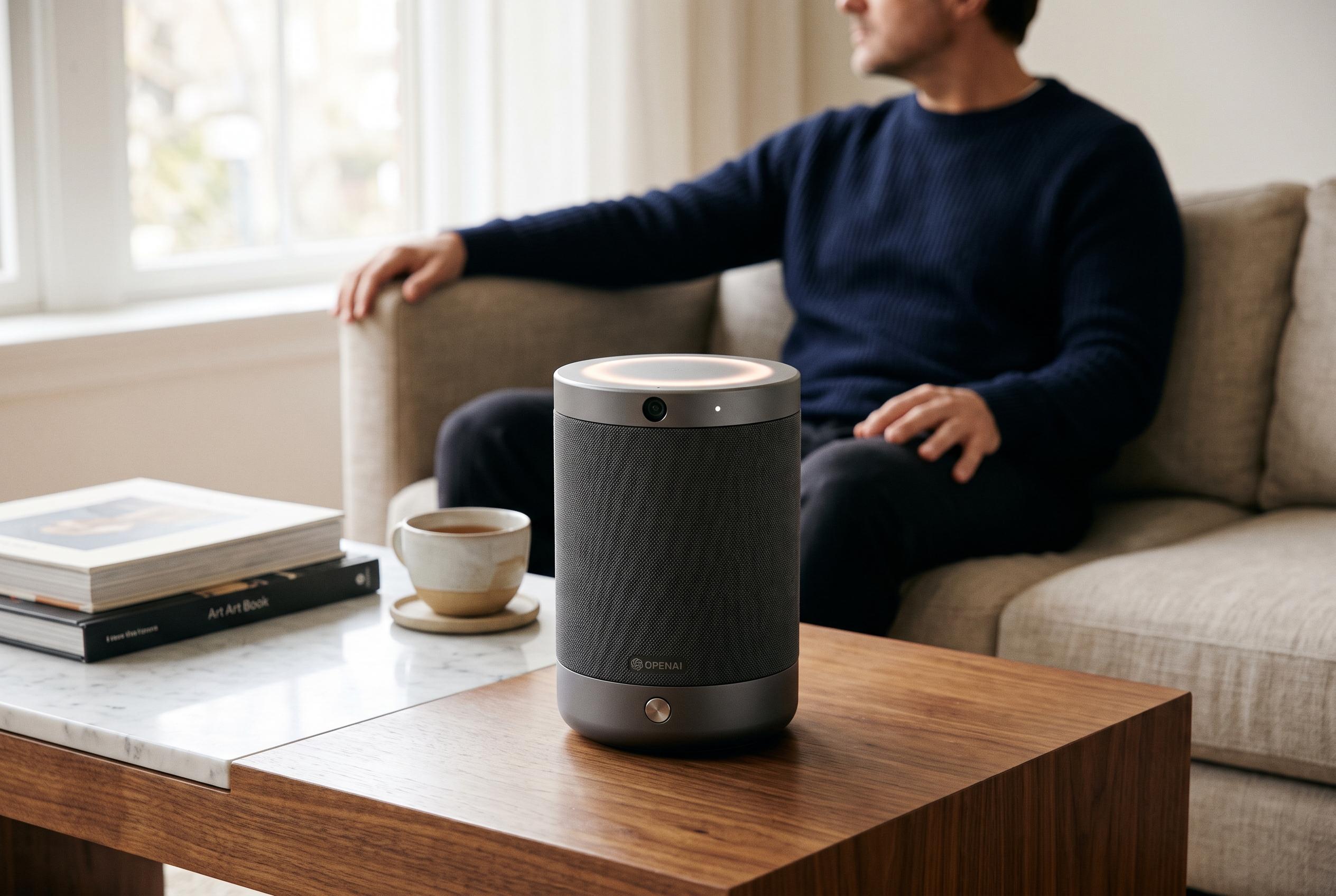

OpenAI’s first consumer hardware, developed in collaboration with former Apple designer Jony Ive, is set to reimagine home AI with a camera-enabled, voice-interactive device expected in 2027, blending sensors and a premium design without a screen.
OpenAI’s first consumer device is taking shape as a smart speaker rather than the headphones, wearable or pen that had been speculated about earlier. Bloomberg’s Mark Gurman has reported that the project is being developed with former Apple designer Jony Ive and is intended to bring ChatGPT-style interaction into the home through voice, sensors and a camera rather than a conventional screen. The device is said to be OpenAI’s first major hardware push after buying Ive’s hardware firm io in May 2025.
The product is expected to arrive in early 2027 and to cost roughly $200 to $300, according to reports from MacRumors, 9to5Google and TechRadar. That would place it in premium smart-speaker territory, but without a display. Instead, the design is said to centre on a compact, premium body with a glowing light ring and moving elements that respond to interaction. The aim appears to be to make the device feel more like an intelligent presence than a simple speaker.
Several reports say the camera will be a key part of that experience. It is expected to help the device recognise faces, identify objects and understand its surroundings, while persistent listening would allow users to speak naturally without always needing a wake word. In practical terms, that would make the speaker less of a passive assistant and more of a context-aware system that can adapt to the room, the user and nearby activity.
According to WinBuzzer, more than 200 employees are working on the project under Ive’s team, underscoring how seriously OpenAI is treating the move into hardware. That effort also comes with obvious risks. A report from El Nacional notes that OpenAI is already facing friction with Apple over accusations involving former employees, which the company has rejected. If the speaker does reach the market in 2027, it will test whether OpenAI can translate its software edge into a product that is both useful and commercially credible in the home.
Disclaimer: This content is intended for informational purposes only. Readers are advised to exercise their own judgement, conduct due diligence, or consult a qualified expert before acting on any information provided.