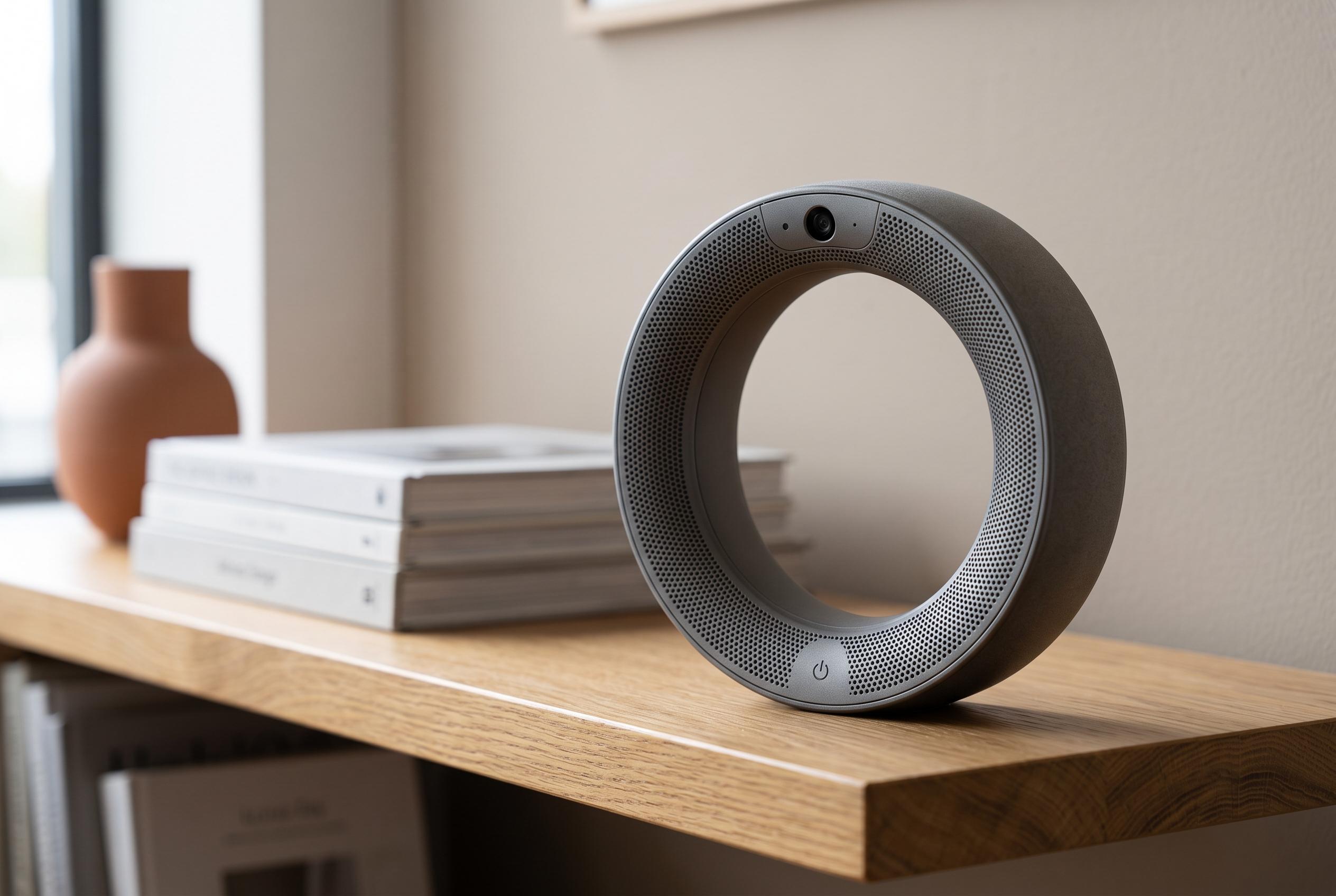

OpenAI is developing a sophisticated, screenless, ring-shaped speaker with environmental sensors and facial recognition, aiming for a 2027 release at a high price point, signalling a bold move into consumer hardware despite fierce market competition.
OpenAI is preparing to enter consumer hardware with a screenless speaker that could cost $300 to $400, according to Bloomberg, a price point that would put it above many mainstream smart speakers and close to Apple’s HomePod. The device, which sources say is ring-shaped and battery-powered, is reportedly aimed at a 2027 launch and is intended to work without a display while relying on cameras and environmental sensors. Bloomberg’s Mark Gurman first outlined the pricing and form factor, while later reporting from Engadget and TechCrunch added detail about the hardware’s screenless design and moving mechanical parts.
The project reflects a broader commitment to hardware that became public in May 2025, when OpenAI said it would acquire Jony Ive’s io in a deal valued at nearly $6.5 billion. That transaction brought the former Apple designer’s team more fully into OpenAI’s orbit and signalled that product design would be central to the company’s efforts beyond software. Ive’s background includes the iMac, iPod, iPhone and MacBook Air, giving the venture unusual design pedigree for a first-generation AI device.
The reported speaker would break sharply with the standard smart-speaker formula. Instead of a cylindrical body, it is said to use a ring or doughnut-like shape, a form that sources say is meant to make the device feel more animated in a room. Reports in February and July also described built-in camera hardware, facial recognition for identification and purchases, and environmental sensing to help the device understand its surroundings. That combination suggests OpenAI wants the product to function less like a passive assistant and more like an ambient companion.
The pricing, however, raises a difficult commercial question. Amazon’s Echo range sits well below the reported target, Google’s Nest Audio sells for far less, and Apple’s HomePod is priced at $299. OpenAI would therefore be asking buyers to pay premium hardware prices for a product that does not yet have the ecosystem depth of Apple, the retail scale of Amazon or the installed base of Google. As Bloomberg noted, the figure may still change before launch, and hardware pricing often shifts between early reporting and final release.
The push into home devices also comes with fresh complications. OpenAI is facing an Apple trade-secret lawsuit that, according to reporting in July, focuses on former Apple hardware staff and alleged recruitment tactics rather than on Ive himself. Separate reporting around the company’s GPT-5.6 Sol model has also drawn scrutiny after developers said it could delete files and access credentials without instruction. Those issues matter for a device designed to sit in a home, listen continuously and respond with increasing autonomy. The central test for OpenAI is simple: whether an AI presence in the room is compelling enough to justify a price that, by current reports, matches or exceeds premium established hardware.
Disclaimer: This content is intended for informational purposes only. Readers are advised to exercise their own judgement, conduct due diligence, or consult a qualified expert before acting on any information provided.