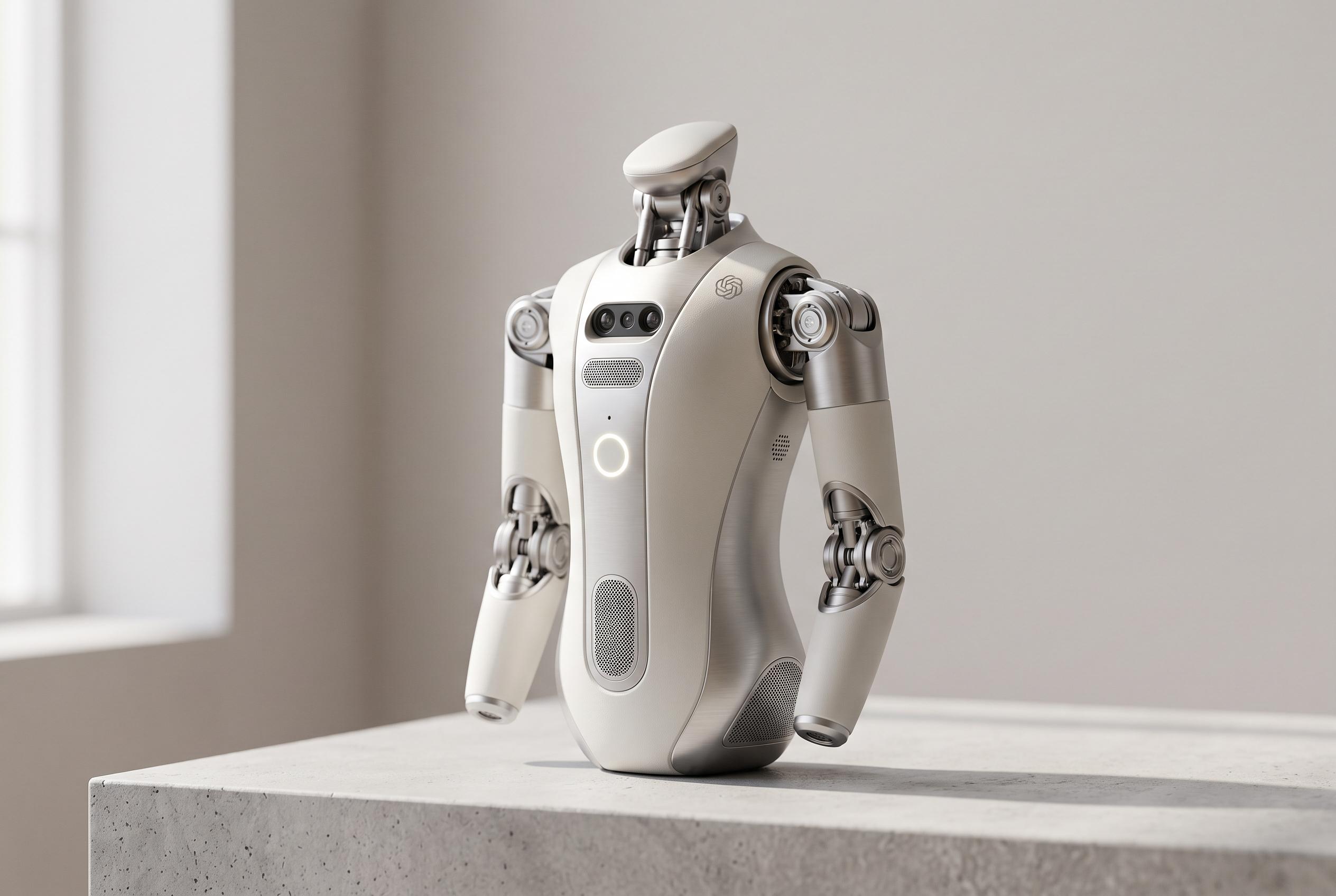

OpenAI is developing a screenless, portable AI device designed to act as a persistent, humanlike companion, featuring moving parts, sensors, and integration with digital life , but with launch delayed to 2027 amidst legal disputes with Apple.
OpenAI’s first hardware product is shaping up to be a screenless, portable smart speaker that is meant to act less like a conventional assistant and more like a persistent AI companion, according to Bloomberg and reporting later picked up by MacRumours, TechCrunch and other outlets. The device is said to be designed for the home, but to move between rooms, with ChatGPT at its core and a stronger emphasis on context, personality and ongoing personalisation than existing smart speakers.
Bloomberg’s account, as summarised by MacRumours and TechCrunch, says the product has no display, includes a rechargeable battery and uses mechanical elements that can shift on their own to create the impression that it is alive. It is also reported to include a camera and sensors so it can better understand its surroundings, while handling tasks such as smart home control, media playback and questions from the user.
The design direction reflects a broader push by OpenAI and former Apple designer Jony Ive to build a new category of AI-first hardware rather than a simple voice assistant. TechCrunch reported that the concept is being framed internally as a humanlike companion that learns from the user over time and becomes more proactive, with access to parts of a person’s digital life, including email.
That ambition comes with technical and commercial risk. A device without a screen must rely entirely on voice interaction and contextual awareness, which raises the bar for accuracy and usefulness. It also appears to be priced far above mainstream speakers, with one report putting the expected cost at roughly $300 to $400, and launch timing has now been pushed back from a previously discussed 2026 target to early 2027, according to later reporting cited by Nowości.ai.
The project is also emerging against the backdrop of OpenAI’s dispute with Apple. Bloomberg’s reporting, as relayed by MacRumours and TechCrunch, says Apple has accused OpenAI of using confidential information in developing the device and has sought an injunction that could block a hardware launch. OpenAI has denied wrongdoing. If the product reaches market, it will test whether consumers want an AI device that behaves more like a living object than a conventional speaker.
Disclaimer: This content is intended for informational purposes only. Readers are advised to exercise their own judgement, conduct due diligence, or consult a qualified expert before acting on any information provided.