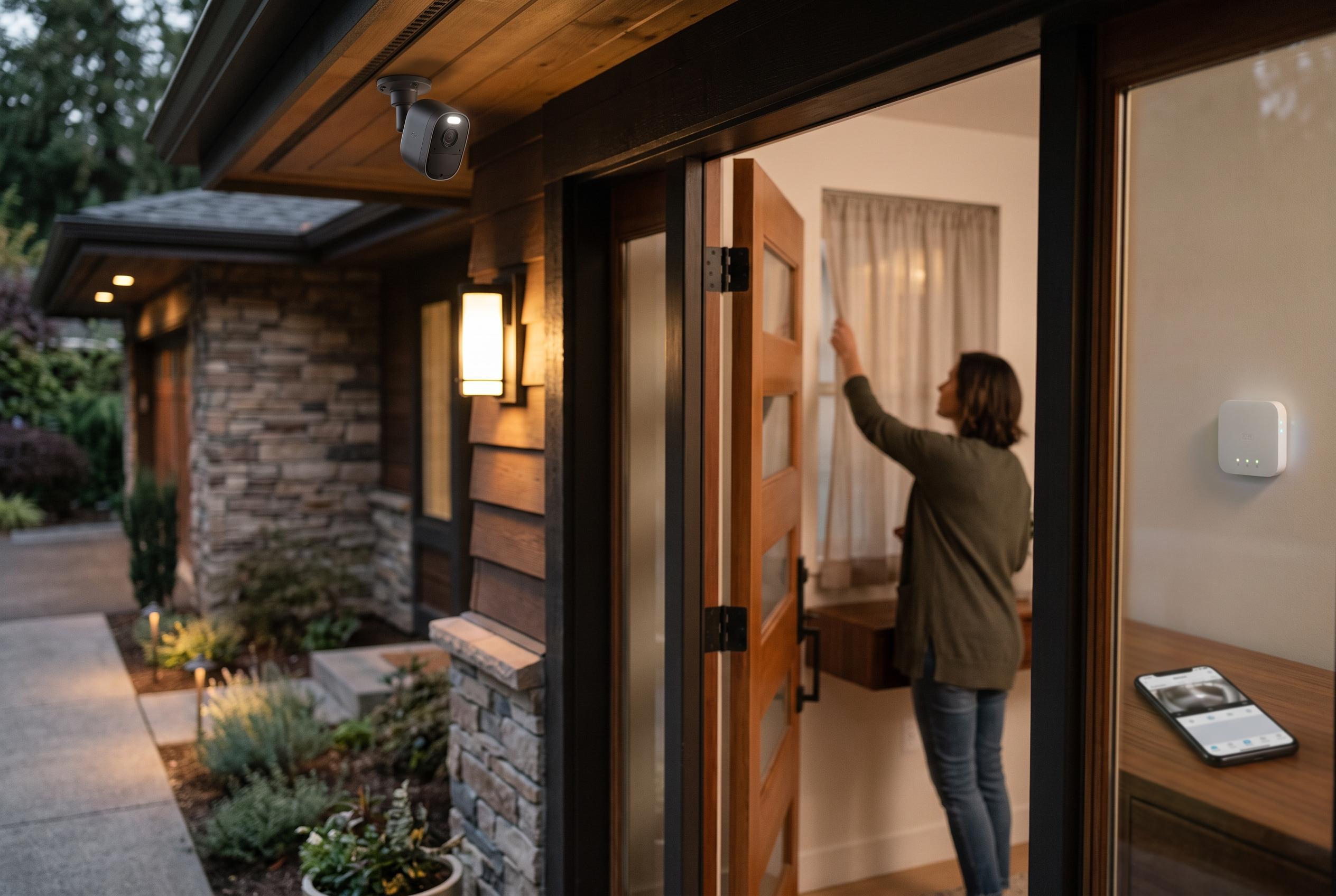

As connected CCTV cameras become more common in homes and businesses, recent reports highlight growing risks of hacking, surveillance breaches, and misuse, prompting tighter regulations and broader awareness of security basics.
CCTV cameras have become a routine part of home and business security, but the rise of Wi-Fi and SIM-enabled models has created a second risk alongside the protection they are meant to provide: the possibility that the footage itself can be intercepted, misused or exposed. According to recent reports from India, investigators have increasingly linked connected cameras to surveillance of sensitive locations, while cyber security researchers overseas have also continued to uncover flaws in popular smart-camera products that can expose live feeds or stored recordings.
In India, the concern is no longer theoretical. Reports cited in the source material describe multiple cases in Punjab involving internet-connected cameras, SIM cards, routers and other equipment, as well as a network uncovered in Ghaziabad in March 2026 that allegedly used cameras near Delhi Cantonment and Sonipat railway station to send live images of military movement and other sensitive activity abroad. The same reporting says the intended scope extended far beyond a single site, with plans to install dozens more cameras in border-adjacent areas.
Cyber security specialists say the first question is not only who installed the device, but who built it, how it was configured and where its data is routed. That matters because connected cameras can be targeted through weak passwords, exposed services, old firmware or flaws in the vendor’s software. In one example reported by security researchers and technology publications, vulnerabilities in a TP-Link Tapo camera allowed unauthorised users to bypass authentication and access video feeds until a firmware update was issued in August 2026. In another case, researchers said they extracted vast amounts of material from a Flock camera after finding an encryption key stored on the device itself, underlining that cloud branding does not eliminate local or physical risk.
Password discipline remains one of the simplest but most neglected defences. Security guidance cited in the source material says default credentials are still a common failure point, and that weak passwords are regularly attacked through dictionary and brute-force attempts. Experts therefore recommend changing any installer-set password immediately, using at least 12 characters, avoiding plain words, and adding numbers and special characters. Two-factor authentication, where available, adds another layer, but it does not compensate for a password that is easily guessed or reused elsewhere.
Regulators have also begun tightening oversight. The source material says India has moved towards stricter security standards for CCTV hardware and software, including certification tests in approved laboratories, clearer hardware disclosure and rules aimed at stronger login protection, network security and software updates. By March 2026, 507 CCTV models had cleared the relevant security standards, according to the report, while non-compliant products were barred from purchase. That shift reflects a wider recognition that security equipment itself must be treated as a software product, not just a camera with a lens.
For buyers, the practical question is no longer only image quality or price. It is also where the footage is stored, how often the firmware is updated, whether the app supports secure access, whether password changes are possible, and who can reach the live stream once the device is online. Local recording through a DVR keeps data in the home, but it can be stolen during a break-in. Cloud storage reduces that physical risk, yet introduces questions over server location, access controls and data jurisdiction. Security specialists also say the wider network matters: if the Wi-Fi itself is weak, outdated or still relying on older protections such as WPA2, the camera is only as safe as the router that carries its traffic.
Disclaimer: This content is intended for informational purposes only. Readers are advised to exercise their own judgement, conduct due diligence, or consult a qualified expert before acting on any information provided.