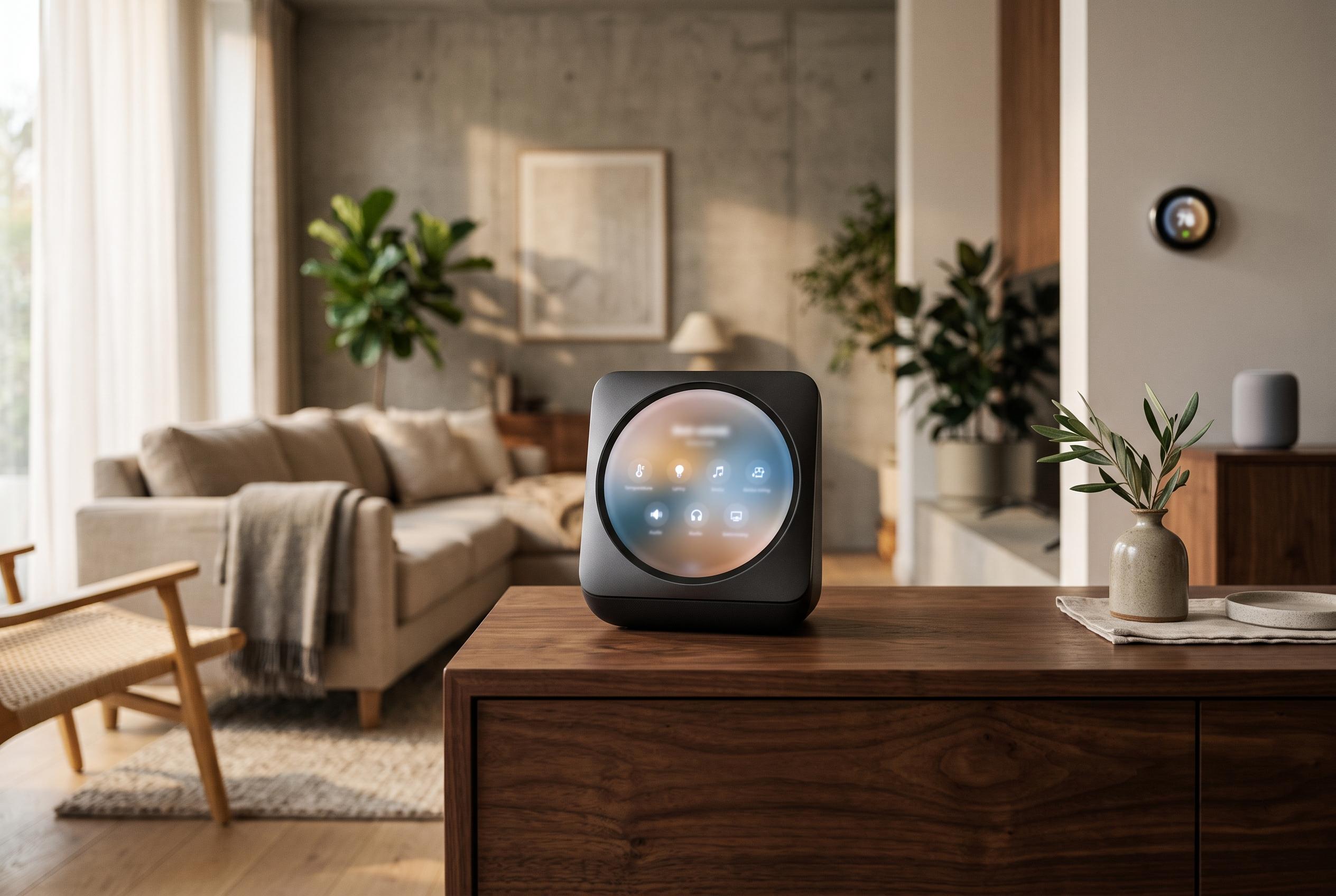

As household smart hubs evolve, new contenders like the Amazon Echo Show 15 and Hubitat Elevation C-8 Pro are redefining their roles, prioritising integrated control, protocol support, and privacy for a more flexible and resilient smart home ecosystem.
For households weighing a smart home hub in 2026, the main question is no longer whether a device can switch lights on and off. The real issue is whether it can sit at the centre of a wider system, handle mixed protocols, and remain useful as standards change. In that respect, Amazon’s Echo Show 15 remains the most rounded option in the list, largely because it combines a large screen, Alexa control and a practical dashboard for daily use. TechRadar and PCWorld both note that its 15.6-inch display makes it especially suited to kitchens and family rooms, although the same scale can be awkward in smaller spaces.
The strongest case for advanced users comes from the Hubitat Elevation C-8 Pro. HomeControlHub and Smart Home Field Guide both emphasise its local processing, which allows automations to run quickly even when the internet is unavailable. Its support for Z-Wave, Zigbee and Matter gives it a broad protocol base, while compatibility with Alexa, Google Assistant and Apple HomeKit adds flexibility. The trade-off is clear: it is less forgiving for beginners and depends heavily on devices that fit within its supported ecosystem.
A different sort of hub is the Amazon Echo Hub, which leans towards a wall-mounted control panel rather than a full-featured general-purpose device. The device is designed around a customisable dashboard and deep Alexa integration, making it useful for people who want a shared family interface for routines, security and camera feeds. That said, optional accessories and Ring-related extras can raise the total cost, so the published price may understate what some homes will actually spend to complete the setup.
For users who prioritise privacy and local control, Home Assistant Green remains one of the most capable choices, even if it asks more of the owner. It is aimed at people comfortable with open-source software and hands-on configuration, and it supports Z-Wave, Zigbee and Thread through USB expansion. By contrast, simpler devices such as the MOES control panel or the Aqara M100 are more narrowly focused: they can be effective, but they are tied more closely to Zigbee or to the vendor’s own ecosystem. That makes them easier to place and use, but less adaptable over time.
The overall pattern is consistent across the field. Larger display hubs improve visibility and day-to-day control, while local processing and broader protocol support improve resilience and longevity. The best choice depends on whether the buyer wants a family-facing control centre, a privacy-led automation engine or a simpler panel for routine tasks. On the evidence available, the Echo Show 15 is the broadest all-rounder, but Hubitat and Home Assistant Green are better suited to users who care more about control depth than convenience.
Disclaimer: This content is intended for informational purposes only. Readers are advised to exercise their own judgement, conduct due diligence, or consult a qualified expert before acting on any information provided.