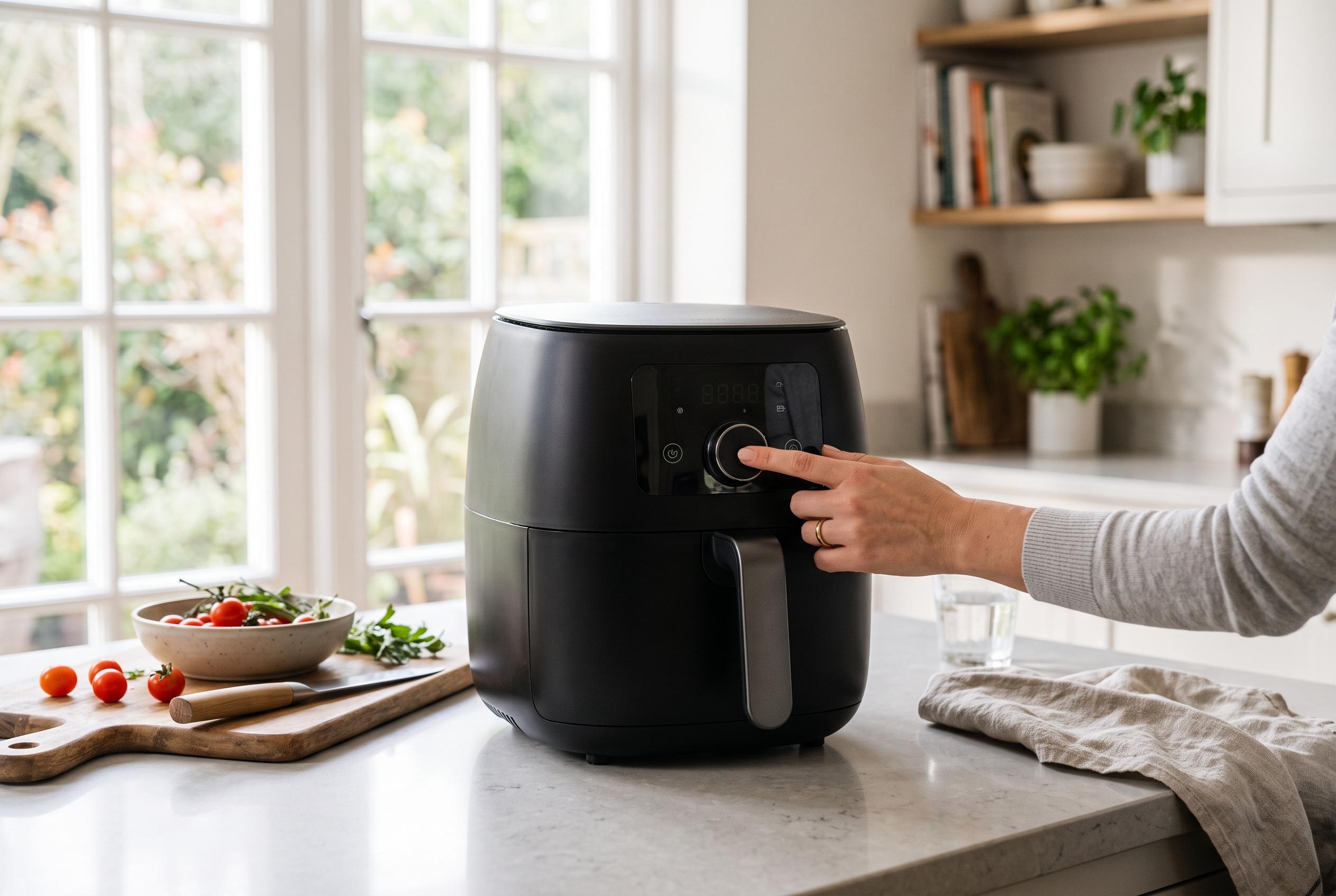

New research reveals that the most effective smart kitchen devices focus on solving common problems simply and efficiently, emphasising durability, ease of use, and integration into daily routines over feature-heavy designs.
Smart kitchen gadgets are attracting attention because they promise to shave time off routine tasks, cut down on mess and make cramped spaces easier to use. But the best devices are not the ones with the most features. They are the ones that solve a frequent problem in a way that is simpler, faster or cleaner than doing the same job by hand. In that sense, the appeal is less about novelty than about whether a product earns its place on the worktop. According to recent kitchen trend research cited by RiSMedia and by smart-home guides, the strongest case is usually for devices that slot into everyday habits rather than those designed to impress on first use.
That is why practical upgrades such as smart bins, under-cabinet lighting, leak sensors and smart displays are often more persuasive than larger, more specialised gadgets. Smart bins can reduce smells and contact with waste. Good lighting improves visibility during prep and cleaning. Leak sensors can alert homeowners before a small fault becomes a costly problem. Smart displays and hubs can also bring appliances, music, blinds and lighting into one control point, which is useful only if the household actually uses those systems together.
By contrast, many single-purpose gadgets fail the usefulness test. Tech writers have repeatedly noted that expensive, app-linked kitchen devices often promise convenience without delivering a material improvement over standard tools. Large machines that do one narrow job can become storage problems, especially in smaller kitchens, while products that are awkward to clean often create more work than they remove. If a device saves a few minutes in cooking but adds much more time at the sink, its value is doubtful.
Placement matters as much as function. Gadgets kept near heat, steam or grease tend to wear badly and become harder to maintain. That is one reason the most sensible purchases are usually compact, durable and easy to clean. Digital scales, immersion blenders, jar openers and similarly modest tools may be far less glamorous than app-controlled appliances, but they often support cooking more directly and at lower cost. The same logic applies to lighting and blinds: if they improve comfort and visibility in a kitchen used for cooking, eating and working, they can be more valuable than another machine with a niche use case.
The simplest buying test is still the best one. Will the item be used several times a week? Does it save time, reduce mess or improve safety? Where will it live when not in use? And is it easy to clean? As product designer Mark Stevenson puts it, the smartest kitchen is the one in which every item has a clear purpose and nothing gets in the cook’s way.
Disclaimer: This content is intended for informational purposes only. Readers are advised to exercise their own judgement, conduct due diligence, or consult a qualified expert before acting on any information provided.