
A new buying guide compares 12 Z-Wave relays and micro modules, showing why dry contacts, power metering, wiring and installation space matter as much as headline channel counts.
Z-Wave relays and micro modules occupy a useful middle ground in home and building automation. Rather than replacing an existing wall switch, they let users keep familiar hardware while adding remote control, app-based automation and hub integration. MicrocontrollersLab’s buying guide focuses on 12 such devices across in-wall, dry contact, low-voltage and DIN rail formats, with examples from Zooz, Shelly and Enerwave. The article is aimed at readers who want to automate garage doors, pumps, boilers, alarms and lighting circuits without redesigning the installation from scratch.
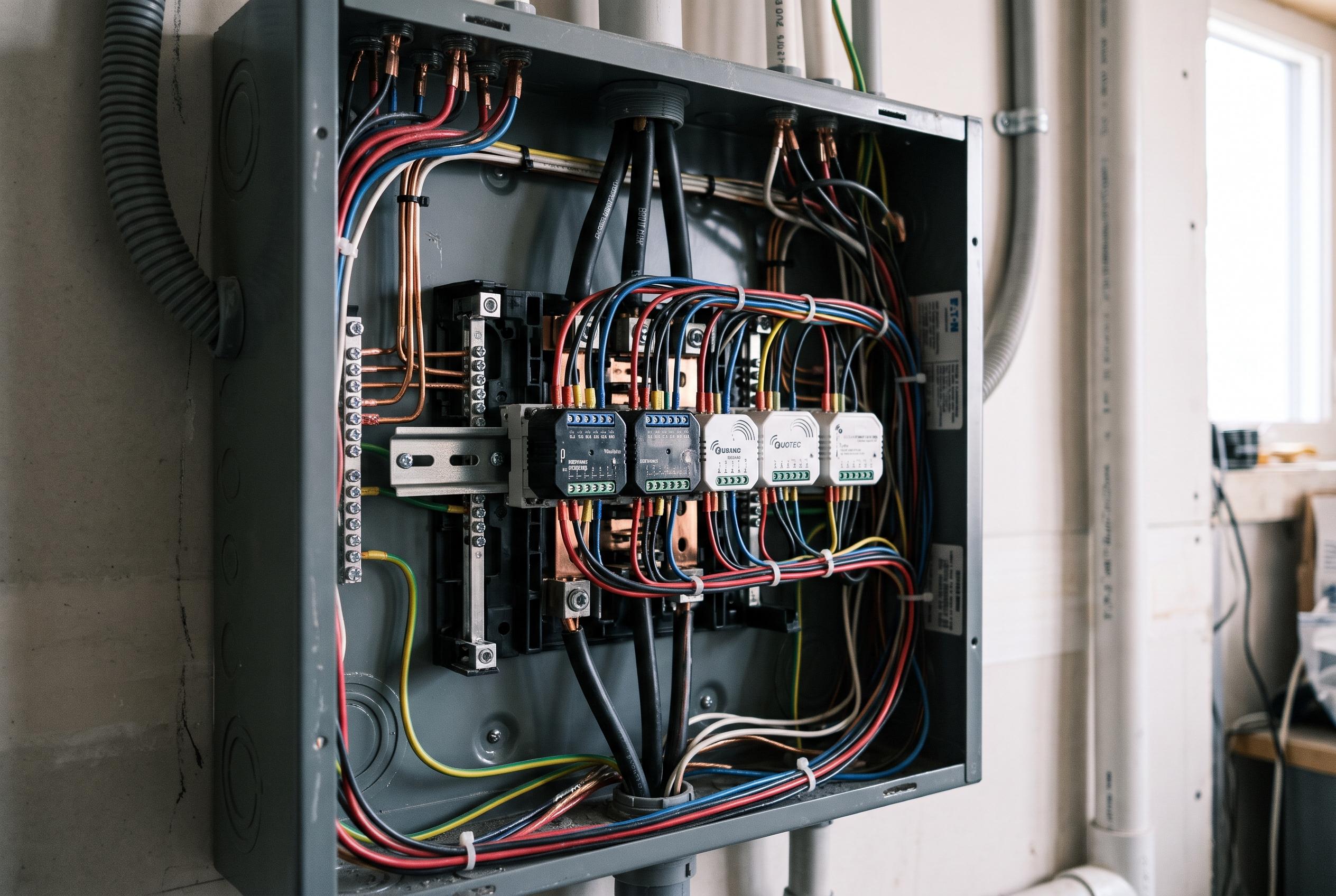
The guide’s main distinction is between line-voltage relays and dry contact models, and that difference matters. Line-voltage units switch mains power to a load such as a light or fan, while dry contact relays simply open or close an isolated circuit, which is the safer fit for garage door openers, gates and boiler terminals. It also highlights practical constraints that often decide the purchase: whether a neutral wire is available, how much current the relay can handle, whether the box has room for the module, and whether the device supports power metering for loads that need monitoring. The same buying logic appears in MicrocontrollersLab’s other comparison guides, which also organise products by load rating, size, metering and hub compatibility.
Among the devices discussed, the Zooz ZEN16 stands out as the most flexible option for low-voltage control. The guide describes it as a three-relay dry contact module that can run from 12–24 V AC/DC or USB-C, making it suitable for garage door systems, irrigation, gates and boiler applications where a neutral wire is not available. For users who need a more compact behind-the-switch solution, the Zooz ZEN51 is presented as a way to preserve an existing wall switch while adding Z-Wave control, although it requires a neutral and is intended for a more conventional lighting-style installation. A second Zooz model, the ZEN17, is positioned as the better option where normally open and normally closed contacts are both required.
The Shelly devices in the guide are aimed more squarely at standard load switching and energy visibility. The Wave 1 US LR is described as a simple 15 A relay for lights, fans and small appliances, while the Wave 1PM adds metering so users can check whether a pump or heater is actually drawing power. The Wave 1PM Mini is singled out for tight boxes where space is limited, and the Wave 2PM extends the same approach to two loads with measurement on both channels. For panel builders and installers working in a control cabinet, the Wave Pro 3 is the DIN rail choice, though the guide notes that professional installation is the sensible route. Enerwave’s older Z-Wave Plus micro switch remains in the mix as a long-established, broadly compatible option for classic Z-Wave systems, but it lacks Long Range support and the newer platform features found in the newer devices.
Taken together, the buying guide argues that there is no single best relay. The right choice depends on the load, the wiring layout and the control method needed. For a garage door opener or gate, a dry contact relay is usually the safer match. For a light or fan, a compact line-voltage module may be better. For a pump or heater, metering can be as important as switching. And for crowded boxes or panel work, size and mounting style may matter more than the number of channels. In that sense, the guide is less a ranking than a decision tree, helping readers avoid the common mistakes of using the wrong relay type, overloading the output or buying a module that cannot fit the space available.
Disclaimer: This content is intended for informational purposes only. Readers are advised to exercise their own judgement, conduct due diligence, or consult a qualified expert before acting on any information provided.