
As electric vehicles, heat pumps, solar panels and batteries spread, companies are shifting the smart-home pitch from connected devices to software that coordinates how homes consume, store and generate power.
For more than a decade, the smart home has been sold as a way to make domestic life simpler: heating controlled remotely, lights switched by app, chargers scheduled more efficiently and appliances brought online with less effort. Schneider Electric now argues that this was only the beginning. The company says the real shift is not about connected devices alone, but about coordinating them as part of a single home energy system. In its view, the next phase is less a smart home than an orchestrated one.
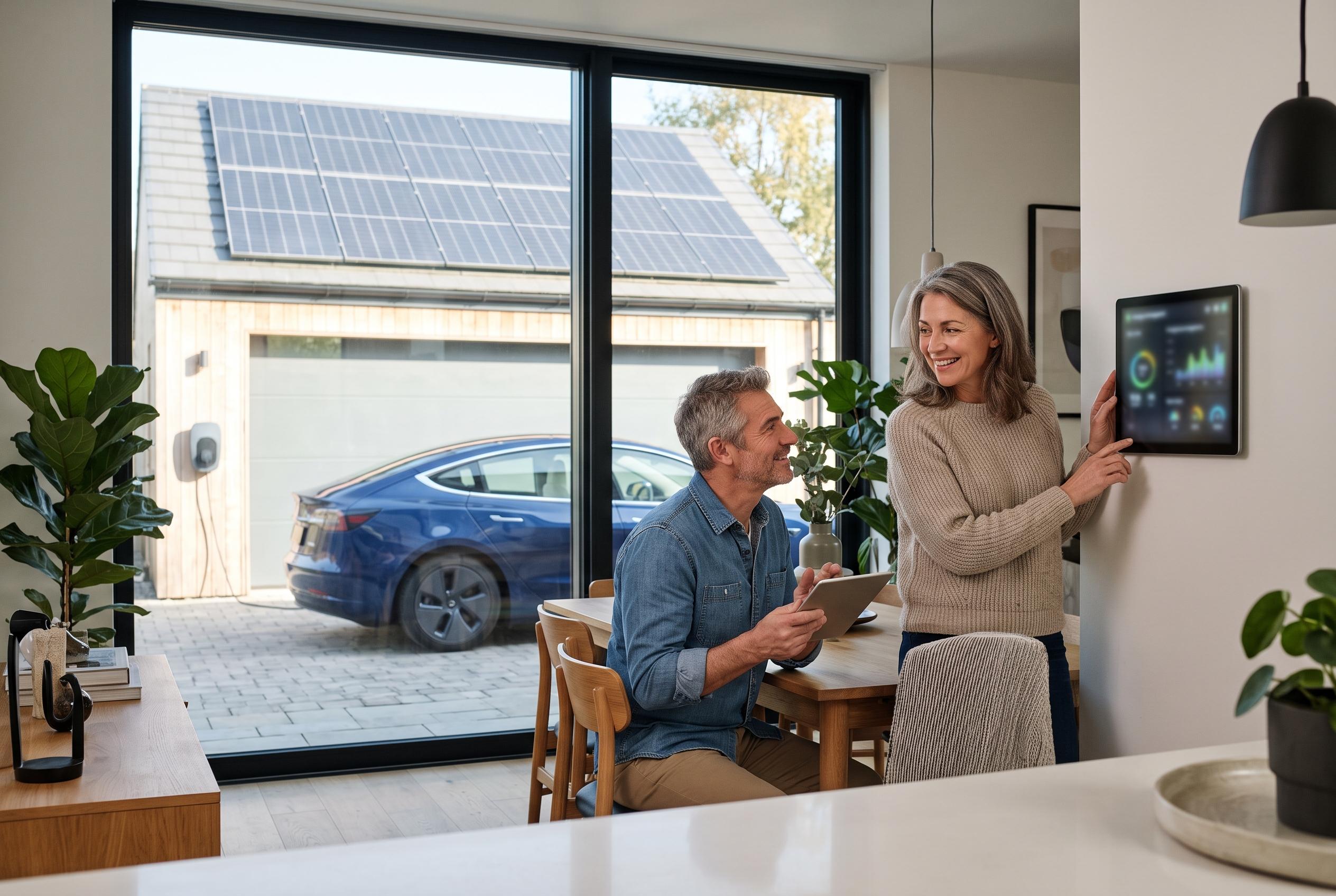
That argument reflects a broader change in how homes are being powered. As households add electric vehicles, heat pumps, solar panels and battery storage, electricity is no longer just consumed; it is also generated, stored and shifted between devices according to price, demand and available capacity. Nested Loop, FUTURi and other energy platforms are making a similar case, describing a market in which individual assets are increasingly linked into one operational layer rather than managed separately. The practical problem is clear: once multiple high-load technologies are installed, controlling each one in isolation can leave savings unrealised and make the system harder to manage.
Several companies are already competing to define this new category. Nested Loop says its platform can coordinate solar, batteries, EV charging, heat pumps and hot water systems without replacing existing hardware. FUTURi is promoting a smart-panel model that manages electrification within current electrical services, avoiding costly upgrades. Zerofy, meanwhile, is pitching software that integrates more than 80 device brands without extra hardware, while EcoFlow is bundling solar, storage, circuit control and EV charging into a single home energy ecosystem. The common thread is orchestration: software and controls that decide when power should be used, stored or redirected, rather than leaving each device to operate on its own.
Schneider Electric is positioning Schneider Home around that same idea. The company says the product family brings together heating controls, EV charging, solar and battery storage under what it calls Home Energy Intelligence, a framework designed to learn household patterns and balance cost, comfort, carbon impact, resilience and electrical capacity. Schneider Electric, which has long been known for industrial and building energy management, is now extending that expertise to residential users. Its argument is that the challenge for modern homes is no longer simple connectivity, but intelligent coordination, with the home itself becoming the system that manages the system.
Disclaimer: This content is intended for informational purposes only. Readers are advised to exercise their own judgement, conduct due diligence, or consult a qualified expert before acting on any information provided.